Tuesday, January 25, 2011

Appeal to Muslims and other Deprived Groups to form Local Census Committees in All Villages & Mohallas : All India Muslim Majlis-e- Mushawarat

ALL INDIA MUSLIM MAJLIS-E-MUSHAWARAT
[Umbrella body of the Indian Muslim Organisations]
D-250, Abul fazal Enclave, Jamia Nagar, New Delhi-110025
Tel.: 011-26946780 Fax: 011-26947346 Email: mushawarat@mushawarat.com

Press Statement

Appeal to Muslims and other Deprived Groups to form Local Census Committees in All Villages & Mohallas
To Assist Fully in Census Phase II on Population Enumeration between February 9 & 28, 2011 

New Delhi: 25 January 2011, Mr Syed Shahabuddin, President All India Muslim Majlis-e- Mushawarat, has issued the following statement.
 
Phase II of the Census shall enumerate Population to produce the socio-economic demographic profile of the country. For this enumeration the Census Commissioner has framed a Schedule of Questions to be asked of all households. The results of this enumeration will have a direct bearing on the policies, development programs & financial allocations at every level for the next decade.
 
The enumerator will visit every household between 9 & 28 February, 2011 and speak to the heads of the households, and some other members, if necessary and record replies separately, for each household.
 
The Schedule has many questions including a question on Religion and another on Language and also on Age, Education, Marital Status and Physical Disability etc.

The AIMMM considers it imperative that all households participate fully in the Enumeration. All Muslims should indicate Islam  as their religion and their mother tongue as their Language. Those, whose mother tongue   is Urdu, specially in northern states should indicate Urdu, not any local dialect they may speak at home.
 
The AIMMM appeals to the educated youth among Muslims and all other deprived groups to form small Census committees in every mohalla and village which should accompany the enumerators from household to household & from family to family, to ensure that enumeration is universal and nobody is left out and that the replies by the households are recorded correctly.
__________________________________________________________________________________

Authorised for Publication Abdul Wahid
New Delhi, 25 January, 2011 Office Secretary

OPEN LETTER TO MARK MAGNIER OF LOS ANGELE TIMES ..... By Ghulam Muhammed

OPEN LETTER TO MARK MAGNIER OF LOS ANGELE TIMES .....

Mark Magnier
Los Angeles Times,

You had done a hatchet job as far as Noor Masjid demolition is concerned. First thing, you have taken this incident in focus and tried to make your Muslim-baiting more platable by expanding the coverage to all religious sites. That cannot hide the fact that your New Delhi correspondent, a Hindu, had a bias against Muslims and their Masjids, which are a regular target of communal Hindu authorities, a la Israel, to keep on demilishing old Masjid structures all over the country and earn political luarels from their Hindu votes banks.

The court case demolishing Noor Masjid, had yet to run its course. The Religious Awkaf, a state organisation with full documentation did have records proving the title of the Noor Masjid as legal and legitimate. However, the state authorities deliberately played truant and did not take up the case with the judiciary and the local municipal authorities ever eager to target Muslims, had a field day to show who is rule the country.

Your reporter Ansul Rana and you are responsible for this motivated shoddy reporting and you must dig up all the facts and rewrite the full and truthful account of the trouble instigated over Noor Masjid.

Ghulam Muhammed, Mumbai

<ghulammuhammed3@gmail.com>

PS. : Why LA TIMES is so concerned about religious places half a way around the world? Is this not a long range mischief-mongering?
------------------------------

Illegal religious structures spread through India

Mosques and temples encroach on sidewalks, schools and roads, despite court orders to stop them. Devotees help ensure the structures are hard to tear down once they are built.

New Delhi mosque Muslims offer Friday prayers at the site of a mosque demolished by authorities in New Delhi. With land at a premium and donations sizable, activists in India say religion is good business. (Adnan Abidi, Reuters / January 13, 2011)

By Mark Magnier, Los Angeles Times January 24, 2011
 
Reporting from New Delhi —


They struck shortly after dawn on a weekday morning this month, taking bulldozers, backhoes and sledgehammers to the Noor Masjid mosque. But the stealth tactics by municipal workers fell short: Well before they finished razing the building, 1,000 Muslim protesters had gathered, and things got ugly.

Across town a few hours later, the city's public works department was busy again, this time leveling the Hindu Pushp Vihar temple. Followers clashed with police, devotees sang to the gods and protesters blocked a main road, sparking massive traffic jams.

Illegal religious structures are mushrooming across India, eating into sidewalks, schools, roads, even prisons, despite numerous court orders to check their spread.

Once built, they're tough to remove in a country with strong religious passions and a history of communal riots.

"Governments find it difficult to touch anything to do with religion," said Gautam Bhatia, an architect and author.

For days after the mosque razing, protests raged. The most intense confrontation came during Friday prayers when thousands of young Muslims sporting skullcaps battered down police barricades, yelling, "God is great!"

"If we don't stand up, they'll walk all over us," Bashir Ahmed said. "They have no right to demolish our mosques."

Faced with protracted opposition, city officials eventually announced that they'd consider rebuilding the mosque.

The exact number of illegal religious structures in India is unknown, but an estimated 60,000 exist in New Delhi, up from 560 in 1980, while a recent survey found 250,000 more in five of India's 28 states. Built on public land without permission, building permits or much thought to traffic safety or crowd control, they range from makeshift to the decidedly elaborate.

Most start small. An illegal shrine may begin its life as a few ornaments and a candle in a tree. 

Then a bench is added. Then concrete floors, a roof, a sleeping alcove.

New Delhi's "ancient" Shiv Shakti Mochan Temple near Parliament is a case in point. Dedicated to Lord Shiva, it started in 1968 as a bird-house-sized structure, said longtime neighbor Tara Singh, pointing out a backlit box wedged into the adjoining banyan tree.

In defiance of a Supreme Court order against expansion, it's now 20 feet by 60 feet with walls, columns, marble floors, twinkling lights, a sink and life-size statues in glass cases, completely blocking the sidewalk. Each time city workers try to raze it, supporters quickly mobilize to fend them off, alerted by a subaltern keeping watch 24/7.

Its keepers say it's only growing as fast as the banyan tree, the manifestation, they say, of a sacred mythical snake that fights evil.

"The power of this blessed tree will defeat any bulldozer," said the priest, identified as Panderji, as several pedestrians handed him donations. "A few months back, they wanted to tear us down and restore the sidewalk. They're always trying something."

Many of the buildings are inspired by strong religious beliefs in a country with the world's third-largest Muslim population and where divinities of the majority Hindu religion are plaintiffs in court cases.

But with land at a premium and religious donations sizable, activists cite another reason. "Religion is good business," said a Hindustan Times editorial condemning encroachments. "Like any other business, there are legit as well as not-so-legit practitioners."

"People in India who are religious-minded see gods in the stones, in flower pots, anywhere," said Bhagwanji Raiyani, whose public-interest filing in a Mumbai court led to the razing of 1,300 illegal structures. "Unscrupulous people who don't want to work hard just put a sign up and people pray and give them money. Sometimes 'temples' then turn into telecom shops."

Although Raiyani achieved a rare victory, the battle to take back the streets is complicated by public apathy, a creaky legal system, corruption, poor land records and politicians who back encroachers for votes.

"People think twice about giving to a beggar," said Nira Punj, founder of Mumbai's Citispace civic group dedicated to protecting public spaces. "They don't to a shrine. This encroachment, it's like terror tactics."

Nor are people above using unorthodox construction to manipulate policy, frustrate rivals or divert projects.
 
Labor leader Shashi Bhushan Pandit says his neighbor in Jogta, central Bihar state, didn't want a road through his property so he built a temple on it, which worked like a charm. "The government rerouted the road," he said.

Adding to the inertia is a public tendency to believe a building's been there much longer than it has.
"It's been here 50 to 100 years," demonstrator Kamal Hassan said of the razed Noor Masjid mosque, although in fact it was only 11 years old. "They pick on Muslims more than Hindus."

Such misconceptions are easily fueled by politicians and religious leaders making political hay, said Monu Chadha, head of the neighborhood group that sued to raze the mosque.
Even when government bulldozers prevail, there's no guarantee that the land will remain temple- or mosque-free.

In 2003, Mumbai demolished 1,100 illegal shrines, temples, mosques and churches. But a survey last year discovered that 200 had reappeared and 1,500 new ones had been built.

mark.magnier@latimes.com

Anshul Rana in The Times' New Delhi Bureau contributed to this report.

Copyright © 2011, Los Angeles Times

Monday, January 24, 2011

Why is the thespian angry? By Vir Sanghvi - Rediff.com

Why is the thespian angry?


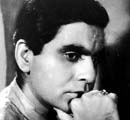
Dilip Kumar. Click for bigger pic!
http://www.rediff.com/entertai/1999/jul/27dil.htm

Vir Sanghvi

If you seek a measure of the success or failure of Indian secularism, then you could do worse than look at the career of Yusuf Khan aka Dilip Kumar. Almost anybody who has any acquaintance with Hindi cinema will tell you that Dilip Kumar is one of the all-time greats
.
Moreover, his record in public life has been exemplary. Despite close friendships with a series of politicians, he has never been involved in any corruption scandal. Nor has there been any suggestion that he is at all dishonest or money-minded. In fact, he is probably one of the poorer stars in Bollywood; Shah Rukh Khan's annual income exceeds Dilip Kumar's net worth.

In the fifties, he was one of the first stars to use his celebrity for the greater good of society. He offered his services to Jawarlal Nehru who used him to popularise a variety of causes. In the sixties, he raised money for jawans during the China war and the 1965 conflict with Pakistan. Successive prime ministers of India have hailed his contribution to society and each time he has been given a responsibility (he was sheriff of Bombay 20 years ago, for instance), he has always risen to the occasion.

If you want an example of the success of Indian secularism, Dilip Kumar should fit the bill. He has been a truly patriotic Muslim. And India, in turn, has honoured him by treating him as a legend in his own lifetime.
But of course, things are not that simple. No matter how successful he has been, Dilip Kumar has never been allowed to forget that he is a Muslim.

It started with his name. Through he has always denied that the studio chose a Hindu name for him to conceal his Muslim origins ("I very nearly became Jehangir -- it was just that I preferred Dilip," he maintains), it can be no accident that so many stars of that period played down their Muslim parentage. The studios believed that in the India of that era, it helped if people thought you were a Hindu.

With wife Saira Banu. Click for bigger pic!
For most of the fifties, most of India had no idea that Dilip Kumar was really Yusuf Khan. Newspapers didn't write much about movie stars, there was only one gossip magazine (Film India, long since deceased) and there was of course, no television with its diet of film based programming. All that fans had were the performances. And these were enough to ensure Dilip became Bombay's top star.

  Then, in the sixties, the problems began. His film, Ganga Jamuna, ran into unprecedented censor trouble. The censor board made it clear it would not allow the film to be released unless he agreed to over 50 cuts. Not only would these cuts have destroyed the movie, most of them were also absurd. For instance, a scene where dacoits swooped down on a train was found objectionable on the grounds that it might provide tips to would be dacoits.

But the censors gave the game away when they objected to Dilip Kumar's last words in the movie. Just before his character died, he said, "Hey Ram". That had to go, said the censors. Why, asked Dilip Kumar. Because those were Gandhiji's last words.

But surely, any Hindu would think of Ram when he was dying.

Yes, said the censors, any Hindu would.

Only the threat of legal action forced the censors to pass Ganga Jamuna,which is now regarded as one of the classics of Indian cinema. Some people suggested that Raj Kapoor -- whose Jis Desh Mein Ganga Behti Hai was in the cinemas -- paid off the censors to delay the release of the competition. But there is no doubt that Dilip Kumar believes his religion had something to do with it.

Worse was to follow. One day, a police party from Calcutta landed up in Bombay and raided Dilip Kumar's house. He was a Pakistani spy, the police said, and they were about to arrest him. Dilip Kumar a spy? How could that make sense? And, anyway, what secret information was he in a position to communicate to the Pakistanis? The vital statistics of Vyjayantimala?

With Vyjayantimala. Click for bigger pic!
 

It turned out that the Calcutta police had arrested a suspected Pakistani spy. In his diary, they had found the names of many well-known people. In the finest traditions of the Indian police, they promptly concluded that all the Hindus listed in the diary were contacts while the Muslims were enemy agents. One such Muslim was Dilip Kumar. It is a measure of how deep prejudice runs in our society that India's top star -- a friend of Nehru who was then still prime minister -- was accused of espionage on the basis of such flimsy evidence only because he was a Muslim. If Dev Anand's name had been in the diary, it is extremely unlikely that anyone would have bothered to raid him.

After several traumatic months, the police gave up for lack of evidence. But rumours swept the city. Dilip Kumar had confessed. The police had recovered a radio transmitter under his floorboards. He was a leader of a gang of Muslim spies within the film industry. And so on.

It is to Dilip Kumar's credit that he bore no bitterness or ill-will despite such appalling mistreatment. Instead he was there, as always, ready to support our troops in the war against Pakistan in 1965.

I mention all this lest you think -- as many people with short memories or of a certain age do -- that Dilip Kumar is being absurdly sensitive about Bal Thackeray's campaign against him. To understand why Dilip Kumar has reacted with such passion and force, you need to understand that he feels that no matter what he does to prove his patriotism, there will always be those who believe that it is not enough.

The problem with Thackeray has a historical origin. In 1967 when Dilip Kumar was campaigning for V K Krishna Menon in North Bombay, Thackeray was busy founding the Shiv Sena in its first avatar as a gang of Congress stooges who beat up Malayalis who dared vote for Menon.

Later, Thackeray revealed himself to be India's filmi groupie number one. Movie stars flocked to the Senapati's residence and told him he was their Fan-apati while the old boy stared goggle-eyed. Only Dilip Kumar had the dignity to remain aloof.

With Madhubala.Click for bigger pic!
 

Thackeray never forgave him and by the time he had launched the Shiv Sena's Muslim-hating avatar, he seized on Dilip Kumar as a representative of all that he loathed -- a successful secular Muslim who saw no reason to pay court to fascism, even when it was dressed up as groupiedom.
This explains why the Shiv Sena picks on Dilip Kumar again and again. During the Bombay riots, it criticised him for daring to help resettle some of those it had made homeless. When he said that he did not find the movie Fire obscene, it sent a contingent of thugs who stripped down to their underwear outside his house. A Shiv Sena MP even said in Parliament that he thought Dilip Kumar was a traitor. And now, Thackeray wants him to return the Nishan-e-Imtiaz, the highest civilian honour in Pakistan.

From Dilip Kumar's perspective, enough is enough. He is in his late seventies. He has proved his patriotism enough times. He is too old and too tired to wage a solitary battle against Thackeray's persecution, particularly when it is backed by the might of the Maharashtra state government.

What does it say about Indian secularism that our country's most famous Muslim should find, in the twilight of his life, that he is still regarded with suspicion by an important section of our country? What must it be like for a dignified Muslims of the old school who bought Nehru's dream of a secular, progressive India to live in a Bombay that is now run by the goondas of the Shiv Sena? And how humiliating must it be for Dilip Kumar to go to Atal Bihari Vajpayee and say, "Sir, I will do whatever you want."?

It is to Vajpayee's credit that he has told Dilip Kumar to ignore Thackeray and to follow his own conscience. But the episode -- as indeed, the manner in which Dilip Kumar has been made to pay for being a Muslim throughout his life -- shames us all as Indians.

If this is how we treat Dilip Kumar, who in the world will believe us when we say that we treat our Muslims well?

--

Sunday, January 23, 2011

2.5 million join Bangladesh Muslim festival - AFP

2.5 million join Bangladesh Muslim festival
(AFP) – 5 hours ago

TONGI, Bangladesh — At least 2.5 million Muslims joined prayers on Sunday near the Bangladeshi capital as part of the second largest annual Islamic festival after the Hajj to Mecca, officials said.

The normally congested streets of Dhaka were empty as devotees left work to gather on the banks of the river Turag for the end of the first phase of the Biswa Ijtema, or World Muslim Congregation.

The gathering, at which Muslims pray and listen to religious scholars, was first held in the 1960s at Tongi, some 30 kilometres (18 miles) north of Dhaka.

Dressed in traditional Islamic robes and caps, devotees set up prayer mats beneath a canopy stretching more than a kilometre while hundreds of thousands of people filled the open space available for the final prayer.

District police chief Mahfuzul Haq Nuruzzaman said at least 2.5 million devotees including thousands of foreigners attended a last prayer session lasting 20 minutes and led by a cleric from New Delhi.

"Devotees have filled up every space found on the roads, rooftops, boats and buses," Nuruzzaman said, adding the Bangladesh president and the prime minister joined prayers capping the three-day long first phase of the festival.

Bangladesh is the world's third-largest Muslim-majority nation, with Muslims making up nearly 90 percent of its 146 million population.

Launched by Tablig Jamaat, a non-political group that urges people to follow the tenets of Islam in their daily lives, the event is second biggest global gathering of Muslims.

Gazi Mohammad Sanaullah, who edits a special bulletin on the congregation, said the organisers are holding the prayer meeting in two phases to accomodate more devotees some of whom travel from remote villages.

The three-day long second phase will start on January 28.

Copyright © 2011 AFP. All rights reserved. More »

Of a massacre untold By A. G. Noorani - Frontline Magazine -India

http://www.hinduonnet.com/fline/fl1805/18051130.htm

Volume 18 - Issue 05, Mar. 03 - 16, 2001

Frontline: India's National Magazine
From the publishers of The Hindu


ANALYSIS


Of a massacre untold 


A revealing account surfaces of happenings in Hyderabad state in the wake of the Indian Army's 'Police Action' there in 1948.

A. G. NOORANI

"AT times one has to close his (sic) eyes in national interest." The "senior police officer" who made this confession to The Indian Express, in Srinagar on February 17, provided a truthful explanation for the compromises which sections of the media and academia tend to make in the "national interest".

The officer was speaking of the volte-face his chief, A.K. Suri, had performed with regard to the disclosure of the arrest by the police of a man from Military Intelligence, in plain clothes, for firing wantonly on a group of youngsters in Maisuma, in Srinagar. But, let alone matters of immediate occurrence or issues of current interest such as Kashmir and the border dispute with China, even on historical events one finds a practice of economising with truth.

That K.M. Munshi, India's Agent-General in the erstwhile state of Hyderabad, did not mention in his memoirs The End of an Era (1957) the massacre of Muslims in many areas in the wake of the Indian Army's "Police Action" in September 1948 -- itself a compromise with the truth -- was but to be expected in view of his outlook. Not so its omission in standard works by writers who aspired to scholarly values and who were not communal; only "patriotic" in a perverted but familiar manner. A rare exception was the book by Communist Party of India (Marxist) leader P. Sundarayya, Telengana People's Struggle and its Lessons (1972). He wrote of the "untold miseries" that were inflicted on "the ordinary Muslim people" (pages 88-89).

Suppression of records is not only unethical but futile. More often than not, the foreign scholar will unearth it from archives in London or Washington, or in India itself. A German scholar has done just that. Margrit Pernau records in her book The Pa ssing of Patrimonalism that "while the occupation by the Indian army had been quick and had caused only relatively few casualties, the following communal carnage was all the more terrible. The Razakars had sown wind and reaped not only storm but a hu rricane which in a few days cost the lives of one-tenth to one-fifth of the male Muslim populationprimarily in the countryside and provincial towers". (page 336, emphasis added, throughout. See review on page 75).

Professor Wilfred Cantwell Smith, a scholar on Islam and a critic of Jinnah's politics, wrote a seminal article in the periodical The Middle East Journal in 1950 (Volume 4) titled Hyderabad: A Muslim Tragedy. He was Lecturer in Islamic History at the University of the Punjab and at the Forman Christian College, Lahore (1940-1946) and visited Hyderabad in 1949. In a critique of the Nizam's policies and of Qasim Razvi, the leader of the Razakars, he also fairly described the aftermath.

"Off the battlefield, however, the Muslim community fell before a massive and brutal blow, the devastation of which left those who did survive reeling in bewildered fear. Thousands upon thousands were slaughtered; many hundreds of thousands uprooted. The instrument of their disaster was, of course, vengeance. Particularly in the Marathwara section of the state, and to a less but still terrible extent in most other areas, the story of the days after 'police action' is grim.

"The only careful report on what happened in this period was made a few months later by investigators - including a Congress Muslim and a sympathetic and admired Hindu -- commissioned by the Indian Government to study the situation. The report was submitted but has not been published; presumably it makes unpleasant reading. It is widely held that the figure mentioned therein for the number of Muslims massacred is 50,000. Other estimates by responsible observers run as high as 200,000, and by some of the Muslims themselves still higher. The lowest estimates, even those offered privately by apologists of the military government, came to at least ten times the number of murders with which previously the Razakars were officially accused... In some areas, all the men were stood in a line, and done to death. Of the total Muslim community in Hyderabad, it would seem that somewhere betweenone in ten and one in five of the adult males may have lost their lives in those few days. In addition to killing, there was widespread rape, arson, looting, and expropriation. A very large percentage of the entire Muslim population of the Districts fled in destitution to the capital or other cities; and later efforts to repatriate them met with scant s uccess." He was referring to a report by Pandit Sundarlal (1886-1980) and Kazi Muhammad Abdul Ghaffar (1889-1956).

In 1988, Omar Khalidi, a devoted chronicler of Hyderabad, published what he claimed were extracts from their Report in his compilation of essays,Hyderabad: After the Fall (Hyderabad Historical Society; Wichita, Kansas; U.S.). His introduction to the extracts, though informative, is marred by inaccuracies and intemperate language. He had relied, somewhat uncritically, on an interview with Yunus Salim who claimed inaccurately, that he was a member of the team led by Sundarlal which toured Hyderaba d in November-December 1948. 

A 32-year-old State attorney then, he was dismissed from the post for having helped the team.

Yunus Salim was a Deputy Minister for Railways in Indira Gandhi's government (1969) and a Governor of Bihar in 1991. Garbled versions of the Report appeared in Pakistan. Khalidi writes: "In addition to the copy in the Union Home Ministry, Srinivas Lahoti , a Communist Party of India leader in Hyderabad, owned a copy. In an interview in February 1988 he claims to have deposited it with the National Archives of India, New Delhi upon his party's instruction. The present writer obtained fragments of the Report (which is partly in English and partly in Urdu) from owners who wish to remain anonymous. The portion in English is being reproduced without any alteration. The Urdu portion is translated into English."

Khalidi was misled. The entire document is in English and the "fragments" he reproduces should have put him on notice that it is not safe to rely on them. The brief Introductory portion is intrinsically unreliable. The rest is a village-wise and d istrict-wise account.

Union Home Minister Vallabhbhai Patel reacted angrily to the Report in a letter to Abdul Ghaffar dated January 4, 1949:

"I notice that in your report you mentioned that you were asked by the Government of India to proceed to Hyderabad State on a goodwill mission. At least I am not aware of any such mission having been entrusted to you by the Government of India. As far as I know, you wanted to go there and it was arranged that you should go there at Government expense. There could have been no question of Government of India sending any goodwill mission to Hyderabad State.

"I notice that your report is and your activities were, restricted to making inquiries about what happened during and after the police action. There is nothing in it about the extent and consequences of Razakar atrocities. Probably that was out of the terms of reference which you had set for yourselves. At the same time, you have covered in your reports matters which could by no stretch of imagination, have formed the purview of your enquiry. I should also like to say at once that the detailed inquiries which have been made by the local administration over a fairly long period as opposed to the roving enquiries which you have made during such a short period show that your estimate and your appreciation of the position lack balance and proportion . Finally you have rushed into a sphere which might have been more appropriately left to be covered by experienced statesmanship and administrative ability."

The assertions were simply untrue and the aspersions were unworthy of Sardar Patel. In those days nobody could have toured the State without official approval. That the team went there admittedly "at government expense" revealed a lot. And, as we know "experienced statesmanship and administrative ability" do not guarantee impartiality in inquiries. The report censured the Razakars and was balanced.

Kazi Abdul Ghaffar was a bitter critic of Razvi's Majlis-e Ittihadul-Muslimin and was trusted by the State Congress. He was editor of Firangi Mahal's Khilafatist paper Akhuwat (1919-20) and of Payam (1934-46) and was respected as a scholar- journalist. He visited Hyderabad in October along with Padmaja Naidu and alerted Maulana Abul Kalam Azad to the happenings there. Pandit Sundarlal was vice-president of the United Provinces Congress (1931-36) and as president of the All-India Peace Council (1959-63), urged rapprochement with China against the majority view of the times.

His magnum opus, The Gita and The Quran, is a neglected work. An English translation was published in 1957 by the Institute of Indo-Middle East Cultural Studies, Hyderabad. Neglected also is Volume 8 (second series) of Selected Works of Jawahar lal Nehru (1990) (pages 102-113).

In a Note to Sardar Patel's Ministry of States, dated November 14, 1948, Prime Minister Jawaharlal Nehru, while denying Pakistan's propaganda, wrote: "I have recently had talks with Kazi Abdul Ghaffar and Miss Padmaja Naidu, who have just returned from Hyderabad. They are both reliable observers... The impression I have gathered from these talks is that while our army is generally believed to have functioned well and to have protected the people, there is little doubt that a very large number of outbreaks took place in the small towns and villages resulting in the massacre of possibly some thousands of Muslims by Hindus, as well as a great deal of looting, etc... This information is contrary to what I had believed and I should like it to be verified through our military and civil authorities in Hyderabad. We must know the truth, or else we shall be caught saying things which are proved to be false later." It is unlikely that those reports did not reach the ears of the Minister concerned, Vallabhbhai Patel.

Even men like Dr. Zakir Hussain's brother, the academic Dr. Yusuf Husain Khan, and Dr. M. A. Ansari's nephew, M.A. Ansari, a High Court Judge, were "removed from their post", Nehru complained. He added: "One of the persistent charges made is that we intend to kill what is called Muslim culture. Hyderabad is known all over the Middle East as a city of Muslim culture. The Osmania University is well known and even better known is the publication department and the translation bureau of the State."

With a letter to V.P. Menon, the secretary of the Ministry, dated November 26, 1946, Nehru enclosed a note on the situation in Hyderabad and remarked: "If possible, some good non-officials should go there to help the administration and to try to produce a better frame of mind both among the Muslims and the Hindus."

The editor to the volume recorded: "A four-man goodwill mission, consisting of Kazi Abdul Ghaffar, Pandit Sundarlal, Moulana Abdulla Misri and Furrukh Sayer Shakeri, was sent to Hyderabad at the personal instance of Nehru to study existing conditions and to help in the establishments of communal harmony. After a brief visit to Bidar and Osmanabad districts by Major-General Chaudhury, Pandit Sundarlal, Akbar Ali Khan and Fareed Mirza, two teams, one consisting of Pandit Sundarlal, Kazi Abdul Ghaffar, Mulla Abdul Basith and Mohammed Yunus Saleem had toured Bidar, Osmanabad and Nanded while the other consisting of Moulana Abdulla Misri, Furrukh Sayer and Fareed Mirza visited Aurangabad, Bhir and Gulbarga. They took stock of the information collected and s ent a report to Vallabhbhai Patel."

All of which shows Sardar Patel's repudiation of the officially sponsored team to be less than honest. Nehru's note cited "additional reports from Hyderabad" about the killing and looting. It said: "If there is even a fraction of truth in these reports, then the situation in Hyderabad was much worse than we had been led to believe. It is important that the exact facts should be placed before us. We want no optimistic account and no suppression of unsavoury episodes. That would lead us to form incorrect judgments... A sense of fear seems to pervade the Muslims of Hyderabad. That is perhaps natural after all that has happened. But unless we can lessen this fear, the situation will become worse."

Dr. Charan Sandhilya, Director of Pandit Sundarlal Institute of Asian Studies at Ghaziabad obtained for this writer a copy of the full text of the Sundarlal Report from the Nehru Memorial Museum and Library, New Delhi (excerpts on facing page). It records official sponsorship and reflects their objectivity in denouncing the Razakars' murderous attacks on Hindus, in praising officials where praise was due, yet never flinching from telling the terrible truth about the massacre of Muslims. This is a truth which hardly any Indian scholar has deigned to admit this day.

The Sundarlal Report is of more than historical importance; it is of current relevance, for the massacres, coupled with the national indifference to them, have left scars in the minds of Muslims in the State, Hyderabad city in particular. And some Muslim communal parties have not been slow to exploit these scars.

Copyrights © 2001, Frontline.

Saturday, January 22, 2011

Bombay Stock Exchange's Sharia Index - 'The ethical investor' - By Supriya Nair - WWW.Livemint.com

http://www.livemint.com/2011/01/21202611/The-ethical-investor.html

WWW.livemint.com


  • Posted: Fri, Jan 21 2011. 8:26 PM IST

The ethical investor

Will BSE’s Shariah index attract more observant and curious investors? We met the people behind the index to find out

Supriya Nair


On Mumbai’s bustling Cadell Road you could walk past the office of Taqwaa Advisory and Shariah Investment Solutions (P) Ltd (Tasis) without noticing it. A low-key signboard in a row of other businesses, typical of old-fashioned office blocks all over the island city, is all that announces their existence.
Money speaks: The Bombay Stock Exchange;Photo by Kuni Takahashi/Bloomberg
 
It’s a far cry from the behemoth of Dalal Street, but Tasis’ subdued presence belies the significance of its recent collaboration with the Bombay Stock Exchange (BSE). In December, they launched the BSE TASIS Shariah 50 Index, which lists the largest Shariah-compliant stocks within the BSE 500.
 It isn’t the first such index in the country. The National Stock Exchange already compiles a list of Shariah-compliant stocks. But it is the first that is based on the stipulations of a wholly India-based Shariah board. The architects of the BSE Shariah 50 are counting on a new wave of attention that they hope will transform the landscape for observant Muslims, as well as investors concerned with social responsibility.

“The notion of Shariah compliance has been around for 1,400 years,” says Jamil Ahmed Shaikh, director of Tasis. “In India, you could date the practice of Islamic banking to the late 1970s when small groups of Muslims in north India and in Mumbai started cooperative societies and chit funds.” But the effects were marginal, he says, and remained so until recently. “Over the last decade, people started to look at it as a way of alternate finance, and there’s more enthusiasm than ever after the subprime crisis (of 2008).” He smiles, “Once you get stuck in one area, you start to look for others.”

So what does a Shariah index do? Broadly speaking, it offers you the chance to invest only in companies that comply with the ethical practices mandated by Islamic law. This means that investing in certain entertainment companies, the hotel and food industries, and companies related to liquor, tobacco and weapons, is prohibited. So is banking, because charging interest is not permissible in Shariah practice, and neither is the accumulation of debt.

But screening out businesses is just one half of the job. The financial equations involved are more complex. To put the index together, Tasis gathered data on Indian market patterns for a decade. They put these forward to their Shariah board, whose muftis considered the data and decided on the nitty-gritty of permissible financial limits. These parameters include debt-to-equity ratio (25%) and interest-to-total-income (3%).

“We look at what average industry rates are, and based on that we ask what our rates should be,” Shaikh explains. “Essentially, these are compromises with the zero-interest requirement, but the rationale was to come to a consensus about these rates.”

In the absence of a consensus, investors and advisers have often set their own parameters. This has always meant factoring in geographical and cultural differences. BSE and Tasis say that having a domestic, India-based Shariah advisory board factors in unprecedented local expertise, as well as a reliable authority, whose guidelines will be well-recognized.

“What works for Saudi Arabia or Dubai does not necessarily apply in India,” Shaikh says. “The market here is different—and potentially big. Even with our conservative screening, we are left with about 1,100 Shariah-compliant scrips in India. That’s more than all the scrips—including non-compliant ones—available in all the Arab world put together.”

Given the strictness of their screening, the BSE TASIS Shariah 50 has conservative standards compared with other Shariah advisory boards in the world, says Shaikh. But the BSE says it’s exactly what the country needs to encourage inclusive growth. “Islamic investors in India and abroad have been hesitant to invest in the market,” says James Shapiro, head, market development, BSE. “But this index provides investors, regardless of faith, with what is, in a broader sense, a socially responsible index.”

There is an interesting clause there. Ashraf Mohamedy, of Mumbai-based Idafa Investments, says non-Muslims have traditionally been responsible for the biggest chunk of Shariah-compliant investments. “The biggest investors in Taurus Ethical Fund and Tata Select Equity Fund (both equity funds that take Shariah compliance into account) are Jains who look for ethical avenues of investment. The fund managers have left out processed food and leather industries, which makes it compliant for observant Jains. It’s social engineering at its best.” Idafa’s own non-Muslim clients “have no problem” with eliminating tobacco, alcohol and banking stocks from their portfolios, he says.

BSE thinks the Shariah index will encourage first-time investors unsure about how their investments tally with their religious beliefs. Three weeks in, the response has been “overwhelmingly positive”, Shapiro says. People from around India and the world “approach us asking for information and instructions on how to use the index. We expect that investment vehicles like exchange-traded funds and mutual funds will be available in the market soon, given the strong demand we’ve seen for these.”

“The news of the Shariah index itself should attract curious investors,” Mohamedy says. “With the BSE’s history and visibility, it means a much increased level of confidence.”

Forty-year-old Sikandar Munshi, who owns a medical store on the Jogeshwari-Vikhroli Link Road, says he began to invest in the market three years ago. “The market’s ups and downs made me think, and after I asked around, I decided to invest as per the Islamic ways,” he says. Strict requirements for debt freedom and sustainable growth reduce risks significantly in Shariah-compliant investment. “There are probably other people who may not even be aware that it’s possible to do so. The Shariah index will give them a chance to think about it.”

Number Game

The BSE TASIS Shariah 50 at a glance:

•The Shariah norms utilized by Tasis are more conservative than those of other Shariah advisory boards

• The Shariah 50 employs stock-level capping as an embedded risk-management feature, ensuring that no constituent has more than 10% weight in the index at any time

• It is the only Shariah index in India to be disseminated in real time to investors with values publicly available on the BSE website during the day

• The Shariah 50 is reviewed monthly, and non-compliant stocks eliminated from the index. Reconsideration for the index is reviewed on a quarterly basis.

supriya.n@livemint.com

Thursday, January 20, 2011

Blast accused helped Swami soften stand By Mohammed Wajihuddin, TNN, - THE TIMES OF INDIA, Mumbai

http://timesofindia.indiatimes.com/city/mumbai/Blast-accused-helped-Swami-soften-stand/articleshow/7330067.cms

Blast accused helped Swami soften stand

Mohammed Wajihuddin, TNN,

Jan 21, 2011, 03.04am IST

MUMBAI: The credit for RSS activist Swami Aseemanand's change of heart, according to his confession, goes to 21-year-old Sheikh Mohammed Kaleem, an accused in the May 18, 2007, Hyderabad's Mecca Masjid blast. Kaleem, who is out on bail, addressed a rally against "sanghi (saffron)" terror at Azad Maidan on Thursday.

The swarthy, bespectacled boy, who was showered with praise and hailed as a model by members of over a dozen Muslim NGOs attending the rally, kept his speech short.

Speaking in typical Hyderabadi Urdu, he recalled many meetings with Aseemanand in Hyderaba's Chanchalguda jail. " One day the jail warden told Aseemanandji that I had already spent 18 months in jail for the Mecca Masjid blast. Aseemanandji, for whom I brought water and food, would ask me questions about Islam."

Among the several teachings of Prophet Mohammed, according to Kaleem, the one which touched Assemanand was the spirit of tolerance the Prophet had showed at Taif, a place near Mecca. Legend has it that when the Prophet reached Taif with the message of monotheism, he was stoned by the pre-Islamic pagan tribe living there. As the Prophet started bleeding profusely, angel Jibreel (Gabriel) came and told Mohammed that, if the Prophet said yes, God would crush the people who had stoned him between two mountains. But the Prophet forgave his tormentors, prayed for them, hoping that truth would prevail one day. "This story had a great impact on Aseemanandji," said Kaleem who also recounted his torture in police custody.

Hyderabad-based advocate Ahmadullah Khan who had fought the case of several accused of the Mecca Masjid blast, including Kaleem, was all praise for the boy: "His good conduct changed the heart of Aseemanand. I know how his family has suffered over the last many years. Now the agencies should admit their mistakes and release all those, including the accused in Malegaon blasts of 2006, currently in prison," demanded Khan who, like most speakers at the rally, alleged persecution of Muslims by the investigating agencies. Samajwadi Party MLA Abu Asim Azmi threatened that Muslims would launch a jail bharo andolan if their boys languishing jails on "false" charges of terror were not let off.