Wednesday, May 4, 2016

http://scroll.in/article/807135/five-things-they-wont-but-should-teach-you-at-the-bcci-commentary-schoolNEIGHBOURHOOD WATCH

Why Islam as state religion may be preferable to the mask of secularism in Bangladesh

It saves minorities from hopes of equal citizenship being raised and dashed. Calls for secularism give Islamist groups an opportunity for renewed mobilisation.

Bengal is a tragic country. Its west, whose present political form is the state of West Bengal, as part of Indian Union, has a Hindu Bengali majority and a secular Constitution that has done little to better the extremely precarious socio-economic condition of the vast majority of Muslim Bengalis, most of whom have negligible assets or social security (true for most non-savarna Hindu Bengalis too). Its east, whose present political form is the sovereign nation-state, the People’s Republic of Bangladesh, has a Muslim Bengali majority. In the 70-odd years since its creation – through Partition, through Pakistani occupation, a secular Constitution and a non-secular Constitution with Islam as state religion since 1988 – it has successfully driven out millions of Hindu Bengalis, who formed 22% of the population in 1951 but comprised only 8.5% of the population in 2011.
Two views
Bangladesh’s 1972 Constitution had secularism as a basic state principle, and no state religion. During the 1971 Bangladesh liberation struggle, West Pakistani occupiers and their East Bengali agents painted the freedom struggle as an India-backed Hindu conspiracy. During 1971, Hindus of East Bengal were targeted in hugely disproportionate numbers. The liberation struggle against a brutal occupation force that espoused Islam as its ideology, in the context of the Cold War, created space for a secular-populist resistance that later got incorporated into the 1972 Constitution. This is the Ekattorer Chetona or spirit of 1971.
However, whether secularism represented all the spirit of 1971 and, by extension, whether 1971 was a refutation of the Two-Nation theory, has often been questioned. One view maintains that Muslim Bengali participation in the Pakistan movement was to secure the rights and dominance of Muslim Bengalis in the context of Bengal. Supporters of this view believe that after the elimination of Hindu competition after 1947, this Muslim Bengali aspiration wasn’t realised due to the quasi-colonial relationship between West Pakistan and East Bengal. Thus 1971 represented stage two of the Muslim Bengali struggle for rights and dominance to fulfill the promise of 1947, and is no negation of the Two-Nation theory. However, the spirit of 1971 camp contends that the liberation struggle wasn’t waged to create a smaller Islamic Eastern Pakistan but a sovereign, secular Bangladesh, premised on non-communal ethno-linguistic nationalism.
Both positions have significant support. After Sheikh Mujib’s assassination, the subsequent unelected or fraudulently elected governments played the Islam card to gain legitimacy in an area where there’s a long history of Islam as a potent rallying point. In 1988, besieged by an increasingly united Opposition, President HM Ershad made Islam the state religion. Almost immediately, 15 eminent citizens mounted a legal challenge in the form of a writ petition that was finally listed for hearing 28 years later, on March 28, 2016. The petition was dismissed in two minutes, without any hearing. Islam remains the state religion of Bangladesh. Nothing changes.
When Islam was incorporated as the state religion in 1988, all major Opposition parties, including the Sheikh Hasina Wajed-led Awami League and Khaleda Zia-led Bangladesh Nationalist Party, had denounced the move in no uncertain words. But Islam plays a much bigger role in Bangladesh politics now than it did during the 1971 Liberation war or the heady days of the anti-dictator, pro-democracy movement of the 1980s. Political parties have responded by variously pandering to majoritarianism. The ruling Awami League itself got its present name in 1953 by dropping the word Muslim from its original name, trying to become a uniter of people of whom one in five were Hindus at the time. Now, greater communalisation of politics and the numerical marginalisation of religious minorities has made a 1953-style name change impossible and unnecessary. Times have changed.
The minorities question
General Ershad’s move has stood the test of time. Even when given the chance by a 2011 legal order to return to the original 1972 secular Constitution, the Awami League government passed the 15th constitutional amendment, retaining Islam as the state religion and restoring secularism as state principle simultaneously. This apparent anachronism is more reflective of the political currents that the Awami League has to navigate, with Ulema all over Bangladesh presenting secularism as an anti-Islam ideology.
The Indian Union’s secular Constitution has clauses regarding cow-protection and no government has ever sought to delete that. In the present times, it is extremely hard to put the genies of majority religion back in the bottle after they have been released, without attracting the anti-majority-religion or minority-appeaser tag. In another astute move that would lend permanence to change, the present Awami League government renamed Dhaka’s international airport after Shah Jalal, a widely revered Sufi saint of the Sylhet region and a religious warrior against so-called infidels, replacing the previous one that was named after Bangladesh Nationalist Party founder General Zia-ur-Rahman.
The face of state religion may be preferable to the mask of secularism as it saves Hindus and other minorities of Bangladesh from hopes of equal citizenship being periodically raised and dashed. Also, each time these discussions arise, it gives Islamist groups an opportunity for renewed mobilisation, and Hindus bear the brunt of this, pushing them further into a hostage relationship with the ruling powers. Even in 1988, almost on cue with the original promulgation making Islam the state religion, temple desecrations happened in Satkhira district and non-Muslims, including tribals, were threatened with eviction.
This time, when the state-religion debate resurfaced, Junaid Babunagari, the secretary general of Hefazat-e-Islam or the Defenders of Islam – a large Qaumi madrassa network-based group with many militant volunteers – threatened Jihad, the ex-Communist education minister stressed that Islam would be the ethical basis of education, and social media spaces saw the wide proliferation of anti-Hindu attitudes including threats to destroy temples and kick Hindus out of Bangladesh. This puts Hindus in an even more precarious situation. With each polarisation, the solidarity around the pole of secularism grows thinner, and rabidly communal statements get more normalised.
While the existence of a particular state religion openly gives preferential status to one group of citizens, thus creating various classes of citizens, the treatment of religious minorities under the no-state-religion period (1971-1988) and Islam-as-state-religion period (1988-present) doesn’t have major differences in terms of the issues that specifically affect minorities in Bangladesh. These include land and property grabbing largely by politically-powerful Muslims in a massive scale, attacks on places of Hindu-Buddhist places of worship, political under-representation and the constant fall in the population proportion of non-Muslims decade after decade. Since the 1950s, no Hindu-Muslim riots have happened in Bangladesh – they have only been one-sided assaults. While 1971 has ensured Muslim Bengali dominance in Bangladesh, it hasn’t prevented regular anti-minority attacks through its years of secularism or from the time Islam was made the State religion, just as secularism has not prevented a disproportionately high number of religious minorities from being riot victims in India since Independence.
A specific state religion represents the symptom of a political crisis – namely, an attempt at hiding questions of injustice that affect all by promoting an ideology that unites a significant portion of the population. Thus, it is not the presence or absence of Islam as state religion but questions of justice that are crucial to the concerns of the remaining minorities of Bangladesh. These include the return of forcibly- or fraudulently-captured property using local influence or the various variants of the inhuman Enemy Property Act by individuals or the State, stemming the decrease in the population of minorities, ensuring the security of women and religious places, and full implementation of the Chittagong Hill Tracts accord.
In a speech on February 6, 1972, Sheikh Mujibur Rahman, the founding father of Bangladesh, talked about the ideals of West Pakistan's leaders that were “incompatible with the civilised world”. Two of those were: Islam in danger and Hindus as the enemy. Bangladesh cannot afford to become what it fought against. State religion Islam or not, Islam is not in danger in Bangladesh and its Hindus are not the enemy.
We welcome your comments at letters@scroll.in.

Bangladesh’s slow capitulation to Islamism - By Ikhtisad Ahmed - Scroll.in

http://scroll.in/article/807468/bangladeshs-slow-capitulation-to-islamism

NEIGHBOURHOOD WATCH

Bangladesh’s slow capitulation to Islamism

The murders of activists, intellectuals and bloggers is the fallout of a larger secularism vs fundamentalism battle in that country.

On April 25, Islamists butchered LGBTQ activists Xulhaz Mannan and Tonoy Mahbub in the presence of Xulhaz’s mother at Mannan's home in Dhaka, for being “the pioneers of practicing and promoting homosexuality in Bangladesh (sic)”. Two days before that, extremists hacked to deathRezaul Karim Siddique, a Muslim professor of English at Rajshahi University in northwest Bangladesh. His killers accused him of “calling to atheism”.
At the time of writing this piece, news of the hacking of a Hindu tailoraccused of insulting the prophet has just come in – reportedly the doing of the Islamic State or its local agents. Along with the murder of the bloggerNazimuddin Samad earlier this month, the red hues greeting the Bengali New Year have been painted with blood.
The most recent killings mark the widening range of targets of the unconscionable machete-wielding Islamists in Bangladesh. A total of 35 such fatal attacks have taken place since 2004, and counted Hindus, Christians, moderate Muslim preachers, secular intellectuals and activists, and foreigners as their victims. By turns, Al Qaeda in the Indian subcontinent and the Islamic State laid tenuous claims on these heinous killings – including ones that preceded their appearance in this region.
The war against secularism
Attacks on progressive intellectuals in Bangladesh date back to the country’s birth in 1971. They resumed again in the early 2000s, with the attacks on celebrated poets Shamsur Rahman and Humayun Azad. While Rahman survived with minor injuries, Azad died of his injuries months later. Jamaat-e-Islami, the country’s biggest Islamist party, and its proxies played a crucial role in the war crimes of ’71, including listing and rounding up leading intellectuals for revenge killings in the final three days of the war. Ziaur Rahman, the founder of the Bangladesh Nationalist Party and the country’s president from 1977 to 1981, rehabilitated the Jamaat in politics after the assassination of the nation’s founder, Sheikh Mujibur Rahman, in 1975.
The BNP and Jamaat have drawn closer over the decades, and during their last tenure in government (2001-2006), Bangladesh saw a sudden new rise of Islamism. During that time, Ahmadiyyas were branded as non-Muslims with a new vigour and minorities were subjected to communal violence on an unprecedented scale. That period also witnessed the rise of homegrown terrorist organisations such as the Harkat-ul-Jihad al-Islami and the Jamaat-ul-Mujahideen Bangladesh, with full patronage of the BNP-Jamaat regime.
Many observers who have taken an interest in Bangladesh’s Islamist crisis mainly since the advent of the so-called blogger killings overlook that such killings go much further back than 2013, and include targets well beyond the bloggers. Yet, some commentators seek to paint this new spike of Islamist terror as an outcrop only of the political tussles of recent years. It has become fashionable to argue that as democratic space has shrunk under the ruling Awami League, it is natural for Islamist terrorism to rise.
This line is spouted not just by BNP-Jamaat members, but also by sections of liberal society who have their own reasons for their deep antipathy towards the Sheikh Hasina-led Awami League. Though this claim seems reasonable on the surface, it is found to be fallacious on closer inspection, and effectively serves as an alibi for the crimes of Islamists.
The Shahbag movement link
The argument goes that if the Awami League was not as heavy-handed as it is, and had left space for Opposition and dissenters, then one would not witness such vicious forms of protest. But Bangladesh’s democratic period has been limited and flawed – it has known repressive regimes in the 1970s and 1980s. The state of emergency of 2007-’08 was possibly the most restrictive period in recent memory, yet terrorist violence was not automatically engendered. The main opponents of that regime – the Awami League and even the BNP then – never chose to use violence targeting civilians as a tool.
To understand why this is happening now, one has to look at the timing more carefully. Rajib Haider, the first of the bloggers to die, was killed at the peak of the pro-war crimes trials movement of 2013. Known as theShahbag Movement, it was triggered by young bloggers – who demanded that people guilty of war crimes during Bangladesh’s struggle for Independence from Pakistan in 1971 should be brought to justice – but drew the support of the mass population.
The BNP-Jamaat and allied Islamists, such as the Qawmi madrassa-based network of fundamentalist clerics called Hefazat-e-Islam, sought to discredit the pro-trials protesters. From Rajib to Nazimuddin, the bloggers who have been maimed and murdered were on hit lists announced by fundamentalists that comprised solely of people involved with, or supportive of, the Shahbag Movement.
Crimes of omission
BNP-Jamaat know that they have no real case against trials that ought to have taken place a long time ago. Thus, they have mounted multi-million dollar lobbying in Western capitals to discredit the International Crimes Tribunal – set up in 2009 to investigate war crimes by the Pakistan Army and its supporters during Bangladesh’s struggle for Independence – and highlight repressive measures taken by the Awami League (leaving aside the fact that they presided over similar actions and far worse – bombings from 2001-’06 killed both top Awami League leaders and many civilians).
They have further painted the bloggers who spearheaded the Shahbag Movement as atheists – a condemnation that carries a death sentence at the hands of Islamist vigilantes. BNP-Jamaat’s decades-old anti-secular ideology and the consequent rise of more vicious and secretive Islamist outfits is the real fuel for dangerous extremism in Bangladesh.
For its part, the Awami League, which claims to be the last bastion of secularism in Bangladesh, has failed miserably to stand by victims of fundamentalist attacks. Any party in an overwhelmingly Muslim country may be wary of being seen as defending atheists or blasphemers, but its appeasing tone is emboldening the fanatics. The Awami League cannot both seek credit for being secular, and then appease Islamist sentiments to detrimental degrees.
The party needs to unequivocally condemn murders as a violation of both law and human decency, irrespective of what the victims may have done or said. It seeks credit as the last defender of secularism, but its shameful victim-blaming must stop.
One can condemn the BNP-Jamaat for playing with human lives and with dangerous ideologies that they too will not be able to control someday, as seen from cases elsewhere in the world, however, the onus of preventing such crimes and prosecuting the perpetrators rests with the ruling Awami League. Sheikh Hasina’s government cannot both enjoy being in power and shirk the responsibilities that come with that privilege.
BNP-Jamaat are constantly blamed by pro-government quarters for the crimes they commit, but it’s time that the government remembers that crimes of omission can be just as grievous.
Ikhtisad Ahmed is a columnist for the Dhaka Tribune, and author of the socio-political short story collection Yours, Etcetera. He is on Twitter as @ikhtisad.
We welcome your comments at letters@scroll.in.

EXCLUSIVE: NOW I SEE A TERRORIST, NOW I DON’T - By Sunil Baghel, Mumbai Mirror, May 4, 2016

http://www.mumbaimirror.com/mumbai/cover-story/Exclusive-Now-I-see-a-terrorist-now-I-dont/articleshow/52100218.cms


MumbaiMirror

EXCLUSIVE: NOW I SEE A TERRORIST, NOW I DON’T

By Sunil Baghel, Mumbai Mirror | May 4, 2016, 03.11 AM IST


Nearly a month after their original statements in the Malegaon 2008 blasts case were reported 'missing' from the special NIA court, two witnesses tendered fresh statements before the court and they are completely contrary to what they said earlier.

While their earlier statements, recorded in late 2008 and early 2009 before two different magistrates in Mumbai, incriminated various accused in the case, the fresh statements virtually give the accused a clean chit. These accused are Dayanand Pandey alias Sudhakar Dwivedi alias Swami Amritanand Devtirth, Lt. Col. Shrikant Prasad Purohit, Major Ramesh Upadhyay, Sudhakar Chaturvedi, Sameer Kulkarni and Pragya Singh Thakur.

The recent statements have been recorded before magistrates in New Delhi. Just as the originals, these statements are also admissible in court as evidence. Mirror is in possession of both sets of statements.

In the earlier statement, one of the witnesses claimed he had heard conversations between the accused at two meetings: one at a temple in Faridabad in January 2008; the other — the main one to hatch the conspiracy — in Bhopal in April the same year. This statement conveyed a detailed account of what was discussed at the meets. "Sudhakar Dwivedi alias Swami Amritanand Devtirth had come to the same temple in my village on January 25. Colonel Purohit, Sudhakar Chaturvedi and Sameer Kulkarni were accompanying him. The next day, they had a closed-door meeting. When I went to the room with tea, I heard them talk about Abhinav Bharat. They were discussing how they would be able to take revenge on Muslims in its name, and that the name would help them seek donations as well."

This meeting, allegedly foundational for executing the blasts, was followed by another, said to be the key meeting, in Bhopal. The witness said Dwivedi called him to this second meet, which was attended by Lt Col Purohit, Major Upadhyay, Sameer Kulkarni, Sudhakar Chaturvedi and Pragya Singh Thakur. "All of them held a meeting in a room at the temple. I went there to serve water and heard them talk about creating a base for Abhinav Bharat in Madhya Pradesh. Purohit was talking about executing a plan for taking revenge on Muslims. He mentioned Malegaon as a place with high density of Muslim population and that a blast could be carried out there to avenge atrocities on Hindus. Everyone present at the meeting agreed with Purohit. Pragya Singh Thakur said people would be arranged for carrying out the blasts and that no one should worry about this."

In the fresh statement, though, the same witness said he came to know Swamiji's name from news reports after he was arrested in the blasts case. He further said he was pressurised by Maharashtra Anti-Terrorism Squad officials to say what he did in his earlier statement, adding that he knew nothing about the alleged meetings.

The other witness's earlier statement said he was present at the Bhopal meeting of April 2008 when the slogan 'Bomb ka badla bomb' was raised, and a "revenge blast" was allegedly plotted. But he has retracted this in the fresh statement. He had also mentioned a discussion on formulating a "constitution for a Hindu rashtra" and forming a parallel government. The witness has now stated that he left the meeting immediately after he was apparently humiliated by Major Upadhyay for raising the issue of Kashmiris being displaced. The new statement categorically says he never mentioned Purohit saying anything about carrying out any blasts or the 'badla' slogan in any of his statements before this one.

The original statements remain missing. Mirror had reported on April 7 how key witness statements in the case had gone missing from the special NIA court.

---

Tuesday, May 3, 2016

Malegaon investigation: Jamiat questions probe into train blast, arms haul - Express News Service - The Indian Express

http://indianexpress.com/article/cities/mumbai/malegaon-investigation-jamiat-questions-probe-into-train-blast-arms-haul-2783309/

The Indian Express

Malegaon investigation: Jamiat questions probe into train blast, arms haul

The organisation said the men who had been picked up by the ATS in the 2006 Malegaon blast case had recently been discharged by the court.

By: Express News Service
Mumbai Published:May 4, 2016, 3:33 


Inline image 1


The organisation said the men who had been picked up by the ATS in the 2006 Malegaon blast case had recently been discharged by the court.. (Express archive) 


The Jamiat Ulama-E-Maharashtra has questioned the investigation carried out in the Mumbai train blast and the Aurangabad Arms haul case by the Maharashtra ATS.

The organisation said the men who had been picked up by the ATS in the 2006 Malegaon blast case had recently been discharged by the court.

It claimed that the same police officers who had erred in the Malegaon investigation, had also investigated the Mumbai train blast and the Aurangabad arms haul case and made Muslim youth “scapegoats”.

“Even though these three cases occurred on different dates and in different cities, the ATS in its faulty investigation brought about a common link to all three cases and framed the same set of accused in these cases,” said Gulzar Azmi, head of the Jamiat Ulama-i-Hinds legal aid committee.

In the Mumbai train blast case, a sessions court has convicted 12 Muslim men of whom five have been sentenced to death and 12 to life imprisonment.

In the Aurangabad arms haul case, a total of 22 Muslim men have been accused and a verdict is expected this month.

Azmi alleged that the accused had been repeatedly tortured by the police officers to turn approvers in their case.

He said two of them — Asif Khan Bashir Khan and Mohaamed Ali Alam Shaikh — who had been picked up in the train blast case, were tortured to turn approvers and threatened with being implicated in the Malegaon case if they did not do so.

“They were coaxed to turn approvers and threatened with being implicated in Malegaon case.

They had told this to the court two days before the Malegaon chargesheet was filed and still they were implicated,” Azmi claimed.

The Jamiat has also claimed that the Maharashtra Police had been sending money to Abrar Ahmed who had turned approver in the Malegoan case.

The Jamiat made public documents accessed through RTI which showed Abrar Ahmed getting money order from a police officer from Malegaon inside jail.

“What is the reason for the police to send money to an accused?
The ATS has used all stratagem at their disposal to implicate innocent men and ensure that they rot in prison,” Azmi said.

He also said the organisation would move the court to ensure that the ATS officers who had arrested these guys are brought to justice.

“The reason we have decided to file an application demanding action against the polcie officers is to ensure that no innocent person has to ever face this trauma of being implicated in a concocted case.

The police need to be answerable for their actions,” Jamiat Legal Advisor Shahid Nadeem said.

---

Monday, May 2, 2016

My right to enter the sanctum - Written by Trupti Desai - The Indian Express

http://indianexpress.com/article/opinion/columns/shani-shingnapur-temple-maharashtra-trupti-desai-ban-women-entry-trimbakeshwar-temple-nashik-haji-ali-dargah-2779685/

My comments posted on Trupti Desai's article:My right to enter the sanctum published by The Indian Express

GM
Ghulam Muhammed
It is ironical that the same Indian secular constitution, that bars the State to interfere into freedom of religion, is being referred by the Ms. Desai to grant her constitutional right to equality in the protected boundaries of religions. In fact, even though she says she is not against religion, she is zeroing only on religion, to seek equality, while women suffer inequality in all social, economic and even in state policies of education, employment and health. Her Leftist liberal agenda against religion in all its form is highly transparent and so is the make-up of her supporters and her cronies. All of a sudden a letter-head organization of Muslims for Secular Democracy had sprang up to revive its own dead existence by holding a ten-men Press Conference, that was covered by another fellow- traveler in a prominent newspaper. This smacks of some conspiracy to create civil strife and to sow seeds of division and disruption of peace. The Mumbai police had for once understood the fake nature of the protest and seen to it, that she does not create law and order problem at Haji Ali Dargah, where incidentally there is no 'sanctum' to compare with what Hindu temples have. She is therefore being pushed by some vested interests to run where angles will fear to tread. Mumbai police had seen to it that she is back to her Pune abode in one piece and in peace.
a few seconds ago
 (0) ·  (0)
 

---

The Indian Express

My right to enter the sanctum

We have little doubt that we will be able to break these wrong traditions and set in motion a new era where women in this country will enter places of worship with their heads held high, not as second-class citizens. 

Written by Trupti Desai 
Updated: May 2, 2016, 0:54

About Author


  • trupti desai 400

Trupti Desai -The writer, 32, is founder president, Bhumata Brigade 

Barely a few months after we started our campaign for entry of women into the sanctum sanctorum of the Shani Shingnapur temple in Maharashtra, it has now entered a decisive phase. After gaining entry into the inner sanctum of the Shani Shingnapur temple and then at Trimbakeshwar in Nashik, we will now try to enter the mazar of the Haji Ali dargah in Mumbai.

After Haji Ali, the Sabarimala temple of Kerala — where they say there is 100 per cent literacy — will be our target. We have little doubt that we will be able to break these wrong traditions and set in motion a new era where women in this country will enter places of worship with their heads held high, not as second-class citizens.

We have been repeatedly asked a question: Why are we trying to break “paramparas (traditions)” that have been observed for ages? My counter-question to those who ask this: Why can’t we break such age-old paramparas that seek only to denigrate women and give them secondary status in a country that has given them equal status? 

This male-dominated society has, for ages, sought to carry on with traditions that suit them. They have conveniently carried on with tradition that subjugates women, snatches their identity and smashes their self-esteem. In a nutshell, bad traditions have been given a strong push for centuries by this male-centric society in a bid to maintain their upper hand and dominance.

We are being asked why women — who go through menstrual cycles — should be allowed to go near gods? Some are branding women as impure and unfit to enter the sanctum sanctorum. The mere raising of such issues and talk about purity and impurity in the 21st century reflects the mindset and quality of these people. Thankfully, not many think on these lines or cling on to outdated and highly objectionable ideas that seek to push women into dark corners. 

My question is: What connection does a menstrual cycle have with the entry of women into the inner sanctums of places of worship? How can anybody even term “impure” the changes that a woman’s body undergoes? In today’s scientific world, how can they even ask such despicable questions? Do these men call the women who gave birth to them impure? Will they call their own births impure? If they call the process through which they come into this world impure, then, by their standards, they themselves are impure. But why even bring up such issues that have downgraded the status of women who have, in fact, been exalted by age-old scriptures that stipulate that man is incomplete without woman, and so on. We believe that god brought man into this world. But who brings men and women into this world? Obviously, women. Then who is a woman? Does she not have the status of a god? 

We are not terming entry into inner sanctums as a victory. If the Constitution of this country has given us equal rights, then we want to assert these rights. If men are allowed to enter inner sanctums at places of worship, we, too, want that right. By entering the inner sanctum, we are seeking to do away with the wrong traditions that exist in this country. For instance, in several communities, including amongst the upper classes, widows are not allowed to remarry. It is considered sacrilegious. On the contrary, if a woman dies, the husband is hurried into re-marriage. Such double standards that heavily favour men have continued for ages. As if women have no feeling or desire. Why should there be double standards in this age and time? All the harsh rules of society are reserved only for women. And all the positive norms seem hugely bent in favour of men. 

Our fight to enter inner sanctums is not targeted at any particular religion. Our fight is not against religion but wrong practices of religion. No scripture forbids women from entering the inner sanctums of places of worship. Yet, such wrong practices continue against the spirit and tenets of the religion. By seeking entry into the sanctum sanctorum, we are not challenging Hindu sanghatanas or any other religion. But we don’t understand what they will gain by stopping us. 

All the organisations that are opposing us tooth and nail should join us and help in giving women pride of place, which they richly deserve. Look at the Shani Shingnapur temple now. Women can enter the inner sanctum with pride and dignity — and nothing “bad”, as some had predicted, has happened. We are thankful to the trustees of the temple for changing their stance and giving women their rightful place. We have faced severe opposition to our entry into inner sanctums so far. We have been threatened, called names, abused using unprintable language, even beaten up. But we are not giving up. In fact, our agitation has become a national movement. After Shani Shingnapur and Trimbakeshwar, on to Haji Ali and Sabarimala.

Sunday, May 1, 2016


Inline image 1Inline image 2

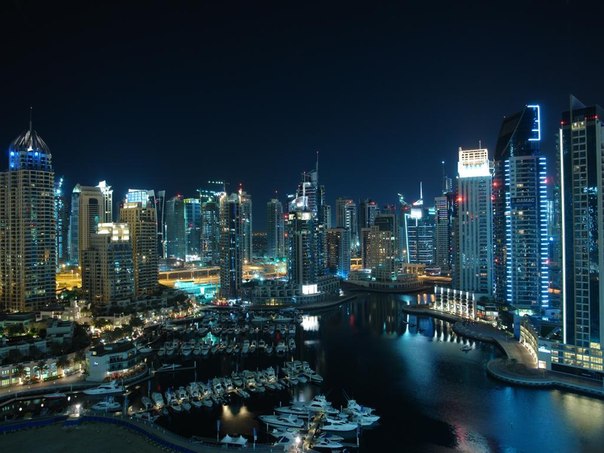
So, I’ve been giving it some thought lately (mostly because I’ve been feeling pretty homesick) and just for the sake of my conscience, I’ve been trying to concur an evaluation – weighing the pros and cons of both cities. However, when it boils down to it, Toronto and Dubai are two very different cities (externally, generally) but they do share many similarities. For example, there are probably as many Arabs here as there are in Dubai, the Lebanese food here is crap in comparison undoubtedly, but there’s something about the Saudi’s in their Canada Goose jackets that just reminds me of home. Toronto has incredible summer weather (ranging from 20 ℃ to 30 ℃) whilst ‘warm’ or ‘hot’ are understatements for Dubai’s summer weather (goes up to 50 ℃). But, everything is centrally air-conditioned and Dubai winter can be compared to Toronto’s early fall, and Toronto winter.. Well, that’s an entirely different story.
Toronto: 0       Dubai: 1
Nobody knows how taxes work in Dubai, because there aren’t any. When I first came to Toronto I had no clue how taxes worked (until much later I realized that 0.13% of how much you spend is added onto the ‘before tax’ equation leading to a ridiculous sum that you have to pay) and yes, tax return may exist but it’s still a hassle and somewhat of a buzzkill. In terms of taxes, Dubai evidently wins this one. In terms of lifestyle, a luxurious money-oriented lifestyle is obligatory in Dubai, at least for the majority of residents. If you don’t have money, you’re nobody. I don’t particularly appreciate that sort of mindset, I mean luxury is great – who doesn’t want a $500,000 car and a $2.8 million apartment that overlooks the Persian gulf? However, it’s not a necessity. I’m more fond of Toronto because of this, everyone is equal. Of course people have money here, but people respect you more for what you do, and for your abilities rather than how much money you have in the bank, or whether you wear a Patek Philippe or a swatch.
.luminato_light_pulse-front_harbourfront_relax_01W5ERwxuET08
Toronto: 1       Dubai: 1
Another characteristic that comes to mind when seeking differences between the two is people. You’re treated exceptionally differently in both cities, and you treat others differently too. Canadians are generally polite, well-mannered, decent people (minus the few assholes you come across) working in a restaurant for the last three months has shown me how respectful and appreciative people can be for your hard-work and efforts. However, in Dubai, nobody gives a shit to be completely honest with you. Tips are considered optional, as are ‘thank yous’. People who work in the hospitality or service industry are considered as the lower-working class and even expats who come from places like the US and the UK eventually succumb to treating those in the service industry in a demeaning manner, you adapt to the different norms wherever you are. Due to these differences, people believe they can treat those ‘lesser’ than them like shit, with absolutely no remorse and no regard – however in Canada, it’s completely different. I adapted to the snobbish, pretentious-like qualities that people possess back in the Middle East, but it definitely made me unattractive – and I still get along better with people from back home.
Toronto: 2       Dubai: 2
imgresDubai_Metro_01
I’ve always believed Dubai to lack anything authentic culture, it’s ‘cool’ to try and adapt to the ‘lochal‘ life-style whereas in Toronto cultures are divided and each area has it’s own unique feel due to the accumulation of one ethnicity (e.g. Little Portugal is literally, little Portugal). Toronto is known as one of the most ethnically diverse cities in the world, and Dubai brims with Indians, Pakistanis, Persians, Filipinos, Bangladeshis, Arabs of all sorts and then you have the splatters of expats here and there – but as I said, if you’re not Emirati you’re not an equal. Also not to mention Dubai’s double standards regarding religious norms – No public displays of affection but a blind-eye is turned to it’s nightlife. Four years in prison if you’re caught with marijuana, but we all know who can bend those rules. I don’t even want to get started on the idiocy of Shariah Law – I do find it disturbing, this is my own opinion. Dubai may be ‘the land of opportunity’ but you, yes you without an Emirati passport, you don’t matter one bit. Toronto provides you with the greatest opportunity – freedom. You can be whoever you want to be, with no judgement or chains to prevent you from doing so (especially no dickhead ‘shoortas’ in their lambos). Let’s not forget Toronto’s endless things-to-do on a daily basis – concerts, shows, TIFF, Nuit Blanche, Luminato etcetera.
Toronto: 3       Dubai: 2
Yes, shopping is way better in Dubai. Shopping in Toronto sucks, unless you’re a hipster or into the vintage thing.
Toronto: 3       Dubai: 3
So, we’re at a tie and I’ve run out of generic, generalized points to consider for evaluation. Now when it really comes down to it, I live in Toronto completely alone. I am alone and I have no form of comfort whatsoever. In Dubai, I have a home. I have a sense of security, I can feel and be a child – I don’t have a worry in the world. Yet here, being in the ‘real world’ I’m constantly on my feet, I worry easily, I am completely and utterly independent. Sure, it’s a great feeling to be able to fend for myself – but at the end of the day, I wouldn’t mind being able to order some Zaatar w Zeit, watch a film at Mercato and grab a ‘little mermaid’ crepe and cruise around.
I can’t wait until December. ✈
Winner: Dubai
2007_12_16TheDubaiBrothers1
Zahraxo

https://zarahaider.com/2013/10/01/dubai-vs-toronto/