Thursday, January 20, 2011

Plea to increase welfare budget, scholarships for Muslims in 12th Plan - By Pervez Bari, ummid.com

http://www.ummid.com/news/2011/January/20.01.2011/plea_to_increase_muslim_funds.htm


Thursday January 20, 2011 04:05:16 PM,

By Pervez Bari, ummid.com

Maulana Mohammad Fazlurrahim Mujaddidi making presentation in the Planning Commission. Ms Syeda Hameed, member Planning Commission January 14.
Related Article
The disparity in the allocation of funds for Muslims in the next Five Year Plan should go. The priority should be on   »
New Delhi: The pathetic plight of Indian Muslims and their woes were narrated, discussed and debated before the Planning Commission members by more than two dozen community leaders, grass root activists, academicians, intellectuals and journalists drawn from all over the country to impress upon them the need to analyze the present condition of the community and suggested multi-level measures to improve it.

The National Consultation was held under ”Aspirations and Expectations of the Muslim Community from the Twelfth Five Year Plan (2012-2017)” at Yojana Bhavan, the headquarters of the Planning Commission of India in New Delhi, on Friday last.
 
Led by the Planning Commission member Dr. (Ms) Syeda Saiyidain Hameed along with other members heard with rapt attention to the delegates who pin-pointed the shortcomings and lacunae in the government’s policies and schemes coupled with discrimination and biases towards the Muslims resulting in the socio-economic conditions of the community tumbling down and getting buried fathom deep. The other members of the Planning Commission who attended the consultation included: Mr. B. K. Chaturvedi, IAS (Rtd.); Mr. Saumitra Chaudhuri and Prof. Abhijit Sen. Other officials present on the occasion were Ms. Vandana Jena, Sr. Adviser (WC/VAC/HH) and Mr. A. Joshi, Director Finance Planning in Ministry of Minority Affairs. While giving specific suggestions the delegates highlighted Muslims’ feeling of insecurity, lack of education, inadequate health services & civic amenities, lack of women empowerment, non-grant of bank loans & financial assistance, lack of scientific temper, profiling, monitoring of government schemes etc. Jamea-tul-Hidaya, Jaipur, and ANHAD, (Act Now for Harmony and Democracy), did all the spade work to hold the said consultation with the Planning Commission. Ms Shabnam Hashmi of ANHAD conducted the proceedings with aplomb.

In the end responding to the day-long deliberations Ms Syeda Hameed said her endeavour would be, along with other members of the Planning Commission, to see that the schemes formulated to uplift Muslim community from the morass of illiteracy and poverty get the maximum thrust. She said that the Planning Commission would try to ensure that the schemes are designed in a such manner that they are not derailed by the government of any “colour” that may come to power at the Centre later on.

Dr. (Ms) Syeda said that there was a wide spectrum of issues touched during the day which shall be encapsulated into action with schemes that are efficacious and serve the Muslim community. She moaned that Muslims at present feel alienated, besieged and marginalized. First the Approach Paper of the 12th Plan would be prepared which would reflect whatever has been discussed throughout the day, she added.

Dr. M. Hamidullah Bhat, Director, NCPUL, (National Council for Promotion of Urdu Language), under the Ministry of Human Resource Development, said that the Approach Paper to be prepared by the Planning Commission should have: (i) Non-clubbing of Muslims data with other Minorities. It should say openly Muslim aggregated data; (ii) Not say Minority but Muslim Concentrated District and (iii) the funding of schemes should be 100 per cent by the Central Govt. – Not 2/3rd by the Centre and 1/3rd by the states.

Dr. Bhat wanted that every Muslim artisan should be transformed into an entrepreneur so as to stand on his feet economically. He expressed grave concern over the shrinking base of Urdu language which is a colossal cultural loss. He wanted the state governments to be told to remain committed to three-language formula in school education. Maulana Mohammed Fazlurrahim Mujaddidi, Rector of Jamea-tul-Hidaya, who was the main spirit behind the said consultation along with Ms Shabnam Hashmi, initiated the discussion with his Power Point presentation on the plight of Muslims vis-à-vis SC/ST and the Central Government’s dispensation towards it. He said the issues involved are: Backwardness of Muslims is area based; No infrastructural development in Ghettos; when Muslim Concentration increases, their performance decreases and Educational Backwardness the 2nd top most issue.

Maulana Mujaddidi, who is also a member of the Consultative Group for Empowerment of Minorities, Planning Commission of India, said after the sense of insecurity the community is frustrated and does not know when, how and whom to approach for redressal of their long unending grievances. The Government knows nothing about the community issues, requirements, priorities and temperament etc. The welfare schemes are creating further confusion and frustration in the community. The examples are Scholarship Scheme and MCDDP (Minority Concentrated District Development Plan).

The Maulana lamented that the 11th Five Year Plan has been a mixed reaction of expectations & set-backs. There were two flagship Welfare Schemes that were introduced in the 11th Plan viz. Scholarship and MCD (Minority Concentrated District Development Plan).

He said the requirement of Pre-Matric and Post-Matric Scholarships were: MMA (Ministry of Minority Affairs) target (2010-11) Total = 17,50,200 of which Pre-Matric = 14,58,500 and Post-Matric = 2,91,700. While estimated (2010) Muslim children under 6-14 years are 1.73 crores, which falls under the norms of MMA and 1.08 Crores falling under Poverty Line.

In the MCD (Minority Concentrated District) Development Plan the funds were utilized for district development of the selected districts (not to be focused on minorities). The major funds were utilized for IAY (Indira Awas Yojna), he pointed out.

With the help of graphs Maulana Mujaddidi, who is associated with a host of organizations in various capacity, exhibited the disparity in community development between Scheduled Castes/Scheduled Tribes and Muslims. The allocation of budget to the communities’ development and subsequent increase in the years 2009 and 2010 are shown in the graphs as under :-
 

Seeing the graph it can be grasped easily that even the increase in the budget allocations of SCs & STs is much more than that of the actual budget of the Minorities, he asserted.

As regards the expectations from the 12th Plan, the Maulana made a passionate plea to Increase the Welfare Budget at least 10 times. In the 11th Plan it was Rs. 7,000 crores which should now be enhanced to at least Rs. 70,000 crores. He pleaded to give top most priority to education with 75 per cent of total allocated budget. All Scholarship Scheme norms should be at par with SCs/STs Scholarship norms, he demanded. The Minority Ministry should concentrate on schemes related to minorities only, he urged.

He further demanded that in the next Plan the domain of New 15-point programme be increased with inclusion of urban welfare schemes also. He urged to ensure Minority Community participation in PPP projects; take-up MCT, (Minorities Concentrated Towns), in the 12th Plan; Cut-off population percentage should be reduced to 15 per cent from the present 25 per cent; to build two residential Schools in each MCT along with Hostel and involve the Muslim community at every level.

Meanwhile, the Maulana at the conclusion of the consultation while thanking the Planning Commission members for giving a patient hearing to the Muslims’ problems and their solutions broke down and in a choking voice said: ” I have not been able to sleep for three nights pondering over the community’s state to which it has been reduced in the last six decades after Independence”. The emotional words of the Maulana made tears well up in the eyes of many who were present on the occasion.
Continuing further the Maulana said: ” I humbly request you all to formulate welfare schemes with guidelines in such a manner that forces hostile to Muslims are not able to subvert these in any way in times to come”.

Noted social activist Dr. Asghar Ali Engineer, who is chairman, Centre for Study of Society and Secularism, Mumbai, moaned that Equal Opportunity Commission which was envisaged in the Sachchar Committee Report has not seen the light of the day yet as no discussion on it has been held. He demanded constitution of the Commission soon as it will benefit Muslims and other marginalized communities too. He said that mostly Muslims are self-employed and are artisans in different trades. These artisans should be helped financially and provided trainings in newly opened ITIs and polytechnics to hone their skills. He emphasized that three reports viz. Gopal Singh, Justice Sachchar Committee and that of Justice Ranganath Mishra should been seen together in totality to frame policies and schemes for the betterment of the Muslim community.

Another noted social activist Prof. Ram Puniyani, an outspoken intellectual against communalism, said that delivery system is not very sensitive due to some deep-rooted misconception about Muslims with the result that the community is isolated and insulated from the mainstream. He wanted that the official machinery should be sensitized so that the underline current of biases which continue against Muslims do not come up at crunch time.

Mr. Gagan Sethi, a Human Rights activist, said the mind set of Muslims should be changed from the Minority community to the second largest Majority community. At the ethos level the Planning Commission should work for this. With reference to 2002 carnage, he pointed out that Gujarat is happening in every state, though it may not be violent at that scale but arm-twisting is going on away from the glare of media, government and others. If the Planning Commission does not intervene and save the situation then Muslims would be doomed, Mr. Sethi bemoaned.

Mr. Zaheeruddin Ali Khan, a social activist and Managing Editor of “Siasat” newspaper which is published simultaneously from Hyderabad and Bangalore, made a Power Point presentation highlighting the power of media in bring about a social change in Muslims in Hyderabad and its surroundings. He said “Siasat” was launched on 15th August 1949 – the third Independence Day with the primary objective of promoting nationalist spirit among the people and lessening the social, communal and political tensions, so as to rebuild a healthy atmosphere enabling the people of Hyderabad to join the national mainstream and strive for national development.

Quoting a proverb “Give a man a fish and you feed him for a day. Teach a man to fish and you feed him for a lifetime”, he said: “ We did more than 30 different projects for the community development in a span of 13 years because we believe it’s our duty to give back something to the community, society & the nation. He said the simple process involved were :Identifying the needs; Creating awareness through our newspaper; Pooling of resources; Personal involvement; Making all arrangements; Voluntary participation and Feedback.

Mr. Zaheer said: “The difference we experienced for better life style was communal harmony, high earnings, more exposure, higher qualification, women empowerment, self-sufficiency, financially sound, positive mindset, better employment and last but not the least increase in confidence level. He questioned what does it all mean? This means Media is the biggest social change agent while yet a lot of change is needed; making Media mightier than money!

Mr. Azam Khan, another social activist from Hyderabad, made a fervent appeal that there should be no cap on the number of scholarships granted to minorities, especially Muslims by the Central Government. He said the Minority Scholarship Scheme will only be effective and result oriented, when its norms are at par with the scholarships for students belonging to Scheduled Castes and Scheduled Tribes, which are Centrally-sponsored and available throughout the year.

Meanwhile, at the outset Ms Shabnam Hashmi, while welcoming the delegates, she stressed the need to think much deeper and engage deeper with Muslims so that they do not feel besieged and second class citizens. The need of the hour is to reach out to the Muslim community so that they do not feel alienated and thereby they change their mind set to contribute their mite in the development of the country.

Ms Hashmi also emphasized that the government and other agencies dealing with Muslim affairs should not interact only with the conservative elements in the Muslim community, as has been the practice so far, but try to know the point of view of other sections of the community too as the community is not monolithic.

Ms Farah Naqvi, a social activist and National Advisory Council, (NAC), member, strongly pleaded for an anti-discriminatory legislation to help out not only Muslims but Dalits, OBCs and other marginalized people who are victims of discrimination and bias of the bureaucracy sitting in the government of the day apart from untouchability by certain political outfits. She was of the view that just constituting the Equal Opportunity Commission is not going to solve the problems of all the deprived people who stand on the same side.

Ms Naqvi said there is a yawning gap between the government and the Muslims due to hostile and biased system in the last 60 years of utter neglect. In the last four years, when Sachchar Committee Report came in 2006 and the same year the Union Ministry of Minority Affairs was formed, an effort is being made to undo the neglect and harm perpetrated on Muslims. This cannot be achieved in the traditional manner but there is an immediate need to move in “Fast Forward” mode and bridge the gap by officially having Muslims in the monitoring bodies for government welfare schemes.

Mr. S. M. Hilal, a social activist, questioned as to why Census 2001 report, the best available authentic data, was ignored and why then Baseline survey, which is just a sample survey, was conducted to implement the recommendations of the Sachchar Committee report. He suggested establishment of monitoring cell in every ministry. He opined that Information System is directly proportional to Monitoring System. If the data is correct and monitoring is proper then any deviation coming into play at the time of implementation of schemes is immediately checked and the interests of the intended beneficiaries are not hurt, he remarked.

Mr. Hilal pleaded for creating National Data Bank to collect data on various aspects through surveys on education, health, access to government, access to justice, situation of girls and women etc. He charged that the minority concentrated area are deliberately neglected by the implementing agencies. He said right from planning to implementation bureaucrats are involved. He alleged the community’s view-points and suggestions of Sachchar Committee were not taken into consideration before chalking out the MCD guidelines. Due to absence of minority community in the mechanism from planning to implementation, the community is helpless. In fact a strong political will at the top level is required for effective development of the schemes for Muslims. Therefore, the district development parameters of MCDs will never improve unless Muslim Minority concentrated areas under MCD are targeted for development, he maintained.

Mr. Gauhar Raza, a Delhi-based noted scientist, leading Urdu poet, social activist and documentary film maker, emphatically talked about developing scientific temperament in Muslim students who have the aptitude to excel provided they are given a chance with financial support. He lamented that Muslims being repeatedly abused by the media and the government leads to a situation where scientific temperament cannot germinate in them.

He said that there is an intense desire among Muslim students for science education in order to come into the mainstream but scientific temper is pushed away at the national level. He moaned that at the cost of Muslims other communities like Jains, Sikhs, Buddhists and Christians are thriving. He cautioned that if not checked then unemployed Muslim youths would be the highest by 2020 which would lead to all types of problems and violence cannot be ruled out.

He suggested that there is an urgent need to stem the rot by just not providing financial help but special efforts made to inculcate scientific temperament in Muslim students and inspire them so that they are able to realize their dreams. In this government’s big institutions pursuing scientific studies can play a stellar role which would go a long way in nation building, he quipped.Ms. Tazaiyun Oomer, Member, Karnataka State Waqf Women’s Foundation, and Mrs. Ayesha Masood, Trustee of Isra Trust running Oasis International School, from Bangalore jointly made a Power Point presentation highlighting the woes of the Muslim community with many suggestions. They said low levels of education is impeding community development. However, there is a surge of interest in education within the community, especially in girls, by the women of the community.

The community needs more schools/ colleges to progress. There is lot of interest to build schools/ colleges also within the community for which two types of assistance is required: (i) Land is not available near minority concentration areas, and/ or is hugely expensive. So, the Government must support to provide land in minority concentrated areas at subsidized rates or grants to credible educational institutions trust to build schools and (ii) Moreover, a scheme supporting minority institutions providing policy level support, easy processes and specific concessions to cater to educational development needs of the community.

Another problem of the community, they pointed out, is the boarding & lodging of children from extremely poor families. Currently, many children from minority communities live in hostels, Madrasas & orphanages. The financial support from government is meagre and the process is very difficult. The Planning Commission, they said, can initiate a scheme whereby a fixed amount, say Rs. 650 per month can be paid as partial subsidy towards the boarding and lodging of children living in these institutions. The payment can be made directly to body managing lodging facility based on number of beneficiaries.

On Women Empowerment front Ms. Tazaiyun Oomer and Mrs. Ayesha Masood suggested that Microfinance helps reaching credit for household and micro industry. “To help the poor escape from money lenders, through our NGO, we are providing interest free micro-credit loans to help more than 250 self-employed women following “Grameen” model. The corpus has been raised through donations while no support from the government.
 
They emphasized that the Government can partner with credible NGOs to provide grants for capacity building of NGOs & Beneficiaries, provide interest free long-term loans to on-lend through micro-credit and the Government can start Women’s Minorities Federation of SHGs to help women mobilize, give training & be a channel of funds. They emphatically stressed to stop giving sewing machines to women and urged instead to distribute computers to them to make them self-reliant.

Ms Mantasha Bin Rashid from J & K, who is associated with ANHAD, explained through a Power Point presentation the current scenario in her state which is heart rending due to the ongoing conflict in the state. In the last two decades more than one lakh youth in the age group of 22-35 have been killed while the government accepts only 30-40,000 violent deaths have occurred. The conflict-related issues include rehabilitation of widows, half widows (whose husbands are missing) and orphans which are: a. Under NFBS (National Family Benefit Scheme) only a one-time grant of Rs. 10,000; b. Widow pension; c. There are no existing livelihood programmes for conflict victims, no programs for education of orphans and d. No monitoring programme.

Ms Mantasha said that due to an unending violence in the state there are high prevalence of mental ailments with just one un-upgraded government psychiatric hospital in the valley. There are no counseling centers in the state and there is high tendency of suicides (especially in females) and thousands of PSTD (Post-Traumatic Stress Disorder) cases.

She said that there is no local Self-Government and as such : a. No Panchayati Raj elections for more than a decade now; b. The 73rd and 74th amendment are not incorporated in the state PRI Act; c. The superseding of Panchayat Bill (2005); d. There are no elected representatives in the District Planning and Development Boards and e. There is acute shortage of funds for development works at district and village level.

They stressed that there is immediate need of funds along with evaluation and accountability as there are huge losses in corporations like a. Small Scale Industries; b. Industrial Development Corporation; c. Road transport; d. Handicraft; e. Agro-based industries and f. JK Minerals Corporation.

There is very high prevalence of unemployment in the state as there are: (i) No industries/Service sector; No Tourism promotion; (ii). No entrepreneurship plans and small unit set-ups and (iii) There is total lack of awareness about the government’s existing schemes and their high manipulation.

The duo said that in order to uplift Kashmiri Muslims, who are plagued by despondency due to ongoing conflict in the region, there is a tremendous need for: a. Awareness; b. Capacity building; c. Strengthening SWC and SHRC; d. Expedite implementation of RTI; e. Surveys, data collection for conflict-hit victims f. Mobile schools for nomadic ST’S; g. Camps for legal literacy, right entitlement and h. Accountability in the grants spend under special package and PM’s plan.

Dr. Manzoor Ahmad from Lucknow, while emphasizing to tag education with employment, suggested to build separate hostels for boys and girls on the lines of Ambedkar Hostels in every city of the country. He said that it is an open secret that Muslims are not given rooms and houses on rent in cities in the prevailing vitiated atmosphere or due to exorbitant rents poor Muslim students are unable to afford it. The hostels, which may be named as Maulana Azad Hostels, will help poor Muslim students, especially those coming from the rural areas to cities to study. The hostels may be managed by local NGOs, he added.

Mr. Ali Shareef & Mr. Mohammed Yousuf Kanni from Karnataka also presented a Power Point presentation putting their views and suggestions based on facts and figures. They pleaded for interest-free loans to the economically disadvantaged Muslims. They pointed out that the Planning Commission Report of the High Level Committee on Financial Sector Reforms headed by Mr. Raghuram Rajan which submitted in 2009 had recommended (page 72): – “measures be taken to permit the delivery of interest-free finance on a larger scale, including through the banking system”.

The duo said that the Sachchar Committee report had stated that self-employed categories constituted about 61 per cent of the total Muslim workforce (73 per cent among women only). However, access to funds for the self-employed is a huge challenge. The plethora of loan-grant schemes available to enable financial access to minorities, however, actual implementation is far from satisfactory. They suggested that to overcome this the National and State Minority Development Corporations need to be financially strengthened.

They also suggested to hold an annual competition at state/ central level wherein NGOs can be asked to submit proposals for minority development. After evaluation, the best initiatives can be chosen and partly funded by the government as a grant. The Maulana Azad Foundation can be made responsible for this, they added.

Dr. Mohammad Iqbal Siddiqui from Rajasthan suggested to develop system of accountability for the police force and administration, reforms in the working of police force, transparency in recruitment and immediate compensation to victims for loss in communal riots.

Mr. Navaid Hamid, General Secretary, Movement for Empowerment for Muslim Indians, (MOEMIN), and Member, National Integration Council based at Delhi, said if in three months time any state government fails to implement Central Government’s welfare schemes for minorities then NGOs should be given opportunity to fulfill the task. He said the development plans for areas of minorities concentration should be blocks and not districts. He wanted that 2000 primary schools be opened adjacent to Madarsas in Muslim dominated blocks and not districts.
 
While Mr. Anis Karim from Gujarat too suggested that if any state government does not implement Central Government’s welfare schemes for minorities then it should be penalized. As a punishment the state’s share from the revenues earned by the Central Government be cut from the Central taxes wherever applicable. This Bhopal-based journalist/writer who was also part of the discussions and sole representative from Madhya Pradesh said that there should be strict monitoring of the Government schemes with an element of reward and punishment for those responsible of implementing these.
 
As such those who implement the schemes in letter and spirit should be rewarded while others indulging in dereliction of duty must be taken to task and punished accordingly. It should be borne in mind that uplifting the Muslims will not only benefit the community but would be good for the country as it would gain to create a cadre of good citizens, he quipped.
The funds should be granted to Minorities-run institutions only wherein 50 per cent students of minorities are enrolled. This will ensure Muslim-managed minorities educational institutions to come at par with others educationally. The grants should, however, include funds for purchasing land lands also as Muslims being poor usually lag behind on this front and, thus, are unable to derive benefits from various Central Government schemes. The agencies of these Central Government schemes as a pre-requisite demand ownership of land from the Muslims who apply for financial grants, then only the grants are sanctioned for building construction purposes and other infra structure development. This provision of having land ownership should be waived, he demanded.
In the Central Government Scholarship schemes for Pre-Matric, Post-Matric and Merit-cum-Means for the Minorities the Application Forms should be simplified and reduced to 1-2 pages only; Domicile Certificate submission for students from Std. I to X be waived; submission of Minority Certificate also be waived etc.

The authorities in the Central Government’s National Rural Health Mission, (NRHM), should see to it that there is no bias against the Unani doctors, who are mostly Muslims, appointed under AYUSH scheme. It should be ensured that the Unani doctors are appointed at par with the Ayurvedic and Homeopathy doctors, he urged. Others who put forth their views during the consultation included: Ms Nasreen Chaudhry (West Bengal), Ms Naghma Khaleeque (New Delhi), Prof. Biju Mathews (USA), Mr. Zakir Hussain (Mewat), Mr. Irshad Mirza Baig (Gujarat), Ms Naish Hasan (Bharat Muslim Mahila Andolan) and Ms Mubeshirah Qayoom Mir (J & K).
 

Wednesday, January 19, 2011

New Deoband Chief's love for Modi fails to get Muslim approval - Ummid.com

It was a scoop by Indian Express that first came out with the Vastanavi story, that got Times of India's goat. It had to call up its mischief mongers to come out with divisive material to sully the peaceful atmosphere. A professional rivalry has blown up a storm in Muslim circles who are instantly and emotionally so disturbed by Modi name, that any soft corner from him, true or false has no place in their scheme of things. Times of India's mischief must be exposed. Maulana Vastanvi has just taken charge of a very old and tradition bound Muslim institution. He has yet to come to get to grips with the wider community and political impact of Darul Uloom's position in community and national, even international affairs.

It is common practice, even by novice journalists to goad interviewee into blurting out sensitive responses, without fully comprehending how far TOI's communication power can distort the real intent of any response, however casual, however cursory it may be. On the ground, in Gujarat, Muslim do have to deal with this oppressive communal regime, which can hardly be expected to go through a change of heart like that of Aseemanand and be human and humane enough to own its guilt, tender an apology to the Muslims of Gujarat as well as the entire world and offer generous rehabilitation package.

The RSS parcharak that Modi appears to be of different metal and more honed in RSS fundamental policy of hate of Muslims and Islam. It will again be a miracle from Almighty, if Modi too gets a heart change. We will look to Almighty rather to Modi, for any such change in his attitude over the entire matter of Gujarat communal riots.

Ghulam Muhammed, Mumbai
<ghulammuhammed3@gmail.com>
<http://ghulammuhammed.blogspot.com>


----------------------------------


Wednesday January 19, 2011 05:15:48 PM, ummid.com Staff Reporters
Related Article
In a shocking revelation the leading English daily Indian Express in its today's issue says that in Gujarat Muslims are assuming Hindu names just to get a job. The   »
Malegaon: Rubbish, uncalled for, misleading and far from reality is what Muslim scholars and elites have termed Maulana Ghulam Mohammad Vastanvi's statement praising Narendra Modi and the present situation in Gujarat.

Maulana Vastanvi's reported statement about Narendra Modi and the present situation for minorities in Gujarat appeared in the media today few days after he won the elections and became the Vice Chancellor of renowned Islamic Seminary Darul Deoband.
"Narendra Modi's hands are stained with the blood of hundreds of Muslims. Moreover, he never showed any remorse for his failure as Chief Minister during the Gujarat riots. Maulana Vastanvi's comments that appeared in today's newspaper are far from reality and lack credibility", Maulana Syed Mohammad Wali Rehmani said while speaking to ummid.com on phone from Patna.
Maulana Syed Mohammad Wali Rehmani, head of Khankahe Rehmania, Munger and Vice President of All India Majlise Mushawerat was reacting to the Maulana Vastanvi's statement praising Chief Minister of Gujarat Narendra Modi that appeared in a leading Indian English daily today morning.

In the statement that the daily termed as 'the most significant endorsement of Modi', Maulana Vastanvi has said all communities are prospering in Narendra Modi's Gujarat, and there is no discrimination against the minorities in the state as far as development is concerned.
 
Advising Maulana Vastanvi to clarify his stand, Maulana Rehmani said, "At the time when evidences after evidences are coming out to prove the involvement of Hindu right wing organizations in terrorism, one should think twice before opening the mouth".
Deoband alumnus and Director of Markazul Maarif, Mumbai Maulana Burhanuddin Qasmi while denouncing Maulana Vastanvi's statement said, "What Maulana Vastanvi has reportedly said about Narendra Modi and the present situation in Gujarat is absolutely rubbish and far from reality."
Stating that Maulana Vastanvi should have avoided giving such statement as the VC of Darul Uloom Deoband, he said, "He is from Gujarat and might be needing 'support from the government' to run his institutions in the state. He is free to do that in his personal capacity. But as the VC of Darul Uloom, his responsibilities are much more. He should refrain from issuing such absurd statements."
Gen Secretary of All India Milli Council, Mumbai Maulana Mehmood Daryabadi while expressing shock over the statement said, "Darul Uloom Deoband is an Islamic and religious seminary and it has never involved itself in politics. Maulana Vastanvi's statements are uncalled for and by issuing such statement, he has degraded his post."
Questioning the motive behind Maulana Vastanvi's statement National Integration Council NC) member Naved Hamid said, "Of late, every businessman and those who have 'resources' and 'money' are coming out in support of Narendra Modi. They are doing so perhaps to safeguard their interests."
"If Narendra Modi is providing equal opportunities to every one", he asked, "Why he is not interested in minority development schemes for minorities in Gujarat? Why instead of pushing the justice to those who suffered during the riots and killed in dubious encounters, his government is taking all efforts to bail out the culprits?"
Meanwhile, ummid.com's repeated attempts to contact Maulana Ghulam Vastanvi failed. However, he found a supporter in Editor of New Delhi based The Milli Gazette Dr. Zafarul Islam Khan.
"One may disagree with what Maulana Vastanvi said about Narendra Modi and Gujarat. But I think the situation has improved for the minorities in Gujarat and Maulana Vastanvi's observation is appropriate and good for the community in the present scenario", he said while speaking to ummid.com on phone from New Delhi.

Monday, January 17, 2011

Turmoil in Tunisia By Daniel Pipes - The Washington Times

Its good to be informed.

Ghulam Muhammed, Mumbai

-------------------------

Turmoil in Tunisia

by Daniel Pipes
The Washington Times
January 18, 2011


The sudden and as-yet-unexplained exit of Tunisia's strongman, Zine El Abidine Ben Ali, 74, after 23 years in power has potential implications for the Middle East and for Muslims worldwide. As an Egyptian commentator noted, "Every Arab leader is watching Tunisia in fear. Every Arab citizen is watching Tunisia in hope and solidarity." I watch with both sets of emotions.
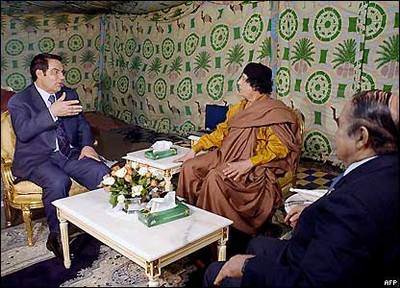
Tunisia's Zine El Abidine Ben Ali (left) with his two neighbors, Muammar Qaddafi of Libya (middle) and Abdelaziz Bouteflika of Algeria.
During the first era of independence, until about 1970, governments in Arabic-speaking countries were frequently overthrown as troops under the control of a discontented colonel streamed into the capital, seized the presidential quarters and the radio station, then announced a new regime. Syrians endured three coups d'état in 1949 alone.


Over time, regimes learned to protect themselves through overlapping intelligence services, reliance on family and tribal members, repression, and other mechanisms. Four decades of sclerotic, sterile stability followed. With only rare exceptions (Iraq in 2003, Gaza in 2007), did regimes get ousted; even more rarely (Sudan in 1985) did civilian dissent have a significant role.
Enter first Al-Jazeera, which focuses Arab-wide attention on topics of its choosing, and then the internet. Beyond its inexpensive, detailed, and timely information, the internet also provides unprecedented secrets (e.g., the recent WikiLeaks dump of U.S. diplomatic cables) even as it connects the likeminded via Facebook and Twitter. These new forces converged in Tunisia in December to create an intifada and quickly ousted an entrenched tyrant.
If one exalts in the power of the disenfranchised to overthrow their dull, cruel, and greedy master, one also looks ahead with trepidation to the Islamist implications of this upheaval.
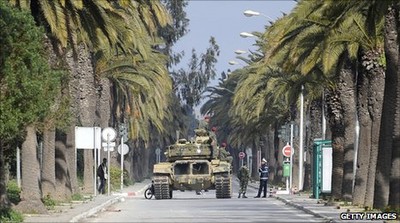
Tanks and soldiers dot the streets of Tunisia.
The first worry concerns Tunisia itself. For all his faults, Mr. Ben Ali stood stalwart as a foe of Islamism, battling not only the terrorists but also (somewhat as in pre-2002 Turkey) the soft jihadists in school rooms and in television studios. A former interior minister, however, he underestimated Islamists, seeing them more as criminals than as committed ideologues. His not allowing alternate Islamic outlooks to develop could now prove a great mistake.

Tunisian Islamists had a minimal role in overthrowing Mr. Ben Ali but they will surely scramble to exploit the opportunity that has opened to them. Indeed, the leader of Tunisia's main Islamist organization, Ennahda, has announced his first return to the country since 1989. Does Interim President Fouad Mebazaa, 77, have the savvy or political credibility to maintain power? Will the military keep the old guard in power? Do moderate forces have the cohesion and vision to deflect an Islamist surge?
The second worry concerns nearby Europe, already deeply incompetent at dealing with its Islamist challenge. Were Ennahda to take power and then expand networks, provide funds, and perhaps smuggle arms to allies in nearby Europe, it could greatly exacerbate existing problems there.
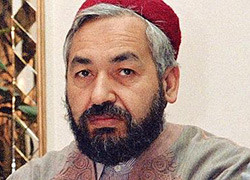
Rached Ghannouchi, head of Ennahda, Tunisia's main Islamist organization.
The third and greatest worry concerns the possible domino effect on other Arabic-speaking countries. This fast, seemingly easy, and relatively bloodless coup d'état could inspire globally Islamists to sweep away their own tyrants. All four North African littoral states – Morocco, Algeria, Libya, and Egypt – fit this description, as do Syria, Jordan and Yemen to the east. That Mr. Ben Ali took refuge in Saudi Arabia implicates that country too. Pakistan could also fit the template. In contrast to the Iranian revolution of 1978-79, which required a charismatic leader, millions on the street, and a full year's worth of effort, events in Tunisia unfolded quickly and in a more generic, reproducible way.


What Franklin D. Roosevelt allegedly said of a Latin America dictator, "He's a bastard but he's our bastard," applies to Mr. Ben Ali and many other Arab strongmen, leaving U.S. government policy in seeming disarray. Barack Obama's ambiguous after-the-fact declaration that he "applaud[s] the courage and dignity of the Tunisian people" can conveniently be read either as a warning to assorted other "bastards" or as a better-late-than-never recognition of awkward facts on the ground.
As Washington sorts out options, I urge the administration to adopt two policies. First, renew the push for democratization initiated by George W. Bush in 2003, but this time with due caution, intelligence, and modesty, recognizing that his flawed implementation inadvertently facilitated the Islamists to acquire more power. Second, focus on Islamism as the civilized world's greatest enemy and stand with our allies, including those in Tunisia, to fight this blight.
Mr. Pipes, director of the Middle East Forum and Taube distinguished visiting fellow at the Hoover Institution of Stanford University, lived in Tunisia in 1970.

With an MBA cleric as its new head, Deoband marks a generational shift - By Seema Chisti - The Indian Express

America's world-wide propaganda campaign against Madrasas was nowhere in sight when a fresh Darul Uloom Deoband graduate started his classes under a tin-roof ramshackle madarsa in a remote village unconnected by even any paved road to the civilized world on the borders of Maharashtra and Gujarat. Thirty years down the line, that Madarsa has sprouted into a full fledged campus with colleges in all streams of arts, science and technology, medicine, pharmacy, management et al., for Muslim boys and girls in residential splendor of a modern educational city, all managed through private donations of Muslims.
The sole contribution of the state was to leave the campus alone to its devices and let it flourish in full bloom of community's modern aspirations. That state contribution was not negligible and its should be acknowledged.
Maulana Ghulam Mohammed Wastanvi was an early convert to the need of the community to match Islamics with modern secular education. His joining the prestigious Darul Uloom at Deoband with its powerful hold on the lives of Indian Muslims, will be a most welcome development that is sure to impact the community, probably more than that glorious contribution of Sir Syed Ahmed Khan of Aligarh Muslim University. This time Islam will be step by step with basics of modernity, without its baggage of blemishes, inshallah.
Ghulam Muhammed, Mumbai
<ghulammuhammed3@gmail.com>
<http://www.ghulammuhammed.blogspot.com/>


http://www.indianexpress.com/news/with-an-mba-cleric-as-its-new-head-deoband-marks-a-generational-shift/738078/0

Tue, 18 Jan 2011

With an MBA cleric as its new head, Deoband marks a generational shift


Seema Chishti

Tags : Maulana Ghulam Mohammed Wastanavi, Mohtamim, Dar-ul-Uloom, Facebook, Islamic world most well-respected seminaries


Posted: Sun Jan 16 2011, 04:46 hrs


New Delhi:
The new Mohtamim or head of the Dar-ul-Uloom, who took over on January 10, has a Facebook page devoted to him by his fans.


That, among other things, is what Maulana Ghulam Mohammed Wastanavi brings to one of the Islamic world’s most well-respected seminaries. A lesser-known scholar outside the Muslim world, Wastanavi is a well-networked Maulana who holds an MBA degree along with degrees in Islamic law.

In his early 60s, the Mohtamim from Gujarat, younger by more than 20 years to his predecessor, has constantly striven to provide technical education and to weave professional courses and degrees related to pharmaceutical, engineering and management with theology.

Wastanavi won the election to the post — occupied by the previous Maulana, Marghoob ur Rehman, for 30 years till his recent death — taking eight votes. The top body of rectors and scholars that picks the Mohtamim (called the shoora) gave Maulana Arshad Madani (a senior cleric currently involved in a battle for control for the Jamiat Ulema e Hind with his nephew, Maulana Mahmuid Madani, MP) four votes while the Deputy Vice-Chancellor of the Deoband, Maulana Abdul Khaliq Madrasi, got two.


Wastanavi’s election represents a generational shift in many ways at the seminary based in Deoband, in UP.

Having obtained his Aalim and Faazil degrees (in Islamic law) from Surat, and MBA from Maharashtra, Wastanavi has been an enthusiastic campaigner of progressive and professional careers for young Muslims coming to madrasas. His admirers, ‘The fans of Maulana Ghulam Mohammed Wastanavi’, have a page on Facebook.

Best known for his extensive network of madrasas in western India, and a member of the Maharashtra Waqf Board and the All India Muslim Personal Law Board, the Maulana has received at least two awards (including the Maulana Abul Kalam Azad Award) from the Maharashtra government for his work.

He edits several periodicals (in Urdu, Arabic and Gujarati) and heads educational institutions and runs hospitals in Akkalkua, Aurangabad, Nanded and Bhavnagar. 

There is of course a view that the post of Mohtamim — involving management of sentiments and factions within the Muslim Indian fold, as well as balancing political faultlines — has suffered because of the election of someone “not from the Deobandi tradition and not having studied there”.

An Islamic scholar, who did not want to be identified, said: “Wastanavi symbolises the Gujarat factor that is emerging as significant in the Muslim world, as scholars from there are prosperous and generous, having helped several Muslim institutions in times of need. Having built an extensive network of support and contacts, they find it easy to win support in the community.”

But other scholars like Dr Akhtar ul Wasey, the Director of Islamic Studies in Jamia Millia, New Delhi, welcomes the appointment of “a progressive and enlightened man, so concerned with professional empowerment”.

With the interest in Islam in the West since the 9/11 attacks, Deoband has emerged as a major world centre for Islamic learning, along with Al Azhar, Cairo. Its anti-terror fatwa in February 2008 was the first in the Islamic world.


Opinion Journal

The Coming Clash With China

Hu Jintao's visit to Washington may be intended to patch up relations, but it is more likely to prove a turning point as tensions rise.

By AARON FRIEDBERG

When he meets with U.S. President Barack Obama this week, China's paramount leader Hu Jintao will not be carrying a symbolic "reset button" of the sort that Secretary of State Clinton presented to her Russian counterpart back in 2009. But he will probably be looking for ways to soothe concerns over his country's recent behavior and its possible implications for the future course of U.S.-China relations.

The last two years have seen a marked upturn in tensions between the two Pacific powers, as well as between China and many of its Asian neighbors. As viewed from Washington, but also from Seoul, Tokyo, Hanoi, Canberra, and New Delhi, this trend is a direct result of increasingly assertive Chinese words and deeds across a wide range of fronts. In the past 12 months alone Beijing has:

•Shielded North Korea from tough international sanctions, despite Pyongyang's unprovoked sinking of a South Korean naval vessel and subsequent deadly shelling of a small island;

•Escalated what might otherwise have been a minor incident at sea into a major confrontation with Japan.

•Used its near monopoly in the production of certain rare earth minerals critical to high-tech manufacturing as an instrument to exert diplomatic leverage.

•Intensified its long-standing claim to virtually all of the resource-rich South China Sea by suggesting that the region was a "core national interest," a term previously used to refer only to areas (like Tibet and Taiwan) over which China is willing to go to war.

•Declared publicly that, when it comes to resolving competing claims over this region "China is a big country and other countries are small countries, and that's just a fact."

•Threatened for the first time to impose sanctions on U.S. companies that participate in arms sales to Taiwan.

•Conducted unprecedentedly large and complex naval exercises in the waters of the Western Pacific outside the so-called "First Island Chain."

•Revealed the existence of a new stealth fighter aircraft.

•Begun initial deployments of a new anti-ship ballistic missile targeted on U.S. aircraft carriers operating in the Western Pacific.


Not surprisingly, all of this activity has stirred anxiety across Asia. It has begun to Not surprisingly, all of this activity has stirred anxiety across Asia. It has begun to
Not surprisingly, all of this activity has stirred anxiety across Asia. It has begun to provoke responses from the United States as well as other countries in the region. President Obama's recent swing through Asia included stops in the capitals of India, Indonesia, South Korea and Japan, but it pointedly excluded Beijing. American and Japanese defense officials have since announced their intention to devote more resources to counter China's rising power, the United States and South Korea have enhanced their military cooperation, and, despite a history of animosity, Seoul and Tokyo have taken steps in the same direction.

Beijing's behavior has thus triggered reactions that, if allowed to run their course, will make it harder to achieve its likely long-term goal of re-establishing China as the dominant power in East Asia. A well-timed campaign of "smile diplomacy" could help to slow down this balancing process, even if it cannot derail it altogether. That is likely what Mr. Hu and his handlers have in mind for their meetings in Washington this week.


But how meaningful and lasting will any of this be? The answer depends in large part on what lies behind China's recent assertiveness. Some Western analysts have sought to explain it away as an incidental by-product of political infighting in the run-up to the planned 2012 leadership succession or a passing outburst of belligerence by some elements of the People's Liberation Army. Cooler heads have now prevailed and are trying to put the country back on the smoother, less confrontational path it has followed for the past several decades.

Unfortunately, the problem is more deeply rooted than these reassuring assertions would seem to suggest. While they may disagree on questions of tactics and timing, there is no reason to believe that China's leaders differ over fundamental questions of strategy. Beijing may be willing to dial back its rhetoric but it is not going to abandon its goal of regional preponderance. That fact will lead inevitably to growing tensions with its neighbors, and with the United States.

Since the start of the 2008-09 financial crisis many Chinese strategists have reached the conclusion that the United States is declining, and their own country is rising much faster than had previously been expected. Belief that this is the case has fed an already powerful strain of forceful, sometimes belligerent nationalism that appears to be increasingly widespread, especially among the young.
In this view it is time for China to "stand up," to right some of the wrongs suffered when the country was relatively weak, and to reclaim its rightful role in Asia and the world. Such sentiments are not the exclusive preserve of the military, although it may seek to tap them, and at times to stir them, for its own ends. The rising generation of Chinese leaders cannot afford to ignore these views; indeed, to a considerable degree, it probably shares them.

If this assessment is correct, then the last two years are not a temporary deviation but a portent of things to come. Rather than signaling the start of a new interval of cooperation and stability, Hu Jintao's visit may actually mark the end of an era of relatively smooth relations between the United States and China.

Mr. Friedberg is a professor at Princeton University. His new book, "A Contest for Supremacy: China, America and the Struggle for Mastery in Asia" is forthcoming from W.W. Norton.

Press Release - Withdraw the Cases Registered against the Innocent Muslim Youth Muslims are Scapegoats for RSS Pracharaks - Civil Liberties Monitoring Committee. India,

Civil Liberties Monitoring Committee. India
 Amberpet, Hyderabad, A.P. India 500013
Contact No: 09391051586, Fax No: 040-27403392
                                                                                                                    17th Jan 2011
Press Release

Mr. Prime Minister We Demand Unconditional Apology from the Government of India

Withdraw the Cases Registered against the Innocent Muslim Youth

Muslims are Scapegoats for RSS Pracharaks

When the Government of Australia can Apologize the Indian Citizen Dr.Haneef then why can’t the Indian Government Apologize to its own Citizens?

The Idea of India is Shaken

Civil Liberties Monitoring Committee states that because of Swami Aseemanands confession, people and media are in wonder and excitement. Now they want to know about the suffering youth and their families. But, it is a matter of fact that our committee is not at all surprised by the statements of Aseemanand because we have been telling right from the beginning i.e. from 18th May 2007, when the blasts occurred at Makkah Masjid in the heart of Hyderabad, after conducting the fact-finding we exposed as to what really happened at Makkah Masjid, we clearly stated that “Hyderabad police is misguiding the whole investigation. The naming of the two Islamic organizations as responsible for the blast with out any acceptable clue reveal the mind of the investigating agency either to mislead the public or to divert their attention. By identifying the probable accused and the organizations with out any preliminary evidence show the attempts of the police to close all other areas of suspicion. The investigating agency can only come up with the names of the organizations which are responsible for the blast only after eliminating all other organizations which can be suspected in such nature of crimes”.

We believe that Swamy Aseemanand’s confessional statement is curtailed and it seems that there is something fishy about that statement. There is no mention of logistical local support at Hyderabad in his statement. In fact he is taking the advantage of innocent youth, to hide the real facts as well as real culprits who supported the Swamy in his tasks at Hyderabad. This is again a big conspiracy and this has to be understood by keeping in mind all the angles.

From the beginning we have been questioning and raising the following issues regularly:

Why the Hyderabad police have registered two FIRs of one incident? Why was one case handed over to CBI and another kept with themselves? Why the Hyderabad police floated the name of Shahed Bilal as the mastermind of the blast through the media? It is very strange that the blast was live telecasted at the time when blast occurred. Why there was no regular police check up on that particular Friday when the blast occurred? On every Friday, it is the routine of the police to stand in the last row of prayers, why were they not present there? Why did the police open fire on the people who were helping the victims of the blast? Why Hyderabad police did not investigate the role of RSS pracharaks in the incident? Why did Hyderabad police misguide the whole investigation? It seems that they wanted to shield the real culprits. Why the innocent Muslim youth were picked up, illegally detained, tortured and arrested? Why did the Hyderabad police propagate through media that they arrested a number of Muslim youth in connection of the blast? But in the court of law they produced the documents which stated that they were conspiring against the state and Asiatic powers by sitting in the Kalapather graveyard. Why were the innocent Muslim youth labeled with conspiracy cases? Is this not the conspiracy of the Hyderabad police to divert the case and target the whole Muslim community? Due to this criminal act of police several other blasts occurred across the country. Why did the Hyderabad police submit the secret report to the government in which they stated that due to the sectarian differences among Muslims, the incident of the blast took place in the Masjid? Is it not the conspiracy of the Hyderabad police against the whole Muslim community? If at all the Government is sincere, then why did they appoint government pleader to defend the accused police officers in City Civil Court against the suit filed to claim the damages for the victims?

The government of AP is cheating the whole Muslim community by saying that it is ready to apologize to Muslims if it was established that innocent youth of the community were deliberately harassed by the police in the aftermath of blast in Makkah Masjid in 2007. Here we want to say that the AP government has not apologized Muslims, but are pretending to do so and misguiding the people, even after knowing the established facts that the real culprits i.e. RSS Pracharaks are exposed for carrying out the blasts across the country.

A suit was filed in the City Civil Court to claim the damages for the victims of the police torture. We demand explanation from the government of AP as to why did the government appoint the pleader to defend the accused police officers involved in the illegal detention, torture, arrest and implicating false cases. If at all the government was sincere it would have done this shameful act of protecting the accused police officers.

By keeping in mind the above questions, one can say that the role of Hyderabad police is highly suspicious in the Makkah Masjid blast, after the blasts and in the investigation of the blast. By taking the advantage of the blast, the Hyderabad police picked up hundreds and Hundreds of youth, by violating all the rules and norms of law, illegally detained, tortured in inhuman manner and forced them to take the responsibility of the blasts and also offered lakhs of rupees and lured them. Hyderabad police tortured the youth by giving the reference as to why they were demanding the CBI enquiry into Sohrabuddin’s fake encounter and Makkah Masjid blast; here the doubts arises in the minds that whether there is any connection of the above two incidents because when the blast occurred, Sohrabuddin’s matter was on high scale and the role of Hyderabad police in it was being questioned. Many police officers were under suspicion. Even the CBI is not being cooperated by the Hyderabad police to conduct proper investigation till date. After the blast the whole concentration was diverted towards this incident and the Sohrabuddin’s matter was setback. Whenever the youth said during the torture to look at the other people i.e. RSS, they were beaten more severely asking not to mention about the name of RSS.

Now the RSS role is exposed in the Hyderabad blast and several other blasts such as Nanded, Jalna, Parbhani, Bhopal, Malegaon, Samjhauta Express, Ajmer, Modasa, Margoa (Goa), and Delhi. Atleast now the government of India should realize as to who the real terrorists and anti-nationals are. It is the high time of government of India to rebuild the confidence of Muslims on the secular and democratic fabric, because this community became the victim of Bomb terror, Mob terror, State terror and RSS terror. During resisting of these terrors this community lost everything. Due to these terrors it was the Muslim community which suffered in all ways i.e. they became the target of the blasts, they lost their lives in the blasts, they were blamed for these blasts and also arrested for these blasts and are still languishing in the jails across the country. Actually it is the greater conspiracy against the Muslims to defame, morally suppress and socially isolate them. Infact, it is the RSS conspiracy which is the worst form of human rights violation of Muslims to destroy the human dignity and to deny right to life.

Atleast, now the government of India should realize that the investigating agencies are biased. Because of them India is defamed at international level. Many innocent people lost their lives because of the police and investigative agencies. Therefore, it is the time to recorrect and apologize with Muslim community and assure them that these kinds of blunder mistakes and conspiracies will not be repeated against them in future. The assurance should not be merely mouth word but it should be practically implemented. It is the duty of the government of India to protect and implement the fundamental duties provided by the constitution of India.

One thing we want to ask the Prime Minister of India is, why the Indian government and their state governments are hesitating to mention apology for the wrong doing of the government and their agencies. Due to this Muslims are still suffering for the mistakes unknown to them and done by RSS. When the government of Australia can apologize to the Indian citizen Dr. Haneef for detaining him in false charges, they have even compensated him with the job and billions of dollars to protect their country’s democratic dignity in the world, then why cant the Indian government which is said to be the largest democratic country in the world, apologize and offer damage compensation to its own citizens, when it has been proved that they are innocents. It is the failure of the republic India to protect the idea of India. 

Therefore, we demand the following to the government of India:

  1. Apologize unconditionally to the whole Muslim community and particularly to the people who became the target of RSS and police terror.
  2. Written apology to the youth who were falsely implicated in terror and anti-national charges.
  3. Withdraw the cases registered against the innocent people; we demand specially the A.P. government to apologize the Muslim youth in written manner.
  4. Issue the G.Os for the withdrawal of false cases against the youth i.e. FIR No. 198/2007 of Ramgopalpet PS, 75/2007 of CCS, and 100/2007 of CCS and the cases registered since 2004.
  5. Withdraw the government pleader in City Civil Court against the suit filed for compensation, admit the mistake, pay compensation and punish the accused police officers.
  6. Investigate, expose and arrest the RSS pracharaks of Hyderabad involved in providing local logistical support to RSS pracharak Swamy Aseemanand involved in bomb blasts.
  7. Register the case against the Hyderabad police officers who falsely implicated the Muslim youth and tortured them inhumanly, and misguided the whole investigation.
  8. Compensate the victims of police torture by paying them rupees twenty lakh per head for the damages.
  9. Rehabilitate the victims of khaki terror.
  10. Re-investigate all the bomb blasts cases from the beginning through CBI.
  11. The role of Hyderabad police officers should be investigated by CBI because there is nexus between Hyderabad police and RSS pracharaks, and also with other states police.
  12. Bengali speaking Muslims were also targeted after the blasts in Hyderabad city, we demand the government of AP to stop suspecting the other state Muslims living in Hyderabad.
  13. We demand the government of India to end the torture and disappearances and close the torture cells. Dissolve the special investigation teams especially made to target the Muslims.
Lateef Md. Khan
Dr. Rafat Seema
Kaneez Fathima
S.Q.Masood
A.Srinivas
M.Mandakini, Adv.
Dr.Ibrahim Ali Junaid


Note: Today's Press conference was addressed by Lateef Md. Khan, he explained in detail all the things mentioned in the press note and demanded with the government of India to apologize unconditionally with the whole Muslim community, withdraw the cases registered against innocent muslim youth.

There were victims of Khaki terror and their families as well.
Victims of Khaki terror, Dr. Ibrahim Ali Junaid, Md. Rayees uddin and Abdul Raheem also spoke.

Dr. Ibrahim Ali Junaid said, ‘I have undergone severe torture during illegal detention, the policemen plucked the hair of my beard and abused me for reading Qura’an. I lost one year of my education. Even after acquittal from the court, I face lot of problems even today; police come every now and then and disturb me and my family. I lost 2-3 jobs because of this stigma. I demand from the government of India to apologize, punish and book case against the policemen who tortured us’.

Abdul Raheem said, ‘After implicating me in false cases, I am socially boycotted, what will happen if the government apologizes now and compensate, my dignity will not come back, I want the government to book case and punish the police officers who were involved in illegal detention and torture, send them to jail and treat them in the manner they treated us’
.
Md. Rayees uddin said, ‘I lost my job after this stigma, now I demand the Chief Minister of AP, Kiran Kumar Reddy, to apologize with us, till now he has not apologized, we also demand to provide us government jobs’.  


--
Lateef Md Khan
Many have sacrificed their lives for our Liberty
Let us renew our commitment to Freedom