Saturday, January 26, 2013

Verma Panel endorses Market-sponsored Feminism - Dr. Javed Jamil

---------- Forwarded message ----------

From: javed jamil <doctorforu123@yahoo.com>
Date: Fri, Jan 25, 2013 at 10:15 AM
Subject: Verma Panel endorses Market-sponsored Femini
 
Verma Panel endorses Market-sponsored Feminism
 
By Dr Javed Jamil*
 
This is what I have been saying all along. I had written in all my articles on Gang rape that the solutions will be found out in a way so as to safeguard the interests of the market forces. What Verma Panel has done is much more than that. They have not just safeguarded the interests of the market forces but have also chosen to promote the market-sponsored feminism. Within 29 days, the panel has brought to naught all the expectations that soared in the wake of public outcry against crimes. Like an obedient employee, it has ensured what his bosses of economic fundamentalism ordered: A solution that would not disturb the system created by the forces of economics. The solution we find has only a few extraordinary elements: that the judge in such cases should be a woman, and the definition of rape should be changed to include sexual assaults by husbands. The woman judge, in their considered view, would prove to be a better judge as if she would be able to go beyond what is prescribed in the law. There is hardly any mention of the failure of a judicial system as a whole in reducing crimes. The whole picture has been viewed merely from the point of view of a male-female tussle, as if rapes are committed merely because men view women as inferiors or objects of lust. 

There is no mention of the havoc caused by the commercialization of nudity and sex that present women as objects of lust. There is no mention of the provocative images. There is no need of death sentence because as the argument goes, this would increase the chances of the victim being murdered. Ironically, there is no suggestion of death even where rape is accompanied with murder. And they have also ruled out any change in the “juvenile” age. What a travesty of justice! The ability of a person is determined purely on the basis of the number of days he has lived instead of his biological and physical abilities at that particular time. If he is one hour short of 18 at that time, he deserves special treatment.

More than that, the Panel has taken advantage of the situation to support an old market demand of enlarging the definition of rape to include “rapes” by husbands. This would go a long way to further weaken an already weakened marriage system, the forces calculate. No one has the right to ask them the question: how can “rape” by husband be like a rape. A rape is horrendous because it forcibly creates a relationship, which is not legally or morally sanctioned. It is a sexual assault on a woman with whom sex is not permitted. It carries with it not only a psychological anguish but physical, social and moral issues. Forced sex by a husband is bad and can be adequately punished, but it does not carry along with it any of the serious problems that accompany rapes.
 
History has witnessed how feminism became the most discussed, the most debated and the most widespread movement of the nineteenth and twentieth centuries. The movement, fed by the big business, engendered a new socio-cultural milieu, which produced two distinct kinds of feminists: genuine and sham. The genuine feminists had real concern for the upheaval of the fair sex. But they could not properly comprehend the machinations of the market forces in their overwhelming support for their feminist struggle. Unfor­tunately, their thoughts were constructed or reconstructed on the basis of influences by the market-sponsored magazines, books and journals. This resulted in an error of judgement on their part and they often failed to recognise the real issues. Much greater in number were the sham or pseudo-feminists who earned huge wealth and fame for their pro-market views on men-women relationship. Little did they feel for uplifting women. Their aim, on the contrary, was to redefine their status that will make it easy for the economic fundamentalists to use them for their gargantuan appetite for money. They contrived to make women the wheels of the train of business.
           
            Feminists viewed history through lenses that would focus for them only what they desired to view. If they had done the earnestness of purpose, the consequences could not have been as horrendously damaging to mankind as they have been. They could then have closely watched the developments and could perhaps have forestalled the march of time from going in the wrong direction. They might then have saved womankind from becoming the most obedient slaves of man’s desires that it has lately become. They could still have campaigned for the promotion of women’s role in specific fields. Woman’s lib might then not have shrunk to form a mere tool of exploitation in the hands of foxy and covetous merchants. She might then have cruised ahead triumphantly, albeit with grace, and without annoying the tranquillity of family and society, to her desired goal in the world. Alas! This was not to be. The so-called feminism, in perspective, proved to be either of the two: sham and contrived, or ill informed and ill conceived. It did not deliver any real good, and in addition encumbered woman’s shoulders much beyond her physical and mental capacity.
 
            It is the impact of market-sponsored feminism that while women’s rights are championed, these very rights are used for the industrialisation of beauty and sex. The markets have turned human beings into commercial beings. If women are required in the market, family system needs to be weakened. The results are for all of us to see. Teenage sex is not only permitted but also promoted; marriage before a certain age is illegal. Promiscuity is permitted, polygamy prohibited. Abortions in general are good as they give women a liberty to move and mix but female infanticide is to be stopped, exploitation of women must remain a major issue but prostitution and pornography need to be legalised.
 
I wish Verma Panel had acted to counter the market sponsored feminism rather than promote it. They could have argued that the exploitation of women by market forces is much more dangerous than the exploitation by husbands and fathers. They could have said that prostitution and pornography have no place in a civilised society. They could have spoken a little about the importance of family system, which is a big wall in between healthy and unhealthy sex. They could also have spoken about the role of alcohol in all the crimes including crimes against women.  But they chose only to say what the market-sponsored system demanded. I wish the political parties and religious and social groups could have realised the dangers posed by various forces. We have missed an opportunity.
 

Dhule video unmasks rioters in uniform - By Zeeshan Shaikh - The Indian Express, Mumbai, India

http://www.indianexpress.com/news/dhule-video-unmasks-rioters-in-uniform/1065064/0


The Indian Express


Dhule video unmasks rioters in uniform

 ZEESHAN SHAIKH : Sat Jan 26 2013, 01:59 hrs


FP


Police in the northern Maharashtra town of Dhule destroyed private property and looted shops earlier this month after violence broke out following a tiff over payment of a hotel bill.

About a dozen video clips available with The Indian Express, each running into a few minutes, show the police breaking open a stall, pulling down a pandal meant for hawkers, smashing water drums and pounding two-wheelers parked along the street on January 6.
Reached for his comment, Director General of Police Sanjeev Dayal said the police had received the same video footage and had initiated action. "Police constable Sumit Namdeo Thakur and police constable Pramod Shivaji Ishi, both posted at Dhule city police station, have been placed under suspension from January 18," he said.

One two-minute clip shows a group of policemen breaking open a small stall in the Machhi Bazaar area. Accompanied by people in civilian clothes, some policemen are seen taking out goods from the stall. A policeman also stuffs his khaki trousers with some of the looted items.

The clip also shows policemen trying to pull down a pandal under which hawkers do business. They are, however, not successful in bringing it down.

In another clip, policemen are seen pounding motorcycles and bicycles parked outside houses in Machhi Bazaar. They are also seen overturning and destroying water drums that residents keep, given erratic water supply in the region.

"The police action was deliberate. They brazenly looted and tried to destroy shops. What is surprising is that a cameraman of a local channel was also part of the police mob which broke open the shop," alleged a shop-owner whose shop was destroyed.

The Indian Express could not verify if the policemen were accompanied by civilians or their own men in plain clothes.
Dayal said action would also be taken against those who are in charge of the police teams for failure to control the men. "In the case of the new clip (the stall being ransacked), criminal action will be applied," he said.

Ahmed Javed, additional DGP (law & order), has submitted a report to the government. The report includes the failings of the police and the remedial measures to be taken. The state has also ordered a judicial inquiry into the incident.

"We have requested people with any video clips of the rioting or the police action that can throw any light on the incident to come forward and share it with us," Javed said.

Violence broke out in Dhule on January 6 after a small tiff over a payment of a hotel bill. It turned into a major riot and six people, all of them Muslims, were killed when the police opened fire on the mob. The police claimed firing was necessary since their men were being selectively targeted.

But some local residents claim the police targeted and assaulted Muslim youth during the riot which lasted over five hours.

— With inputs from Sagnik Chowdhury

------
Related Google links:
  1. News for Dhule video

    1. Dhule riots: Video shows policemen looting shops, destroying private property
      IBNLive ‎- 49 minutes ago
      In what may validate complaints of police atrocity during the Dhule riots, CNN-IBN has accessed a video that shows policemen going on a ...
  2. Dhule video unmasks rioters in uniform - Indian Express

    www.indianexpress.com/news/dhule-video...in.../1065064/
    16 hours ago – Dhule video unmasks rioters in uniform - Police in the northern Maharashtra town of Dhule destroyed private property and looted shops earlier this ...

    Get more results from the past 24 hours

  3. Dhule: Latest News, Photos, Videos on Dhule - NDTV.COM

    Find Dhule Latest News, Videos & Pictures on Dhule and see latest updates, news, information from NDTV.COM. Explore more on Dhule.
  4. Dhule riots: Video shows policemen looting shops Maharashtra ...

    ibnlive.in.com/videos/.../dhule-riots-video-shows-policemen-l...
    2 hours ago – Dhule: In what may validate complaints of police atrocity during the Dhule riots, CNN-IBN has accessed a video that shows policemen going on ...

Thursday, January 24, 2013

Muslim outfit threatens to stall Vishwaroopam - TNN - The Times of India - Madurai - Tamil Nadu - India

My comment is live on timesofIndia.com - over its news story: Muslim outfit threatens to stall Vishwaroopam
---------- Forwarded message ----------
From: The Times of India <mailerservice@indiatimes.com>
Date: Thu, Jan 24, 2013 at 6:55 PM
Subject: Your comment is live on timesofIndia.com
To: ghulammuhammed3@gmail.com


 The Times Of India

Dear Reader,
Your comment on the article ''Muslim outfit threatens to stall Vishwaroopam'' is now displayed on timesofindia.com.

''After a spat of Bollywood films passed by Central Censor Board projected Muslims as the stereotyped terrorists in various block buster films has been ignored by Muslim community all over India and abroad, the worm turned in the southern state of Tamil Nadu, where Muslims by and large do not suffer from comparable communal discrimination that has become the hallmark of the rule of the two main political parties questionable electoral gimmickry. Since 'Law and Order' is strictly and constitutionally a state subject, regional and independent states have been trying to bring Muslims into the mainstream and had been reacting to their just demands with the sympathy they deserve. In the midst of the uproar over Kamal Haasan's film depicting Muslim with beard and skull cap as the archetypical terrorist, at a time, where at least in India, Hindutva terrorists have been openly exposed by Union Home Minister, citing facts, the film seems to have hit a raw nerve of abject denial by Muslim community, forcefully denying any such stereotyping and demanding a ban on such films that are subliminally dividing the nation, the stand by Congress spokesman recommending the State of Tamil Nadu to abide by the law, as the film has passed Central Censor, would appear to be a fall back of the Congress party to fish in communal waters. This brand of Congress communalism is now becoming outdated and must be condemned by all who wish to see India secular and peaceful.''


To reply to this comment , or see the whole conversation, click here.

Thanks for sharing your thoughts.

Regards,
 Team TOI


http://timesofindia.indiatimes.com/city/madurai/Muslim-outfit-threatens-to-stall-Vishwaroopam/articleshow/18159103.cms

Muslim outfit threatens to stall Vishwaroopam

TNN | Jan 24, 2013, 05.00 AM IST
MADURAI: Though Kamal Hasan's Vishwaroopam crossed many a blockades to be released on January 25, Muslim outfits here have decided to give a tough time for the theatres where the movie will be screened on Friday. They have decided to hold siege of all five theatres in the city.

Addressing media persons here on Wednesday, H Shahul, district president of Tamil Nadu Thouheed Jamaath (TNTJ) said the siege will not be a token protest for a single screening but they will hold siege of theatres for all the shows entire day. The decision was taken after the leaders of all Muslim outfits were screened a preview on January 21. "No other movie had degraded our community to such level so far," Shahul commented. "The movie projects Islam and Muslims as terrorists and they are fed extremism right from the womb," he mentioned.

They are also taking legal measures to stop the screening by approaching the court and the state headquarters is taking such measures. On their part, they have submitted a petition to the deputy commissioner (L & O), R Thirunavukkarasu in this regard. The siege will be their first method to express their agitation and they will continue protesting the movie.

"Ever since the movie Bombay, the Muslim community is targeted by the film industry, depicting us as terrorists. The repeated depictions are kindling the sentiments of our people. But we are sensitising them to stage the protest in a democratic manner," Shahul stated. However, the outfit expressed its helplessness over the movie being released through DTH. They have decided to seek the help of court to stop DTH screening too, sources claimed. Other Muslim outfits have also expressed support for the protest, they added.
-------------


Wednesday, January 23, 2013

'I don't believe Muslims are a problem and Islam a threat' - Writer William Dalrymple - Interview with Rediff.com's Syed Firdaus Ashraf

http://www.rediff.com/news/slide-show/slide-show-1-i-dont-believe-muslims-are-problem-and-islam-a-threat/20130116.htm?sc_cid=emailshare&invitekey=71afe9c800d8123eed93d9d5bd899b07

Rediff.com  »  News » Writer Willam Dalrymple: 'I don't believe Muslims are a problem and Islam a threat'

'I don't believe Muslims are a problem and Islam a threat'


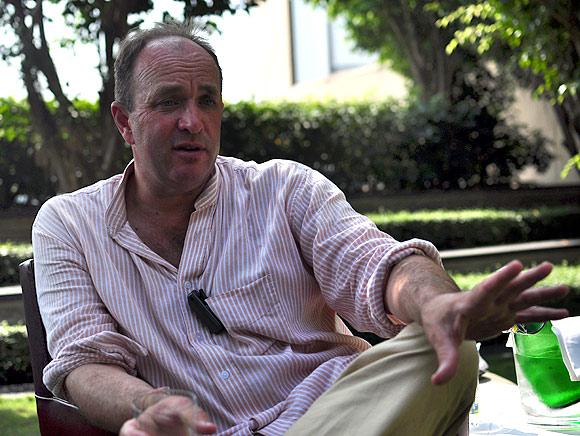
Writer Willam Dalrymple in Mumbai

Next
'When Sikhs were killed in the Afghan-Sikh war in 1837, the Afridis used to bury their heads like flowerpots in the ground,' writer and popular historian William Dalrymple tells Rediff.com's Syed Firdaus Ashraf.

"This obsession of linking Islam and violence is a false one," says writer and popular historian William Dalrymple, whose latest book Return of a King is a historical work based on the First Afghan War.

In the second part of an interesting conversation with Rediff.com's Syed Firdaus Ashraf, Dalrymple discusses how the defeat of the great imperial power in that war is central to what the Afghans think of themselves.

Dalrymple, who has written two widely acclaimed books on the Mughals, counters the view that peace eludes the Islamic world and says that in the last 300 years there have been more instances of Muslim countries being invaded than them being invaders themselves.

"The British are partly responsible for stereotyping Islam. They have a lot to answer for and this book is a story of an unnecessary war waged against a nation which ended in horrible destruction," Dalrymple says in a thought-provoking conversation.

PART I: 'Pakistan is obsessed with the idea of about a billion Indians surrounding them'

Do you feel the Western world still fears Islam as a religion and think of the Crusades when they invade countries like Afghanistan?

Do you think they fear Islam could make a comeback as a potent force?

I think there is a huge ignorance about Islam in the West. 9/11 was a big shock to America as a nation. America is huge and like every huge nation is very self obsessed, China is and so is India.

India constantly looks within itself. If you see any Indian books they talk about them and not about American Presidents (laughs). So big countries are very obsessed with themselves.

America knew nothing of the Islamic world and suddenly 9/11 happened which they had to explain.

So there was a huge amount of fear, misrepresentation, expression of ignorance and we know that results in massive policy failures. As when George Bush tried to pretend that Saddam Hussain is part of Al Qaeda!It was nonsense!

What one has to do as a writer or intellectual is to try and present both the pictures and educate people. This is the point of being a writer and a historian.

Don't you think that Islam is an expansionist religion because historically they have expanded so well and so fast?
 
(Interrupts) I don't think, I don't agree. If you look at the history of great invasions, certainly, there is story of expansion of Islam in its early days, but the British declared war on every country in the world barring 17 (laughs) I think at some point in the last 500 years.

America has declared war on hundreds of countries in the last 100 years. Look at the Mongol Empire, that is not an Islamic empire and they too declared war on many countries.

Empires come and go. Powerful nations invade weaker nations. I don't think that is no more true in the Islamic world than anywhere else. I don't think Islam is inherently oppressive and inherently...(stops abruptly).

In fact, Islam has been invaded more than they have been invading.

Prev

Next
Islamic countries have been invaded more times rather than they going out and invading other countries?

Yes. In the last 300 years certainly.

In Return of a King, you mention that many kings right from Nadir Shah to Aurangzeb paid protection money to the Afghans. Do you think believe NATO paid protection money to the Taliban?

The reality is that Aurangzeb while fighting the Marathas felt it was pointless to (also) fight the Pathans of the frontier tribes. He paid them protection money to keep the roads open. The same is the case of Nadir Shah.

The British used to have this saying, 'Thrash the Sindhis, befriend the Baluch, but pay the Pathans' (laughs). I am not advocating that policy (laughs), but that was the 19th century policy of the British rule.

No one has successfully subjugated the Pathans for long.

So you think NATO must not have paid the Taliban?
 
There have been scandals where security companies have been paying the Taliban not to attack their convoys. It is certainly one way of dealing with the problem.

I firmly believe it is quite possible for Afghanistan to develop like other parts of the world. There could be road building, local governance, education, sanitation.

The tragedy is that the international community took their eyes (away) from Afghanistan when they went to invade Iraq.

All the money promised to redevelop Afghanistan was never used. The money had to go to Afghanistan only for security.

Even after ten years and spending billions of dollars in Afghanistan, there are no decent roads in Afghanistan.

No streetlights. No rubbish collection.

The Afghans look at that and wonder where has all the money gone because they don't see their cities changing.

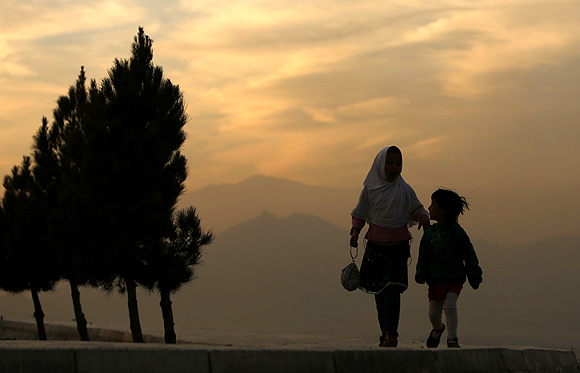
One thing you do see is the advancement in education. Every morning in the cities of Afghanistan you see school kids and young women in veils heading off to schools in big numbers.

Roads, administration, the illiterate civil service, all things that the West could have spent money on have been completely neglected.

Even the poorest and worst parts of Pakistan or the very worst administered part of Jharkhand or Bihar don't compare to the terrible neglect in basic infrastructure that you find in Afghanistan.

If only we had not spent huge money on armaments, drones and Humvees -- instead of that we had only spent money on education and infrastructure, we would have seen a very different outcome of Afghanistan.


Prev

Next

What will your next book be about?

This is my third big narrative history. I have done three books, set in the late 18th and early 19th century. White Mughals, The Last Mughal and now Return of a King -- three snapshots of 19th century history.

This book is as good as I can do in this form. I am very much at peace with this book. The natural arc of the story is so extraordinary.

I stumbled upon a very good subject and was lucky to find these sources in Afghanistan.

I would love to do something big like cultural history or artistic history. There is a wonderful book from Russia called Natasha's Dance by Orlando Figes, who has told the whole cultural history of Russia using this wonderful method.

I am thinking of something big on these lines. It is very early days and I have not found my map yet through this landscape. That is the landscape I want to travel through my artistry.

I am a trained art historian. My last project was on Mughal paintings in New York.

Is it true that one of your great-great-great-granduncles, Captain Colin Mackenzie, fought in the First Afghan War?

He is one of them. I had read his book, but I had no idea at that time he was my great-great-great-granduncle. He was married to my aunt and was not my blood relation.

The story is full of unbelievable idiots (laughs) and also lot of pleasant people. Norton (General William Not) is sort of a jealous, pigheaded, bureaucrat. Burnes is always going with his own ambitions.

Leading British General Elphinstone (the commander-in- chief, Major General William Elphinstone, cousin of Mountstuart Elphinstone) is a complete idiot.

One or two guys come out with any saving grace. George Rawlinson is one of them and the second one is my uncle and I am very proud of that.

In your book you mention that the Afghans are hawks and the Indians are like Carrion crows. Is that so?

These are not my words. These words are of Mirza Ata (an Afghan writer of that time). I cannot make such racist statements (laughs).

(Ata also said) Afghans have seen themselves as free mountain people and they looked down on Hindustanis who were conquered by the British and earlier by the Mughals.

You still find in some parts of Afghanistan a very aristocratic disdain for India. Mirza Ata has more disdain for the British. He also says somewhere that Indians don't have the sense how to present themselves and how to dress. God save me from their dal and their miserable chapatis (laughs).

'The defeat of the British is central to how Afghans think of themselves'

Prev

Next
How far did the concept of jihad and martyrdom matter to Afghan soldiers fighting Westerners then and now?

The rhetoric of the resistance is extremely jihadi and Islamic. When there are public announcements they are calling themselves soldiers of Islam declaring themselves to be fighting the kafirs.

When you look at the individuals involved it is more complex. (warrior-aristocrat) Abdullah Khan's girlfriend gets seduced by Burnes and he fights to retain his honour.

Amanullah Khan fights because his land has been confiscated. Mian Masjidi (had intially supported the British, but later turned against them) has offered to surrender to the British, but they attack his home and kill his family, so he fights against them.

Behind the rhetoric which is very much one of jihad, there is individual human motivation in all its complexity.

What do the Afghans think of the First Anglo Afghan war?

It is their freedom struggle. The main diplomatic quarter of Kabul is called Akbar Khan after the resistance leader. He is remembered because his faction won. He is in the Afghan psyche.

What Chankayapuri is to New Delhi; Akbar Khan is to Kabul.

Even in tiny little Afghan villages names like Burnes and Norton are remembered though they have been forgotten in Great Britain.

The defeat of this great imperial power by their tribesmen is absolutely central to how Afghans think of themselves.

When America was about to go into Afghanistan in 2001-2002, Mullah Omar asked the Afghans whether they want to be remembered as the sons of Shah Shuja or Dost Mohammad Khan?

He then did what Dost Mohammad did. He went to the Ahmed Shah Durrani mausoleum in Kandahar and got the shirt of the Prophet and declared himself Amir-ul-Momin (Leader of the Faithful).

You mention how the Afridi tribe tortured the British and how they badly mutilated the dead bodies. Is that true?

It is true. The Afghans amazed the British. There was a huge risk for them to go and rescue the bodies of their dead soldiers. They could not go back and retrieve the dead bodies of every fallen soldier. They desecrated their enemy's bodies.
The Sikhs too did the same thing. This is something of a regional tradition rather than Islamic tradition.

When Sikhs were killed in the Afghan-Sikh war in 1837, the Afridis used to bury their heads like flowerpots in the ground which has been largely forgotten.

Is that the reason why Nicholson turned against the Muslims and Islam and vented his anger in 1857 war?

Yes, this is what I like about how these three books end. In White Mughals, the main villain is Henry Russell who seduces Khair-u-nissa. Norton, who is the villain from the British side, is the protege of Henry Russell.

Then on the other side at the end of this book John Nicholson sees his brother being killed and his body desecrated -- he turns out to be the villain in The Last Mughal.

These three books are linked, it is like a trilogy.

'India is a uniquely successful post-colonial society'

Prev

More

Do you think the Muslim world and the West can live peacefully in the future?

Of course I do. You seem to be very troubled by the Islam side. Your questions keep coming back: 'Is Islam a threat? Are Muslims a problem?'
I don't believe Muslims are a problem and I don't think Islam is a threat.

There are leaders in the Islamic world (who) a lot of us admire -- not the heads of the ISI or the leaders of Lashkar-e-Jhangvi.

There are militant leaders in many parts of the world. I don't think there are more in the Islamic world than elsewhere.

We don't find peaceful places in the Islamic world.

I totally dispute that. There are many peaceful places in the Islamic world. Some wonderful countries, I have been quite happy traveling through the Islamic world.

The developing world as a whole has many problems. India is a uniquely successful post-colonial society which has been able to keep democracy and the rule of law in spite of corruption.

We all know about the many problems of Indian politicians and so on. Despite that, if you look at the wider developing world and post-colonial world, there is violence in many parts of world.

Look at Africa. It is far poorer and far more violent than the most of the Islamic world.
This obsession of linking Islam and violence is a false one. You find this in post colonial societies which are developing.

There are violent strands in Islam. There are organisations like Al Qaeda and Lashkar-e-Jhangvi. You have Muslim leaders who are militant, but there are many peaceful Muslim leaders and fabulous Muslim countries like modern Turkey.
Go to Istanbul, you will find it like Bombay, if not more so. You need to be balanced about it. There is Malaysia.

There are many wonderful places and I certainly bristle when people say Islam is about violence and strife.

You wrote in The Last Mughal how British stereotyped Muslims and Islam in history after the 1857 war.

The British are partly responsible for stereotyping Islam. In the 19th century the British used to try and present Islam as a violent religion which opposed the peaceful religion of Christianity.

If you were a colonised British subject you didn't see the other way because the British were the ones who had expanded the most.

I believe there are good things and bad things that British have brought to the world. I would not take the view that everything what they did was wrong.

But they have a lot to answer for and this book is entirely a story of an unnecessary war waged aggressively against a nation which ended in horrible destruction and waste.

It is a cautionary tale for imperial powers for the future.


492 more
Mail Delivery Subsystem


Show details

Tuesday, January 22, 2013

Al Qaeda in the Islamic Maghreb: Who’s Who? Who is Behind the Terrorists? - By Prof Michel Chossudovsky - globalresearch.ca

http://www.globalresearch.ca/al-qaeda-in-the-islamic-maghreb-whos-whos-who-is-behind-the-terrorists/5319754

Al Qaeda in the Islamic Maghreb: Who’s Who? Who is Behind the Terrorists?


Who is behind the terrorist group which attacked the BP -Statoil-Sonatrach In Amenas Gas Field Complex located on the Libyan border in South Eastern Algeria?  (see map below)

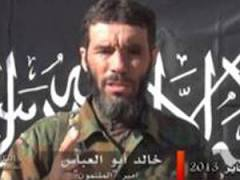
The operation was coordinated by Mokhtar Belmokhtar, leader of the Al Qaeda affiliated Islamist al-Mulathameen (Masked) Brigade, or “Those who Sign with Blood.” 

Belmokhtar’s  organization has been involved in the drug trade, smuggling as well kidnapping operations of foreigners in North Africa.  While his whereabouts are known, French intelligence has dubbed Belmokhtar “the uncatchable”.

Belmokhtar took responsibility on behalf of Al Qaeda for the kidnapping of 41 Western hostages including 7 Americans at the BP In Amenas Gas Field Complex.

Belmokhtar, however, was not directly involved in the actual attack. The field commander of the operation was Abdul Rahman al-Nigeri, a veteran jihadist fighter from Niger, who joined Algeria’s Group for Preaching and Combat (GSPC) in 2005. (Albawaba,  January 17, 2013)


The In Amenas kidnapping operation was carried out five days after the conduct of air strikes by France directed against Al Qaeda in the Islamic Maghreb (AQIM) militants in northern Mali.

French special forces and Malian troops regained control of Diabaly and Konna, two small towns North of Mopti.  The town of Diabaly had apparently been taken over a few days earlier by fighters led by one of the leading AQIM commanders Abdelhamid Abou Zeid.

While the terrorist attack and kidnapping directed against the In Amenas Gas plant was described as an act of revenge, it was not in any way improvised, Confirmed by analysts, the operation  had in all likelihood been planned well in advance:
“European and U.S. officials say the raid was almost certainly too elaborate to have been planned in so short a time, although the French campaign could have been one trigger for fighters to launch an assault they had already prepared.”
According to recent reports (January 20, 2012) there are some 80 casualties, including hostages and jihadist fighters. There were several hundred workers at the gas plant, most of whom were Algerian. “Of those rescued, only 107 out of 792 workers were foreign”, according to the Algerian Ministry of Interior. 

The British and French governments laid the blame on the jihadists. 

In the words of Britain’s Prime Minister David Cameron:
“Of course people will ask questions about the Algerian response to these events, but I would just say that the responsibility for these deaths lies squarely with the terrorists who launched this vicious and cowardly attack. (Reuters, January 20, 2013).
News reports confirm, however, that a large number of the deaths of both the hostages and the Islamic fighters was the result of the bombing raids led by Algerian forces.

Negotiations with the captors, which could have saved lives, had not been seriously contemplated by either the Algerian or Western governments. The militants had demanded an end to France’s attacks in northern Mali in return for the safety of the hostages. Al Qaeda leader Belmokhtar had stated:
“We are ready to negotiate with the West and the Algerian government provided they stop their bombing of Mali’s Muslims” (Reuters, January 20, 2013)
Within the ranks of the jihadists were mercenaries from a number of Muslim countries including Libya (yet to be confirmed) as well as fighters from Western countries.


Al Qaeda in the Islamic Maghreb (AQIM). Who’s Who? 

There are a number of affiliated groups which are actively involved in northern Mali:
  • Al-Qaeda Organization in the Islamic Maghreb (AQIM) led by Abdelmalek Droukdel, “the emir of al Qaeda in the Islamic Maghreb”,
  • Ansar Ed-Dine led by Iyad Ag Ghaly,
  • the Movement for Unity and Jihad in West Africa (MUJWA).

The Armed Islamic Group, or Groupe islamique armé (GIA) which was prominent in the 1990s is largely defunct. Its members have joined AQIM.

The National Movement for the Liberation of Azawad  (MNLA) is a Tuareg secular nationalist and independence movement.

Historical Background

In September 2006, the Salafist Group for Preaching and Combat (GSPC) joined forces with Al Qaeda. The GSPC was founded by Hassan Hattab a former GIA commander.

In January 2007,  the group officially changed its name to the Al-Qaeda Organization in the Islamic Maghreb (AQIM). Also in early 2007, the newly formed AQIM established a close relationship with the Libya Islamic Fighting Group (LIFG).

The commanders of the GSPC had been inspired by the religious teaching of Salafism in Saudi Arabia, which historically played an important role in the training of the Mujahideen in Afghanistan.

The history of AQIM jihadist commanders is of significance in addressing the broader issue:
  • Who is behind the various Al Qaeda affiliated factions?
  • Who is supporting the terrorists?
  • What political and economic interests are being served?
The Washington based Council on Foreign Relations (CFR) traces the origins of AQIM back to the Soviet-Afghan war:
Most of AQIM’s major leaders are believed to have trained in Afghanistan during the 1979-1989 war against the Soviets as part of a group of North African volunteers known as “Afghan Arabs” that returned to the region and radicalized Islamist movements in the years that followed. The group is divided into “katibas” or brigades, which are clustered into different and often independent cells.

The group’s top leader, or emir, since 2004 has been  Abdelmalek Droukdel, also known as Abou Mossab Abdelwadoud, a trained engineer and explosives expert who has fought in Afghanistan and has roots with the GIA in Algeria. It is under Droukdel’s leadership that AQIM declared France as its main target. One of the “most violent and radical” AQIM leaders is Abdelhamid Abou Zeid, according to counterterrorism experts. Abou Zied is linked to several kidnappings and executions of Europeans in the region. (Council on Foreign Relations, Al Qaeda in the Islamic Maghreb, cfr.org, undated)

What the CFR report fails to mention is that the Islamic jihad in Afghanistan was a CIA initiative, initially launched in 1979 during the Carter administration. It was actively supported by president Ronald Reagan throughout the 1980s.

In 1979 the largest covert operation in the history of the CIA was launched in Afghanistan.  Wahabi missionaries from Saudi Arabia set up the Coranic schools (madrassahs) in Pakistan and Afghanistan. The Islamic textbooks used in the madrassahs were printed and published in Nebraska. Covert funding was channeled to the Mujahideen with the support of the CIA:
“With the active encouragement of the CIA and Pakistan’s ISI, who wanted to turn the Afghan Jihad into a global war waged by all Muslim states against the Soviet Union, some 35,000 Muslim radicals from 40 Islamic countries joined Afghanistan’s fight between 1982 and 1992. Tens of thousands more came to study in Pakistani madrasahs. Eventually, more than 100,000 foreign Muslim radicals were directly influenced by the Afghan jihad.” (Ahmed Rashid, “The Taliban: Exporting Extremism”, Foreign Affairs, November-December 1999).
The Central Intelligence Agency (CIA), using Pakistan’s military Inter-Services Intelligence (ISI), played a key role in training the Mujahideen. In turn, the CIA-sponsored guerrilla training was integrated with the teachings of Islam:
In March 1985, President Reagan signed National Security Decision Directive 166,…[which] authorize[d] stepped-up covert military aid to the Mujahideen, and it made clear that the secret Afghan war had a new goal: to defeat Soviet troops in Afghanistan through covert action and encourage a Soviet withdrawal. The new covert U.S. assistance began with a dramatic increase in arms supplies — a steady rise to 65,000 tons annually by 1987… as well as a “ceaseless stream” of CIA and Pentagon specialists who traveled to the secret headquarters of Pakistan’s ISI on the main road near Rawalpindi, Pakistan. There the CIA specialists met with Pakistani intelligence officers to help plan operations for the Afghan rebels.” (Steve Coll, Washington Post, July 19, 1992)
Mokhtar Belmokhtar, mastermind behind the terrorist attack by the Islamist al-Mulathameen (Masked) Brigade on the In Amenas Gas complex is one of the founding members of AQIM.
 
He was trained and recruited by the CIA in Afghanistan. 
 
Belmokhtar  was a North African volunteers, an  “Afghan Arab” enlisted at age 19 as a Mujahideen to fight within the ranks of Al Qaeda in Afghanistan, at a time when the CIA and its Pakistani affiliate –the Inter Services Intelligence (ISI)– were actively supporting the jihadists in both recruitment and training.
 
Mokhtar Belmokhtar fought in the Afghan “civil war”.


He returned to Algeria in 1993 and joined the GSPC. 
 
Belmokhtar’s history and involvement in Afghanistan suggests that he was a US sponsored “intelligence asset”.

The Role of America’s Allies, Saudi Arabia and Qatar

Al-Qaeda in the Islamic Maghreb (AQIM) from the outset in 2007 had established a close relationship to the Libyan Islamic Fighting Group (LIFG), whose leaders had also been trained and recruited in Afghanistan bu the CIA. The LIFG is supported covertly by the CIA and Britain’s MI6.

The LIFG  was directly supported by NATO during the 2011 war on Libya, “providing weapons, training, special forces and even aircraft to support them in the overthrow of Libya’s government.” (Tony Cartalucci, The Geopolitical Reordering of Africa: US Covert Support to Al Qaeda in Northern Mali, France “Comes to the Rescue”, Global Research, January 2013)

. British SAS Special Forces had been brought into Libya prior to onset of the insurrection, acting as mlitary advisers to the LIFG.
More recently, reports confirm that AQIM has received weapons from the Libya Islamic Fighting Group (LIFG). LIFG mercenaries have integrated AQIM brigades. According to commander Mokhtar Belmokhtar, who coordinated the In Amenas kidnapping operation:
“We have been one of the main beneficiaries of the revolutions in the Arab world. As for our benefiting from the (Libyan) weapons, this is a natural thing in these kinds of circumstances.” http://www.hanford.gov/c.cfm/oci/ci_terrorist.cfm?dossier=174
The BP In Amenas plant is located directly on the Libyan border. One suspects that there was a contingent of Libya Islamic Fighting Group (LIFG) combatants involved in the operation.

AQIM also has ties to the Al Nusra Front in Syria which is supported covertly by Saudi Arabia and Qatar.

Al Qaeda in the Islamic Maghreb is indelibly tied into a Western intelligence agenda. It is described  as ” one of the region’s wealthiest, best-armed militant groups”, financed covertly by Saudi Arabia and Qatar.

France’s  Canard enchaîné revealed (June 2012) that Qatar (a staunch ally of the United States) has been funding various terrorist entities in Mali including the Salafist Ansar Ed-Dine:
Both the Tuareg rebels of the MNLA (independence and laity), Ansar Ed Dine, AQIM (Al Qaeda in Islamic Maghreb) and Mujao (Jihad in West Africa) were assisted with dollars from Qatar, according to one report  (The Examiner)

The satirical French paper Canard Enchaîné reported [June 2012] that Qatar has allegedly been funding armed groups in northern Mali made their way into Algerian and west African outlets.

Suspicions that Ansar Ed-Dine, the main pro-shari’ah armed group in the region, has been receiving funding from Qatar has circulated in Mali for several months.

Reports (as yet unconfirmed) that a ‘Qatari’ aircraft landed at Gao, full of weapons, money and drugs, for example, emerged near the beginning of the conflict.

The original report cites a French military intelligence report as indicating that Qatar has provided financial support to all three of the main armed groups in northern Mali: Iyad Ag Ghali’s Ansar Ed-Dine, al-Qa’ida in the Islamic Maghreb (AQIM) and the Movement for Unity and Jihad in West Africa (MUJWA).

The amount of funding given to each of the groups is not mentioned but it mentions repeated reports from the French DGSE to the Defense Ministry have mentioned Qatar’s support for ‘terrorism’ in northern Mali. (emphasis added)
The role of Al Qaeda in the Islamic Maghreb as an intelligence asset must be carefully assessed. The Islamic insurgency creates conditions which favor the political destabilization of Mali as a nation state. What geopolitical interests have been served?


 Concluding Remarks: “The American Sudan”

In a bitter irony, the kidnapping operation in Southern Algeria and the tragedy resulting from the Algerian led military “rescue” operation provide a humanitarian justification for Western military intervention led by US AFRICOM.  The latter not only pertains to Mali and Algeria. It could also include the broader region extending  across the sub-Saharan Sahelian belt, from Mauritania to the Western border of Sudan.

This process of escalation is part of a US military and strategic “road-map”, a subsequent stage in the militarization of the African continent, “a followup” to the US-NATO 2011 war on Libya.

It is a project of neo-colonial conquest by the US over a vast area.

While France is the former colonial power, intervening on behalf of Washington, the end-game is to eventually exclude France from the Maghreb and sub-Saharan Africa. This displacement of France as a colonial power has been ongoing since the war of Indochina in the 1950s.

While the US is prepared in the short-run to share the spoils of war with France, Washington’s ultimate objective is to “redraw the map of the African continent”, and eventually, to transform francophone Africa into an American sphere of influence. The latter would extend across the continent from Mauritania on the Atlantic to the Sudan, Ethiopia and Somalia.

A similar process of excluding France from francophone Africa has been ongoing since the 1990s in Rwanda, Burundi and the Republic of the Congo.

In turn, French as an official language in francophone Africa is being encroached upon. Today in Rwanda, English is an official language, alongside Kinyarwanda  and French. Starting with the RPF government in 1994, secondary education was offered in either French or English. Since 2009 it is offered solely in English. 

The University since 1994, no longer operates in French. (The president of Rwanda Paul Kagame does not read or speak French). 

In 2009, Rwanda joined the Commonwealth.

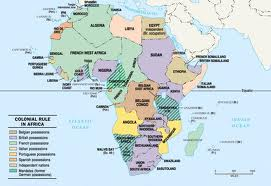
What is at stake is a vast territory which during the colonial period included French West Africa and French Equatorial Africa  (See map  left as well as maps below)

Mali during the French period was referred to as Le Soudan  français (the French Sudan).


Ironically, this process of weakening and eventually excluding France from francophone Africa has been carried out with the tacit endorsement of  both (former) president Nicolas Sarkozy and president François Hollande, both of whom are serving US geopolitical interests to the detriment of the French Republic.

The militarization of the African continent is part of the mandate of US Africom.

The longer term goal is to exert geopolitical as well military control over a vast area, which historically has been within France’s sphere of influence.  This area is an rich in oil, natural gas, gold, uranium and strategic minerals. (See R. Teichman, The War on Mali. What you Should Know: An Eldorado of Uranium, Gold, Petroleum, Strategic Minerals …, Global Research, January 15, 2013)
The colonial re-division of Africa decided at the 1884-85 at the Berlin Conference (right). For the maps of French colonial Africa, see below.


About the author:

Michel Chossudovsky is an award-winning author, Professor of Economics (emeritus) at the University of Ottawa, Founder and Director of the Centre for Research on Globalization (CRG), Montreal and Editor of the globalresearch.ca website. He is the author of The Globalization of Poverty and The New World Order (2003) and America’s “War on Terrorism”(2005). His most recent book is entitled Towards a World War III Scenario: The Dangers of Nuclear War (2011). He is also a contributor to the Encyclopaedia Britannica. His writings have been published in more than twenty languages.

Related content:

Disclaimer: The contents of this article are of sole responsibility of the author(s). The Centre for Research on Globalization will not be 


Bloomberg - India’s Narendra Modi and the Tale of Two Rapes - By Shikha Dalmia

http://www.bloomberg.com/news/2013-01-17/india-s-narendra-modi-and-the-tale-of-two-rapes.html

India’s Narendra Modi and the Tale of Two Rapes

By Shikha Dalmia Jan 17, 2013 9:12 PM GMT+0530
 
One of the most obscene moments after the death of the gang-rape victim in New Delhi was a tweet by Narendra Modi, the chief minister of the Indian state of Gujarat, offering regret and condolences to the dead woman’s family.

Modi, who has quelled restive minorities by allowing attackers to subject women to unspeakable horrors, has done more than any man to numb his prudish country to sexual violence. Yet he was elected to a third term last month and is the presumptive front-runner of the Bharatiya Janata Party, the main Hindu opposition party, for prime minister in next year’s national elections.

So long as Indians keep rewarding politicos such as Modi, the country’s collective outrage after the New Delhi case won’t change the culture that makes such atrocities common in India.


The attack on the 23-year-old physiotherapy student was depraved. Five men and a teenager in a private bus are accused of kidnapping, beating, raping and violating her with an iron rod -- and then dumping her and her semi-conscious boyfriend on a highway, where they also allegedly tried to run her over. But as monstrous as this crime was, consider what happened in Gujarat in February 2002, a few months after Modi assumed office.

Organized bands of well-armed Hindus -- some from groups tied to Modi’s party -- fanned across the state seeking revenge against Muslims for allegedly burning a train full of Hindu pilgrims a few weeks earlier. The Hindu rioters systematically sought out and destroyed Muslim homes and businesses, killing more than 1,000 people.

Extreme Violence

Muslim women were singled out. According to many Indian and foreign sources, including a Human Rights Watch account and a report by an international research team called “Threatened Existence: A Feminist Analysis of the Genocide in Gujarat,” women were stripped, gang-raped, often publicly, and in almost all cases then burned or hacked to death.

The reason the violence reached such extremes was that the state police stood back and didn’t intervene to stop the Hindu attacks and even told victims that it couldn’t protect them. As if the bloodletting wasn’t horrific enough, Modi subsequently dismantled the shelters constructed by private organizations for dispossessed Muslims, calling them “child-breeding centers.”

Compared with the New Delhi rape, which has triggered a protest movement in India calling for the castration and execution of the suspects, the Gujarat rapes and pogrom elicited barely a whimper. 

Many Hindus either deny that the horror even occurred or, if they accept it, claim it wasn’t as grisly as news accounts suggest. And if they believe the accounts, they say Muslims had it coming. Fewer than 100 out of the thousands accused -- among them only one state minister and one Bharatiya Janata Party leader -- were convicted, and that was a decade later. Modi himself was exonerated.
Whatever public disgust there was against him has dissipated, given the stellar economic growth that Gujarat has seen on his watch. Business leaders and corporations, from India and overseas, turn a blind eye to Modi’s role in allowing the bloodshed, and praise his economic stewardship. His business backers have already managed to get the U.K. government to reverse its long-standing ban on him and to give him a visa. Now they are trying to persuade the U.S. government to follow suit.

What accounts for the wide gulf in the Indian public response to the single crime in New Delhi and the mass crimes in Gujarat?
On a positive side, attitudes toward women have evolved considerably since the Gujarat atrocity 11 years ago. Indian women’s aspirations and opportunities have increased, especially in big cities, and they are demanding that the governing classes keep pace and create an environment in which they are free to move around safely.

Changed Attitudes

After the New Delhi attack, any politician or even religious guru -- no matter how revered -- who suggested that women need to circumscribe their lives and choices for their own protection was condemned and lampooned, something scarcely imaginable when I was growing up in New Delhi (in a Hindu household) in the 1970s.

But the darker reality is that the young woman’s rape and murder outraged the country’s Hindu urban middle class because it was a random and senseless act that could have just as easily victimized their daughters. 

Not so with attacks on the Muslim women in Gujarat. 

The premeditated and programmatic violence against them meant that the broader Hindu majority was insulated from it. If the New Delhi woman’s fate made every Indian feel more vulnerable, the attack on the Muslim women made Hindus feel more secure.

There are other reasons for India’s apathy toward Modi’s misdeeds. India is a democracy and has its share of human-rights activists and watchdog groups keeping an eye on government brutality. Yet the public at large has little appreciation of the dangers associated with overly muscular government. Indians complain constantly about government dysfunction and corruption. Yet they have little compunction about giving draconian powers to their rulers in the name of security. The upshot, tragically, is that Indians care less about state-fueled rape than when perpetrated by individuals.

The scale of the sexual violence in Gujarat was unprecedented in India. But smaller episodes are a matter of routine. The Indian army has been accused of using rape as a weapon to crush secessionist movements in Kashmir and Manipur. After one particularly heinous case eight years ago, Manipuri women stripped naked and stormed the army headquarters with placards plaintively protesting: “Indian Army Rapes Us.”

Tolerating sexual violence for any purpose erodes the overall stigma against it, opening a moral space where hoodlums can run amok. The lack of national outrage against the mass rapes perpetrated under Modi reduces their true cruelty, breaking down the psychological walls that would at least prevent nonsociopaths from going on a rampage. Hindus who turn a blind eye to the rape of Muslim women can’t ultimately protect their own.

How India can restore moral boundaries is a difficult issue, but it certainly won’t be solved by electing Modi to higher office -- even if he were Adam Smith himself. Protesters shouldn’t just seek justice against the six accused in New Delhi. Modi, too, has much to atone.

(Shikha Dalmia is a contributor to Bloomberg View and a Detroit-based senior analyst at Reason Foundation. The opinions expressed are her own.)

To contact the writer of this article: Shikha Dalmia in Detroit at shikhadalmia62@gmail.com.
To contact the editor responsible for this article: Katy Roberts at kroberts29@bloomberg.net


--------------------