The Indian Express
Mumbai ‘touch-and-go’ situation kept cops on toes
Written by Zeeshan Shaikh
| Mumbai |
Posted: January 6, 2015 1:19 am | Updated: January 6, 2015 1:30 am
Hours after a riot broke out in central Mumbai on Sunday night
during the Eid-e-Milad procession, a somewhat rattled state
administration admitted that the communal conflagration could have
escalated rapidly. While Mumbai Police Commissioner Rakesh Maria denied
that there was any larger conspiracy, senior ministers said the
government had been told that simultaneous communal incidents could have
broken out at multiple locations across Mumbai.
Maria himself said it had been a “touch-and-go” situation. “We treated the incident like a communal one. The entire city was put on alert. It was touch-and-go on Sunday night,” said Maria. On Monday morning, while some of the affected areas, including the Shiv Sena-dominated Lalbaug and Parel and the Muslim-dominated Byculla, remained tense and shopkeepers chose to start business slowly and warily, the police briefed Maharashtra Chief Minister Devendra Fadnavis. Revenue Minister Eknath Khadse confirmed that the police’s assessment was a serious one: “Some miscreants were out to disturb Mumbai’s communal harmony.” Maria said the police, apart from ensuring bandobast across the city within minutes of the first incident breaking out in Lalbaug, had to ensure that rumour mongering did not cause further outbreaks of violence elsewhere. “Besides on the ground, our biggest fight was also on social media to counter rumour mongers. We sent out text messages to stay on top of the situation,” Maria told The Indian Express. The Eid-e-Milad procession, starting from Khilafat House in south Mumbai, is an annual affair in Mumbai. The first such procession had been led by Mahatma Gandhi himself, during the Khilafat movement. The day marks the birthday of Prophet Mohammed and is largely celebrated by Sunni Barelvi Muslims, identified as being more syncretic within the community. Incidentally, the lead-up to the event this year saw rising calls from clerics that the community should be restrained during the final juloos and that there should be low noise levels during the celebrations. The excessive use of floats, blaring loud music and the disregard for traffic rules during such processions has been a cause for concern within the community. According to eyewitnesses, the first incident took place at 6.30 pm, when a motorbike that was part of the procession and was being driven rashly brushed against a woman near the Lalbaug market. The bikers were roughed up by an irate crowd. Around two hours later, the bikers, who were allegedly driving on the wrong side of the road, fled after being stopped by a mob at Bharat Mata cinema junction in Lalbaug. Eyewitnesses said that a mob then got together at the junction and began to stop and assault any motorbikers wearing skull caps or bearing flags. Simultaneously, community members also say young Muslims in Mumbai, feeling increasingly cornered in recent months, are displaying a rising trend of wearing their identity on their sleeves. Sarfaraz Arzu, vice-chairman of the All India Khilafat Committee which organises the procession every year, said the organisers had requested participants to be at their best behaviour. “But when you are in a holiday mood, your behaviour also seems to take a holiday — this is a universal principle which is evident in Holi and Ganpati festivals as well,” Arzu said. Maria said apart from the Lalbaug stretch, which was the only area affected by clashes, and a vehicle that caught fire in Worli, no other incidents were reported. Maria himself was overseeing bandobast in the city till early Monday. With Rohit Alok --- Extended version on E-Paper: Indian Express Mumbai, Front Page  Indian Express Mumbai, 2nd Page:  Indian Express Mumbai Newline: http://epaper.indianexpress.  |  
473 more
Show d
|
Showing posts with label Mumbai. Show all posts
Showing posts with label Mumbai. Show all posts
Tuesday, January 6, 2015
Mumbai ‘touch-and-go’ situation kept cops on toes - Written by Zeeshan Shaikh - THE INDIAN EXPRESS, MUMBAI


Tuesday, October 14, 2014
Maharashtra polls: All eyes on Muslim votes - By Mayura Janwalkar , Tabassum Barnagarwala - The Indian Express, Mumbai
THE INDIAN EXPRESS
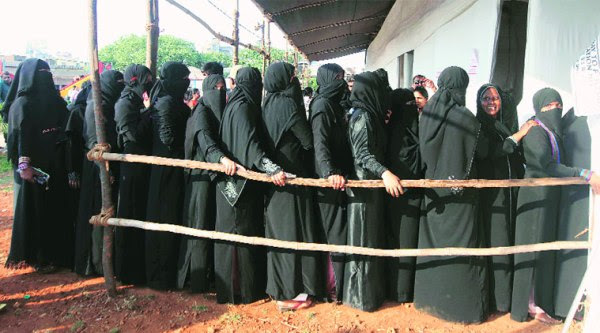 Several groups among the Muslims have indicated that they are not
averse to voting for the BJP or the Shiv Sena. (Source: Express archive)
From Jogeshwari to Malvani, Mohammed Ali Road to Mankhurd, there is
immense curiosity regarding how pockets dominated by the Muslim
community could vote on Wednesday, given the BJP’s big win in the Lok
Sabha election and the Congress’s eroding support among its traditional
votebanks. The presence of some MIM and Samajwadi Party candidates has
queered the pitch further, and several groups among the Muslims have
indicated that they are not shy of voting for the BJP or the Shiv Sena.
Several groups among the Muslims have indicated that they are not
averse to voting for the BJP or the Shiv Sena. (Source: Express archive)
From Jogeshwari to Malvani, Mohammed Ali Road to Mankhurd, there is
immense curiosity regarding how pockets dominated by the Muslim
community could vote on Wednesday, given the BJP’s big win in the Lok
Sabha election and the Congress’s eroding support among its traditional
votebanks. The presence of some MIM and Samajwadi Party candidates has
queered the pitch further, and several groups among the Muslims have
indicated that they are not shy of voting for the BJP or the Shiv Sena.
Jogeshwari (East), for example, carries the weight of a past chequered by communal violence. The ‘Caves Road’ that leads to the suburban railway station continues to be a physical division between the Muslim-dominated Prem Nagar and its non-Muslim neighbours. Here, the vote could simply be for whoever promises better development.
Soon after being elected in 2009, Shiv Sena MLA Ravindra Waikar – who had found a mention in the Shrikrishna Commission report for inciting a mob and shouting communal slogans against the Muslims- said that he wanted to work for the upliftment of Muslims in his constituency. The incumbent may have won the faith of a part of 45,000 to 50,000-strong voter bank in the area, but social workers and residents of the slum area say that Prem Nagar continues to grapple with inadequacies in infrastructure, sanitation, health care and education.
“Election here had never been about issues. It is driven by popular perception. When you ask people what has a certain candidate done for them, they don’t know. They just say that a candidate is good because ‘public’ says he is,” said Shaikh Sajid Akbar who runs the Modern Youth Association (MYA). His organisation has put up banners in the area with a slogan ‘Hamara vote Hamari Maang’ to make people aware of the parameters they should be testing Assembly election candidates on. The posters demand a Slum Rehabilitation Scheme, legal water connections, improved health care, fire fighting and a sports centre among others.
Rama Shyam and her husband Sheikh Masood Akhtar of NGO Saher (Society for awareness, harmony and equal rights) have been working in the Jogeshwari (East) area for over a decade. Akhtar who was born in Jogeshwari (East) said that there are certain basic issues that have received very little attention from the state and the residents of Prem Nagar too have shown complacency in dealing with them.
“During the civic polls (2012) we had a meeting with all aspiring corporators and asked them what they wanted to do for this constituency. None of them had any vision. They did not know what the area needs. They said you tell us what to do and we will do it,” Akhtar pointed out. While problems of sanitation continue to mount, they are compounded by narrow roads that hinder garbage pick-up trucks from entering the area. Shyam said that there are hardly any civic or state-run health centres or clinics in the locality that has led to quacks thriving.
The Muslim pockets of Jogheshwari (East) are estimated to comprise 13 per cent of the voting population in the suburb. At the other end of the city, marked by narrow lanes, old dilapidated matchbox buildings, and a significant Muslim population, the busy Mohammed Ali Road has been witnessing daily election rallies. Hawkers and shop owners cast quick glances at the proceeding rallies before returning to business, knowing nothing new is being said.
Amongst the several speeches, All India Majlis-e-Ittehadul Muslimeen (MIM) leader Akbaruddin Owaisi’s speech in Mumbadevi sparked an emotional chord — the 1993 riots.
“Bhendi Bazaar was the heart of Mumbai riots, Muslim beards cut, women’s breasts were cut, business destroyed. Pani ki kimat hai, par Musalman ki khoon ka koyi kismat nahi (Water has value, but Muslim blood does not seem to have any value),” he said at his rally.
While voters no longer base their decision to select a party solely on the riots that plagued the Bhendi Bazaar area two decades ago, the scar exists in their mind.
“There is anger, even though subdued, against political forces who supported it. But now people just want to chose a candidate who will look into their problems, not ones who will keep ranting about old issues,” said Muttam Khalid, a social activist.
However, Mustafa Arsiwala, resident of Bhendi Bazaar, said, “People here just want to go for work, come back home and sleep. Politicians who let us work peacefully are invited. But I don’t think there is anger of 1993 riots in our minds any longer.”
While Congress stands to lose several of its seats in the state owing to an anti-incumbency and an equally strong Modi factor working in tandem, the majority of Muslim population living in cramped 250 square ft flats — comprising Shia, Sunni, Bohras, Ismaili, Irani — continues to hold a similar political ideology.
The area is perhaps one of few pockets where despite anger against the existing state government, voters wish to see Amin Patel in the MLA’s throne.
A few shop owners come out to discuss their problems: old buildings and heavy traffic. While parties play on communal lines, voters know very few will address their basic problems.
“We are not very happy with the Congress but the MLA has done some work to repair our buildings. That matters,” said Shabbir Shaikh, a hawker who sits at the JJ Hospital junction.
The assembly constituency has 18 candidates contesting, 15 of whom are Muslims. “This may cause a dent in Congress vote share,” says Salim Alware, another activist who fights for Muslim rights.
Another example is Malvani, in Malad West, where the 80,000 Muslim voters appear to be gunning for change. Aslam Shaikh from the Congress may have been a clear winner, but with the BJP and Shiv sena splitting, the Shiv Sena’s Vinay Jain will be strong competition for Shaikh. According to the majority of Muslims who reside in Malwani at Malad (West) they are upset with Shaikh and would want a new MLA to represent them. Shafiulla Shaikh, a resident of Malwani, said, “Aslam has done nothing worth mentioning for his community. He has disappointed us.”
mayura.janwalkar@expressindia.
Maharashtra polls: All eyes on Muslim votes
Written by Mayura Janwalkar
, Tabassum Barnagarwala
| Mumbai | October 14, 2014 1:32 am
Several groups among the Muslims have indicated that they are not
averse to voting for the BJP or the Shiv Sena. (Source: Express archive)Jogeshwari (East), for example, carries the weight of a past chequered by communal violence. The ‘Caves Road’ that leads to the suburban railway station continues to be a physical division between the Muslim-dominated Prem Nagar and its non-Muslim neighbours. Here, the vote could simply be for whoever promises better development.
Soon after being elected in 2009, Shiv Sena MLA Ravindra Waikar – who had found a mention in the Shrikrishna Commission report for inciting a mob and shouting communal slogans against the Muslims- said that he wanted to work for the upliftment of Muslims in his constituency. The incumbent may have won the faith of a part of 45,000 to 50,000-strong voter bank in the area, but social workers and residents of the slum area say that Prem Nagar continues to grapple with inadequacies in infrastructure, sanitation, health care and education.
“Election here had never been about issues. It is driven by popular perception. When you ask people what has a certain candidate done for them, they don’t know. They just say that a candidate is good because ‘public’ says he is,” said Shaikh Sajid Akbar who runs the Modern Youth Association (MYA). His organisation has put up banners in the area with a slogan ‘Hamara vote Hamari Maang’ to make people aware of the parameters they should be testing Assembly election candidates on. The posters demand a Slum Rehabilitation Scheme, legal water connections, improved health care, fire fighting and a sports centre among others.
Rama Shyam and her husband Sheikh Masood Akhtar of NGO Saher (Society for awareness, harmony and equal rights) have been working in the Jogeshwari (East) area for over a decade. Akhtar who was born in Jogeshwari (East) said that there are certain basic issues that have received very little attention from the state and the residents of Prem Nagar too have shown complacency in dealing with them.
“During the civic polls (2012) we had a meeting with all aspiring corporators and asked them what they wanted to do for this constituency. None of them had any vision. They did not know what the area needs. They said you tell us what to do and we will do it,” Akhtar pointed out. While problems of sanitation continue to mount, they are compounded by narrow roads that hinder garbage pick-up trucks from entering the area. Shyam said that there are hardly any civic or state-run health centres or clinics in the locality that has led to quacks thriving.
The Muslim pockets of Jogheshwari (East) are estimated to comprise 13 per cent of the voting population in the suburb. At the other end of the city, marked by narrow lanes, old dilapidated matchbox buildings, and a significant Muslim population, the busy Mohammed Ali Road has been witnessing daily election rallies. Hawkers and shop owners cast quick glances at the proceeding rallies before returning to business, knowing nothing new is being said.
Amongst the several speeches, All India Majlis-e-Ittehadul Muslimeen (MIM) leader Akbaruddin Owaisi’s speech in Mumbadevi sparked an emotional chord — the 1993 riots.
“Bhendi Bazaar was the heart of Mumbai riots, Muslim beards cut, women’s breasts were cut, business destroyed. Pani ki kimat hai, par Musalman ki khoon ka koyi kismat nahi (Water has value, but Muslim blood does not seem to have any value),” he said at his rally.
While voters no longer base their decision to select a party solely on the riots that plagued the Bhendi Bazaar area two decades ago, the scar exists in their mind.
“There is anger, even though subdued, against political forces who supported it. But now people just want to chose a candidate who will look into their problems, not ones who will keep ranting about old issues,” said Muttam Khalid, a social activist.
However, Mustafa Arsiwala, resident of Bhendi Bazaar, said, “People here just want to go for work, come back home and sleep. Politicians who let us work peacefully are invited. But I don’t think there is anger of 1993 riots in our minds any longer.”
While Congress stands to lose several of its seats in the state owing to an anti-incumbency and an equally strong Modi factor working in tandem, the majority of Muslim population living in cramped 250 square ft flats — comprising Shia, Sunni, Bohras, Ismaili, Irani — continues to hold a similar political ideology.
The area is perhaps one of few pockets where despite anger against the existing state government, voters wish to see Amin Patel in the MLA’s throne.
A few shop owners come out to discuss their problems: old buildings and heavy traffic. While parties play on communal lines, voters know very few will address their basic problems.
“We are not very happy with the Congress but the MLA has done some work to repair our buildings. That matters,” said Shabbir Shaikh, a hawker who sits at the JJ Hospital junction.
The assembly constituency has 18 candidates contesting, 15 of whom are Muslims. “This may cause a dent in Congress vote share,” says Salim Alware, another activist who fights for Muslim rights.
Another example is Malvani, in Malad West, where the 80,000 Muslim voters appear to be gunning for change. Aslam Shaikh from the Congress may have been a clear winner, but with the BJP and Shiv sena splitting, the Shiv Sena’s Vinay Jain will be strong competition for Shaikh. According to the majority of Muslims who reside in Malwani at Malad (West) they are upset with Shaikh and would want a new MLA to represent them. Shafiulla Shaikh, a resident of Malwani, said, “Aslam has done nothing worth mentioning for his community. He has disappointed us.”
mayura.janwalkar@expressindia.
Thursday, September 25, 2014
Not sure PM meant what he said about Muslims: Asaduddin Owaisi - Interview by Zeeshan Shaikh - The Indian Express, Mumbai
The Indian Express, Mumbai
Asaduddin Owaisi is the president of the Hyderabad-centred All-India Majlis-e-Ittehadul Muslimeen, which is contesting the elections in Maharashtra. Visiting Mumbai, he spoke about his party’s poll prospects and Muslims in India.
How many seats is the MIM planning to contest? Are you open to alliances?
We have not yet decided on the number of seats. We are definitely looking at striking an alliance with Dalit and OBC groups. The MIM is in Maharashtra for the long haul. The party will henceforth contest elections at all levels in the state.
What issues will you take up?
The most important issue is the political dis-empowerment of Muslims, and secondly, the socio-economic indicators of the community. From 1962 to 2009, there have been 3,108 MLAs elected in Maharashtra, of whom 119 were Muslims. With their proportion in the population, the number should have been 286. The political representation of Muslims is only 3.8 per cent. Report after report, from that of the Planning Commission to those of state-appointed committees such as the Rahman Committee, have pointed out the piteous conditions of Muslims. You also have a high incidence of communal conflicts. Innocent Muslims are illegally being put in jail. We plan to raise all these issues. The aim of the MIM is to work with all minorities who face these problems, including Dalits and OBCs.
Some Muslim intellectuals have said your entry will polarise society and malign Muslims’ image.
First of all, inclusive politics was never practised in Maharashtra by either the Congress-NCP or the Shiv Sena-BJP. I want to question people who attack me, why has not a single Muslim MP been elected from Maharashtra? Why has the Srikrishna Commission report never been implemented in the state? The population of Muslims in Maharashtra and Telangana is the same. Telangana has set aside Rs 1.000 crore for minorities; in Maharashtra it is only Rs 368 crore and it has not been spent. The Centre had identified four districts of Maharashtra under the Minority Multi-sectoral Development Plan. The implementation of these funds is less than 5 per cent in Parbhani and Washim. Now if we raise such issues, we are deemed to be communal. It has become very easy to blame Muslims for all the ills of the country.
How do you view Prime Minister Narendra Modi’s statement about Muslims living and dying for the country?
For the last 10 years, every prime minister who has gone to the United States has been forced to say this. When Manmohan Singh went he too made a statement about Indian Muslims. My question is, if the prime minister feels the way he does, why are his party men sending out such varying signals by attacking Muslims? Why are there still so many Muslims languishing in Gujarat’s jails? Muslims have never indulged in anti-national activities. When you look at Kashmir militancy, which was at its peak in the 1990s, not a single Muslim from other states joined it. I have my doubts about the prime minister’s statement. I am not sure whether he really meant what he said. I don’t know if this is a late realisation by the PM, or a statement made due to international compulsions.
There are reports of a lot of Muslim youths going to Iraq and Syria to join ISIS.
ISIS is one of the most evil entities. The MIM as well as senior clerics of Hyderabad have repeatedly been making statements condemning ISIS. I would tell the youth who are thinking of joining such evil entities that they should take part in the struggle to address the huge problems that the Muslim community in India faces. They should struggle to eradicate poverty. They should take part in the democratic process to take on communal forces.
----- ----- ----- ----- -----
.
Not sure PM meant what he said about Muslims: Asaduddin Owaisi
Written by Zeeshan Shaikh
| Mumbai | Posted: September 25, 2014 2:54 am
Asaduddin Owaisi is the president of the Hyderabad-centred All-India Majlis-e-Ittehadul Muslimeen, which is contesting the elections in Maharashtra. Visiting Mumbai, he spoke about his party’s poll prospects and Muslims in India.
How many seats is the MIM planning to contest? Are you open to alliances?
We have not yet decided on the number of seats. We are definitely looking at striking an alliance with Dalit and OBC groups. The MIM is in Maharashtra for the long haul. The party will henceforth contest elections at all levels in the state.
What issues will you take up?
The most important issue is the political dis-empowerment of Muslims, and secondly, the socio-economic indicators of the community. From 1962 to 2009, there have been 3,108 MLAs elected in Maharashtra, of whom 119 were Muslims. With their proportion in the population, the number should have been 286. The political representation of Muslims is only 3.8 per cent. Report after report, from that of the Planning Commission to those of state-appointed committees such as the Rahman Committee, have pointed out the piteous conditions of Muslims. You also have a high incidence of communal conflicts. Innocent Muslims are illegally being put in jail. We plan to raise all these issues. The aim of the MIM is to work with all minorities who face these problems, including Dalits and OBCs.
Some Muslim intellectuals have said your entry will polarise society and malign Muslims’ image.
First of all, inclusive politics was never practised in Maharashtra by either the Congress-NCP or the Shiv Sena-BJP. I want to question people who attack me, why has not a single Muslim MP been elected from Maharashtra? Why has the Srikrishna Commission report never been implemented in the state? The population of Muslims in Maharashtra and Telangana is the same. Telangana has set aside Rs 1.000 crore for minorities; in Maharashtra it is only Rs 368 crore and it has not been spent. The Centre had identified four districts of Maharashtra under the Minority Multi-sectoral Development Plan. The implementation of these funds is less than 5 per cent in Parbhani and Washim. Now if we raise such issues, we are deemed to be communal. It has become very easy to blame Muslims for all the ills of the country.
How do you view Prime Minister Narendra Modi’s statement about Muslims living and dying for the country?
For the last 10 years, every prime minister who has gone to the United States has been forced to say this. When Manmohan Singh went he too made a statement about Indian Muslims. My question is, if the prime minister feels the way he does, why are his party men sending out such varying signals by attacking Muslims? Why are there still so many Muslims languishing in Gujarat’s jails? Muslims have never indulged in anti-national activities. When you look at Kashmir militancy, which was at its peak in the 1990s, not a single Muslim from other states joined it. I have my doubts about the prime minister’s statement. I am not sure whether he really meant what he said. I don’t know if this is a late realisation by the PM, or a statement made due to international compulsions.
There are reports of a lot of Muslim youths going to Iraq and Syria to join ISIS.
ISIS is one of the most evil entities. The MIM as well as senior clerics of Hyderabad have repeatedly been making statements condemning ISIS. I would tell the youth who are thinking of joining such evil entities that they should take part in the struggle to address the huge problems that the Muslim community in India faces. They should struggle to eradicate poverty. They should take part in the democratic process to take on communal forces.
----- ----- ----- ----- -----
.
Wednesday, September 24, 2014
Jail official asked me to cut beard, terror accused tells court, seeks compensation - By Maghna Yelluru - The Indian Express, Mumbai
http://indianexpress.com/
Jail official asked me to cut beard, terror accused tells court, seeks compensation
Mumbai | Posted: September 24, 2014 2:36 am
By Meghna Yelluru
A 33-year-old terror accused has filed a complaint against the superintendent of Arthur Road jail for allegedly ordering him to cut his beard. Abdul Latif alias Guddu, accused of plotting strikes at ONGC headquarters and two markets in the city in 2010, has demanded Rs 10 lakh as compensation and strict action, including suspension, to be taken against the jail authority for “hurting his religious sentiments”. In his complaint submitted to a sessions court on September 19, Latif alleged that on September 18, during a “weekly round”, superintendent Ahir Rao questioned him regarding his beard. According to the complaint, Latif responded by saying, “main Musalmaan hoon, aur mere dharam ke hisaab se rakha hoon. (I am a Muslim, and have kept a beard in accordance with my religion)” “Jail main koi Musalmaan nahin rehta. Daadhi rakhe toh aur sadega jail me. Main kuch nahin jaanta, mujhe yeh daadi kati hui chahiye (Nobody is a Muslim in jail. If you keep a beard, you’ll rot longer in jail. I want this beard cut),” Rao is alleged to have instructed, according to the complaint copy. “Yeh mere dharam ke khilaaf hai (This is against my religion),” Latif objected. In his complaint, Latif alleged that Rao had directed the jailor to ensure that his orders were complied with. “On the same day, the complainant prepared this application addressed to the superintendent to roll back the said unconstitutional order, which was handed over to Jailor Ade, but he refused to accept it and insisted that Latif cut his beard. Ade further turned down to give any acknowledgment on the application (sic),” the complaint read. Latif, through his complaint, prayed for the suspension of Rao for “illegal, unconstitutional, inhumane, anti-religious remarks.” He further urged Additional Director General (Prison) Meera Borwankar to initiate a departmental inquiry against the superintendent. “Pass the order and direct the superintendent to say sorry to applicant and give undertaking in writing,” the complainant said. A copy of the complaint was also sent to Gulzar Azmi, member of the State Minorities Commission and the Jamiat Ulama-e-Maharashtra, an NGO that provides legal aid to over 400 Muslims booked under terror charges. Shahid Nadeem Ansari, an advocate with the Jamiat Legal Cell told the Newsline, “We will take this issue forward and write to the state home minister and DIG prison to take action against the culprit and initiate departmental inquiry against him.” “The accused has had a beard for a long time, and not only him, others facing serious charges of terrorism also sport beards. A month ago, Rao stopped 7/11 blast accused Abdul Waheed din Mohammed from carrying a Quran inside the jail,” Shahid alleged. Borwankar said, “I have not received a copy of the complaint yet, but this cannot be true. Jail authorities will never force anybody to shave or prohibit someone from carrying a Quran inside the jail. We respect all religions.” Latif, however, claims in his complaint that he could produce witnesses in court, if required. “The court has taken cognisance of the complaint and has directed the jail authorities to file a reply in court on September 24, " said the counsel for Latif. ----- ----- ----- ----- ----- , |
Monday, July 14, 2014
Court, misquote - By Tahir Mahmood -The Indian Express, Mumbai, INDIA
The Indian Express

As long as there is legally sanctioned room for settlement of disputes by non-state bodies, the court cannot isolate the mechanism operating for it in any particular community and order its abolition. Source: CR Sasikumar

Court, misquote
Tahir Mahmood
|
July 14, 2014 12:38 am
As long as there is legally sanctioned room for settlement of disputes by non-state bodies, the court cannot isolate the mechanism operating for it in any particular community and order its abolition. Source: CR Sasikumar
Summary
The Supreme Court has not declared fatwas illegal. It has situated them within the law.
More From Tahir Mahmood
The Supreme Court has not declared fatwas illegal. It has situated them within the law.
A victory day for the Muslims, a day of deliverance for all others —
these diametrically opposed perceptions of the apex court’s ruling on
the fatwa and Dar-ul-Qaza traditions of Muslim society are being
projected by the Urdu and English media respectively. Neither is
warranted by the letter and spirit of the court’s absolutely innocuous
judgment.
A few years ago, a Delhi lawyer had filed a writ petition in the Supreme Court seeking a ban on the fatwa system and shariat courts, alleging that these were tantamount to running a “parallel judiciary” in the country. A division bench has now pronounced its judgment, which has been reported in the print media under sensational captions and is being hotly debated on TV channels. All this hurly burly is based on sheer misinformation about the system challenged and reflects a grave misreading of the judgment.
The Arabic word “fatwa” means an exposition of religious law by a Muslim cleric or seminary in answer to a specific query. It is like a lawyer’s opinion, which the querist may or may not act upon. The fatwa-giver writes his opinion as per his own understanding of religion, right or wrong, and does not claim it to be authentic — fatwas always conclude with the words wallahu a’lam bi-sawab (god knows better with certainty). Muslim law neither obliges any person to seek a fatwa in any matter nor makes it incumbent upon her to follow it if obtained.
As regards shariat courts, known as Dar-ul-Qazas, these are in the nature of what is known in law as alternative dispute resolution (ADR) mechanisms and generally decide personal law discords of disputants who voluntarily approach them and agree to abide by their verdicts. In some cases, where one party to a family dispute (generally a wife) seeks relief from a Dar-ul-Qaza and the other party unscrupulously keeps absent just to harass the complainant, a decision may, in the interest of justice, be given ex parte. No Dar-ul-Qaza decision, whether given ex parte or after hearing the parties, constitutes what is known in law as res judicata so as to bar the jurisdiction of any state court to entertain and decide the dispute.
A Dar-ul-Qaza hierarchy was first established on a mass scale in Bihar in 1919 and has successfully been operating there for over nine decades. Dar-ul-Qaza decisions are often taken by the disputants to local civil courts, which treat them as arbitration awards and pass decrees accordingly. Justice C.K. Prasad, who wrote the Supreme Court judgment, served in Bihar for long years as advocate general and high court judge.
He must be fully conversant with the true nature of the so-called shariat courts and his decision reflects a proper understanding of the system. He had spoken his mind during the hearing of the case in February this year when he told the petitioner: “You are assuming all fatwas are irrational. Some fatwas may be wise and may be for [the] general good also. People in this country are wise enough. If two Muslims agree for mediation, who can stay it? It is a blend of arbitration and mediation.” His judgment is fully in accord with this thinking.
That the court has declared fatwas or Dar-ul-Qazas to be “illegal” is a fantasy; that it has endorsed these religious traditions with impunity a delusion. Obviously, as long as the freedom of speech and expression guaranteed by the Constitution is available to the citizens, the court cannot restrain a mufti from giving his opinion on a religious matter. And, as long as there is legally sanctioned room for settlement of disputes by non-state bodies, the court cannot isolate the mechanism operating for it in any particular community and order its abolition. The SC therefore has done nothing of the sort — the petitioner’s demand for that has been clearly rejected, and rightly so.
At the same time, the court has made it clear, again absolutely rightly, that neither a fatwa nor a Dar-ul-Qaza verdict can be forcibly implemented by anybody against the wishes of the person who obtained it. It has further observed that in a bilateral dispute, a third party’s request for a fatwa should not be entertained by the muftis. Unfortunately, both practices are rampant.
Unconcerned persons having no locus standi in a particular dispute seek and obtain a fatwa, and the neighbours of the parties in dispute or the local community organisations harass them for not acting upon it. Instead of speaking out against such clearly unlawful practices in a mild way, the SC, in my opinion, could have issued mandatory directions in this regard. Of course, it has said in so many words that a person whose legal rights are being violated can always approach a state court for relief.
Instead of rejoicing over the judgment, Muslims must duly take its real message and translate it into concrete action. Others must let the judgment remain what it is — there is nothing in it for them to “celebrate”. Muslims should also evolve ways and means to ensure that fatwas are issued only by real experts in religious jurisprudence.
The writer has been chair of the National Minorities Commission and member, Law Commission of India
----- ----- ----- ----- -----
A few years ago, a Delhi lawyer had filed a writ petition in the Supreme Court seeking a ban on the fatwa system and shariat courts, alleging that these were tantamount to running a “parallel judiciary” in the country. A division bench has now pronounced its judgment, which has been reported in the print media under sensational captions and is being hotly debated on TV channels. All this hurly burly is based on sheer misinformation about the system challenged and reflects a grave misreading of the judgment.
The Arabic word “fatwa” means an exposition of religious law by a Muslim cleric or seminary in answer to a specific query. It is like a lawyer’s opinion, which the querist may or may not act upon. The fatwa-giver writes his opinion as per his own understanding of religion, right or wrong, and does not claim it to be authentic — fatwas always conclude with the words wallahu a’lam bi-sawab (god knows better with certainty). Muslim law neither obliges any person to seek a fatwa in any matter nor makes it incumbent upon her to follow it if obtained.
As regards shariat courts, known as Dar-ul-Qazas, these are in the nature of what is known in law as alternative dispute resolution (ADR) mechanisms and generally decide personal law discords of disputants who voluntarily approach them and agree to abide by their verdicts. In some cases, where one party to a family dispute (generally a wife) seeks relief from a Dar-ul-Qaza and the other party unscrupulously keeps absent just to harass the complainant, a decision may, in the interest of justice, be given ex parte. No Dar-ul-Qaza decision, whether given ex parte or after hearing the parties, constitutes what is known in law as res judicata so as to bar the jurisdiction of any state court to entertain and decide the dispute.
A Dar-ul-Qaza hierarchy was first established on a mass scale in Bihar in 1919 and has successfully been operating there for over nine decades. Dar-ul-Qaza decisions are often taken by the disputants to local civil courts, which treat them as arbitration awards and pass decrees accordingly. Justice C.K. Prasad, who wrote the Supreme Court judgment, served in Bihar for long years as advocate general and high court judge.
He must be fully conversant with the true nature of the so-called shariat courts and his decision reflects a proper understanding of the system. He had spoken his mind during the hearing of the case in February this year when he told the petitioner: “You are assuming all fatwas are irrational. Some fatwas may be wise and may be for [the] general good also. People in this country are wise enough. If two Muslims agree for mediation, who can stay it? It is a blend of arbitration and mediation.” His judgment is fully in accord with this thinking.
That the court has declared fatwas or Dar-ul-Qazas to be “illegal” is a fantasy; that it has endorsed these religious traditions with impunity a delusion. Obviously, as long as the freedom of speech and expression guaranteed by the Constitution is available to the citizens, the court cannot restrain a mufti from giving his opinion on a religious matter. And, as long as there is legally sanctioned room for settlement of disputes by non-state bodies, the court cannot isolate the mechanism operating for it in any particular community and order its abolition. The SC therefore has done nothing of the sort — the petitioner’s demand for that has been clearly rejected, and rightly so.
At the same time, the court has made it clear, again absolutely rightly, that neither a fatwa nor a Dar-ul-Qaza verdict can be forcibly implemented by anybody against the wishes of the person who obtained it. It has further observed that in a bilateral dispute, a third party’s request for a fatwa should not be entertained by the muftis. Unfortunately, both practices are rampant.
Unconcerned persons having no locus standi in a particular dispute seek and obtain a fatwa, and the neighbours of the parties in dispute or the local community organisations harass them for not acting upon it. Instead of speaking out against such clearly unlawful practices in a mild way, the SC, in my opinion, could have issued mandatory directions in this regard. Of course, it has said in so many words that a person whose legal rights are being violated can always approach a state court for relief.
Instead of rejoicing over the judgment, Muslims must duly take its real message and translate it into concrete action. Others must let the judgment remain what it is — there is nothing in it for them to “celebrate”. Muslims should also evolve ways and means to ensure that fatwas are issued only by real experts in religious jurisprudence.
The writer has been chair of the National Minorities Commission and member, Law Commission of India
----- ----- ----- ----- -----
Wednesday, July 2, 2014
Fading of the strongman [Altaf Hussain - MQM] - By Khaled Ahmed - The Indian Express, Mumbai, India
The Indian EXPRESS

The MQM violence was compounded by Pakhtun violence in the turf war that ensued.

Fading of the strongman
Khaled Ahmed
|
July 3, 2014 12:02 am
The MQM violence was compounded by Pakhtun violence in the turf war that ensued.
Summary
Altaf Hussain is no longer the figure he was. Yet, the MQM draws support because its alternative is the Taliban.
More From Khaled Ahmed
The 60-year-old Muttahida Qaumi Movement (MQM) leader-in-exile, Altaf Hussain, was dramatically arrested on June 3 from his home in North West London. He was to be interrogated on the recovery from his home of several hundred thousand pounds that he could not account for and was therefore exposed to a charge of money-laundering. He is currently out on bail.
On hearing the news, his “fortress” Karachi immediately closed down,
with a few buses symbolically torched by his devotees. The MQM is the
fourth-largest presence in the National Assembly of Pakistan. Karachi
has 20 seats for the lower House, out of which 17 were won by the MQM in
the 2013 election.
Altaf Hussain is the MQM’s leader with a cult. The charisma has arisen out of the fear — and resultant violence — a migrant arouses in the land he adopts after immigration. When, after 1947, Hindus vacated the four cities of Sindh where they formed majorities, they were not replaced by the rural Sindhi-speaking population but by the Urdu-speaking immigrants from India. On the basis of an odd rule, majority populations mostly live in the countryside while the vulnerable minorities feel safe in the cities. The Hindus of Sindh and Punjab were mostly urban while the Muslims were rural.
The cult of Altaf Hussain is based on the security he gave to the muhajir (migrant) by opposing local violence with migrant violence. A “gangster” MQM removed the stigma of a rogue organisation by taking part in elections and returning enough representatives from urban Sindh to parliament, to become a political make-weight in central alliances while ruling Sindh in tandem with the rural-based Pakistan People’s Party.
Hatred of the MQM is primal in Sindh because the migrants are “trespassers”. In Punjab too, there is an antipathy that is less easily explained. The outgoing Punjabi Hindu urban majorities were quickly replaced with rural Muslims from Pakistani Punjab and from Indian Punjab. The feeling against the Indian Punjabis was watered down by their shared language. But the Urdu-speaking urban Muslims arriving from India quickly found that they were not welcome in Lahore and, thereafter, most of them quickly took the train to Karachi where there were secretarial jobs waiting for them in the new capital.
The MQM’s dominance of Karachi and strong presence in the major cities of Sindh were disturbed by the influx of the Pakhtun through internal migration. In Karachi, the majority population is Urdu-speaking; but Karachi is also the biggest Pakhtun city in the world, comprising both Pakistani and Afghan Pakhtun. Because of the Pakistani state’s involvement in proxy wars, the Taliban Pakhtun turned against the state after it joined the global war against terrorism post-9/11. The MQM violence was compounded by Pakhtun violence in the turf war that ensued.
Altaf Hussain fled to the UK in 1992, fearing that his enemies, led by the state intelligence agencies, were closing in on him. His anti-Talibanisation, secular-liberal stance and his hold on urban Sindh appealed to a UK leadership worried about radicalisation creeping into expat British Pakistanis. He thereafter lived in London without distancing himself from the organisational pyramid of the MQM. He could have looked after himself much better had he the intellect to do so. A cult will always point to the implied godhead of its leader and eschew intellectual reasoning.
There are many cult figures in Pakistan who manifest a non-intellectual tendency to excess. This excess is often expressed in hate speech. Hate speech in turn is inculcated through the popular mode of address of the religious leader. The sermonising tradition in Pakistan is based on a sharp sense of the loss of utopia (injustice).
Altaf Hussain has been accused of hate speech in the UK. His telephonic addresses to Pakistan are violent to the point of being comic, but remain realistic because of his remote-controlled strategy of deploying party elements. The “angry” cult leaders in various degrees today are the following: Imran Khan, who, like Altaf Hussain, controls seats in parliament, but is given to heated rhetoric, now gradually seeping into his followers in the form of violence.
Another cult leader with violent rhetoric is Tahir-ul-Qadri, alias Sheikh-ul-Islam, at the top of the Pakistan Awami Tehreek (PAT), who has opted out of politics but pledges “revolution” through Islamic “street power”, which he controls from abroad like Altaf Hussain. But, unlike Hussain, he has looked after himself by reason of superior intellectual gifts. Unlike Hussain, he has abstained from excessive food consumption and managed his colossal global wealth much better.
Hafiz Saeed of the Jamaat-ud-Dawa (JuD) is a fiery hate-speech expert with untold wealth, backed by non-state actors, with a growing ability to penetrate the state and ultimately run it through his cult. He stays away from electoral politics but has the organisational skill comparable to Altaf Hussain and Tahir-ul-Qadri. Like Hussain, his health may be undermined by excessive food consumption. When the deep state needs a “long march” to scare off its perceived enemies, Saeed leads with money and men, to the astonishment and dismay of the other religious parties participating in the “long march”.
Living in London, Altaf Hussain is no longer the dapper figure he was. He should have managed his finances better too, like many Pakistani nationals and leaders who have their wealth stashed away in the UK. The technique of flying into a rage, borrowed from the religious cleric, should have been modified after the MQM became the only modern-liberal party in Pakistan, affording shelter to such minority victims of the predatory state as Shias, Ismailis, Ahmadis and Hindus. But the cult prevailed.
From Hitler to Saddam, the strongman fades after overreaching himself. This is the fate of the cult leader too, his lack of realism reinforced by his worshipping flock. Christ’s last words to his mother Mary were tough because as a mother she was scared that he would overreach, as he did when he attacked the Jewish temple, and didn’t really follow the cult. The cult leaders of Pakistan are threatened by this flaw of miscalculation that compels them to overreach.
In the prototype, the death of the cult leader leads to the death of his flock. Often, it is a collective suicide ritual. But on ground in Pakistan, the passage of the cult leader may lead to internecine violence among his followers. And if the MQM dies, the alternative will not be a peaceful Sindhi party but the Taliban, which thought should cause all Pakistanis to lose sleep.
That’s perhaps why Prime Minister Nawaz Sharif and most parliamentarian leaders, unwilling to die at the hands of the Taliban and the deep state’s non-state actors, have decided to side with the MQM as its leader faces a possible court trial in the UK.
Ideology undermines intellect, replacing free inquiry with the mantra of frozen agitprop. That’s why some Pakistani political parties are cult-led and non-intellectual. “Visceral” will not morph into “cerebral”. As the original leader fades away, charisma will not descend on any intellectual alternative but on the family of the cult leader. Altaf Hussain is too big to be replaced by his daughter.
The writer is consulting editor, ‘Newsweek Pakistan’
Altaf Hussain is the MQM’s leader with a cult. The charisma has arisen out of the fear — and resultant violence — a migrant arouses in the land he adopts after immigration. When, after 1947, Hindus vacated the four cities of Sindh where they formed majorities, they were not replaced by the rural Sindhi-speaking population but by the Urdu-speaking immigrants from India. On the basis of an odd rule, majority populations mostly live in the countryside while the vulnerable minorities feel safe in the cities. The Hindus of Sindh and Punjab were mostly urban while the Muslims were rural.
The cult of Altaf Hussain is based on the security he gave to the muhajir (migrant) by opposing local violence with migrant violence. A “gangster” MQM removed the stigma of a rogue organisation by taking part in elections and returning enough representatives from urban Sindh to parliament, to become a political make-weight in central alliances while ruling Sindh in tandem with the rural-based Pakistan People’s Party.
Hatred of the MQM is primal in Sindh because the migrants are “trespassers”. In Punjab too, there is an antipathy that is less easily explained. The outgoing Punjabi Hindu urban majorities were quickly replaced with rural Muslims from Pakistani Punjab and from Indian Punjab. The feeling against the Indian Punjabis was watered down by their shared language. But the Urdu-speaking urban Muslims arriving from India quickly found that they were not welcome in Lahore and, thereafter, most of them quickly took the train to Karachi where there were secretarial jobs waiting for them in the new capital.
The MQM’s dominance of Karachi and strong presence in the major cities of Sindh were disturbed by the influx of the Pakhtun through internal migration. In Karachi, the majority population is Urdu-speaking; but Karachi is also the biggest Pakhtun city in the world, comprising both Pakistani and Afghan Pakhtun. Because of the Pakistani state’s involvement in proxy wars, the Taliban Pakhtun turned against the state after it joined the global war against terrorism post-9/11. The MQM violence was compounded by Pakhtun violence in the turf war that ensued.
Altaf Hussain fled to the UK in 1992, fearing that his enemies, led by the state intelligence agencies, were closing in on him. His anti-Talibanisation, secular-liberal stance and his hold on urban Sindh appealed to a UK leadership worried about radicalisation creeping into expat British Pakistanis. He thereafter lived in London without distancing himself from the organisational pyramid of the MQM. He could have looked after himself much better had he the intellect to do so. A cult will always point to the implied godhead of its leader and eschew intellectual reasoning.
There are many cult figures in Pakistan who manifest a non-intellectual tendency to excess. This excess is often expressed in hate speech. Hate speech in turn is inculcated through the popular mode of address of the religious leader. The sermonising tradition in Pakistan is based on a sharp sense of the loss of utopia (injustice).
Altaf Hussain has been accused of hate speech in the UK. His telephonic addresses to Pakistan are violent to the point of being comic, but remain realistic because of his remote-controlled strategy of deploying party elements. The “angry” cult leaders in various degrees today are the following: Imran Khan, who, like Altaf Hussain, controls seats in parliament, but is given to heated rhetoric, now gradually seeping into his followers in the form of violence.
Another cult leader with violent rhetoric is Tahir-ul-Qadri, alias Sheikh-ul-Islam, at the top of the Pakistan Awami Tehreek (PAT), who has opted out of politics but pledges “revolution” through Islamic “street power”, which he controls from abroad like Altaf Hussain. But, unlike Hussain, he has looked after himself by reason of superior intellectual gifts. Unlike Hussain, he has abstained from excessive food consumption and managed his colossal global wealth much better.
Hafiz Saeed of the Jamaat-ud-Dawa (JuD) is a fiery hate-speech expert with untold wealth, backed by non-state actors, with a growing ability to penetrate the state and ultimately run it through his cult. He stays away from electoral politics but has the organisational skill comparable to Altaf Hussain and Tahir-ul-Qadri. Like Hussain, his health may be undermined by excessive food consumption. When the deep state needs a “long march” to scare off its perceived enemies, Saeed leads with money and men, to the astonishment and dismay of the other religious parties participating in the “long march”.
Living in London, Altaf Hussain is no longer the dapper figure he was. He should have managed his finances better too, like many Pakistani nationals and leaders who have their wealth stashed away in the UK. The technique of flying into a rage, borrowed from the religious cleric, should have been modified after the MQM became the only modern-liberal party in Pakistan, affording shelter to such minority victims of the predatory state as Shias, Ismailis, Ahmadis and Hindus. But the cult prevailed.
From Hitler to Saddam, the strongman fades after overreaching himself. This is the fate of the cult leader too, his lack of realism reinforced by his worshipping flock. Christ’s last words to his mother Mary were tough because as a mother she was scared that he would overreach, as he did when he attacked the Jewish temple, and didn’t really follow the cult. The cult leaders of Pakistan are threatened by this flaw of miscalculation that compels them to overreach.
In the prototype, the death of the cult leader leads to the death of his flock. Often, it is a collective suicide ritual. But on ground in Pakistan, the passage of the cult leader may lead to internecine violence among his followers. And if the MQM dies, the alternative will not be a peaceful Sindhi party but the Taliban, which thought should cause all Pakistanis to lose sleep.
That’s perhaps why Prime Minister Nawaz Sharif and most parliamentarian leaders, unwilling to die at the hands of the Taliban and the deep state’s non-state actors, have decided to side with the MQM as its leader faces a possible court trial in the UK.
Ideology undermines intellect, replacing free inquiry with the mantra of frozen agitprop. That’s why some Pakistani political parties are cult-led and non-intellectual. “Visceral” will not morph into “cerebral”. As the original leader fades away, charisma will not descend on any intellectual alternative but on the family of the cult leader. Altaf Hussain is too big to be replaced by his daughter.
The writer is consulting editor, ‘Newsweek Pakistan’

Wednesday, February 12, 2014
UNCLE SAM IS READY TO DO BUSINESS WITH MODI - By Dr. Aslam Abdullah, Editor Muslim Observer, USA | 1 comment by Ghulam Muhammed, Mumbai
Wednesday, February 12, 2014
My Comments posted on Caravandaily.com website over Dr. Aslam
Abdullah's article: Uncle Sam ready to do business with Modi:
“ The sudden change in US estimation of Modi from an
extremist who has committed mass murder genocidal crime in Gujarat, the state
in which he was the Chief Minister, to a possible ally in wider geopolitical US
interests, in Afghanistan, Pakistan, Middle East as well as US trade and
investments priorities in India, is a direct result of Indian Foreign
Ministry's mishandling of the Khobargade case, the repercussions of which
appear to be ever-widening the gulf between UPA administration, and the US
establishment. UPA government has for all practical purposes given up on any
meaningful future planning on strategic matters and is prepared to hand over
India to Modi on a silver platter. Though anti-Modi opposition has been
exclusively concentrating on Modi role in 2002 Gujarat massacres, the
opposition in political field as well as in media has completely ignored the
wider implications of a Modi win, for the future of Indian in the
subcontinent's geopolitical placement. India, at the behest of US may have to
get involved in military misadventures with its neighbors --- Pakistan, China,
Afghanistan, Iran and Middle East too. A seriously weakened US, with hardly any
will and even means to now protect its global interests through armed
interventions, is looking for pliable proxies to carry out its bloody war
abroad. The warmonger Neo-con Zionists entrenched in US State Department, are
past masters in instigating wars and global conflicts through proxies. They
have used US itself to further their own Zionist New World Order's nefarious
agenda, all along. India under Modi will become a willing sacrificial lamb for
the Zionists. It is time for India's thinkers to project the dangers in Modi
coming to power through US support in his election victory. There is no secret
how Modi will perform the task of US proxy, as his inclinations are all very
well known in public arena. Even though he has dwelt hardly on any
international matter in his election forays, the gullible public is hardly
informed of what it means for India to be under a BJP/RSS rule and that too under a
ruthless and reckless leader like Modi.
Those who see a ray of hope in the emergence of Arvind
Kejriwal's Aam Aadmi Party as frustrating Modi’s progress toward forming a majority
government, are yet to know how far Arvind Kejriwal is aware and prepared to
deal with international changeover of India's entire global posture, if and
when Modi forms an effective government at the centre. Both Congress and THIRD
FRONT should take up this subject to keep the voters well informed about this
live and kicking danger of India getting into the global whirlwind as an
America proxy, in exchange for a US visit visa for Modi."
Ghulam Muhammed, Mumbai
----- ----- ----- ----- -----

Dr Aslam Abdullah is a noted Islamic scholar and Editor of Muslim Observer published from Farmington, MI, United States.


in Big Story, Dr Aslam Abdullah, India
9 hours ago
1 Comment
239 Views
 The US State Department in its internal discussions has realized the emerging reality in India
India will remain a republic committed to secularism, pluralism and democracy under Modi but the definitions of these ideals would change
DR ASLAM ABDULLAH
THE reality has not yet dawned upon Muslim leadership in India that the forthcoming elections in India would be different from those that ever took place in the country. They would determine and seal the destiny of India for the foreseeable future. Muslim leaders are still stuck with their lethargic and indifferent political attitudes coupled with sectarian, caste and political as well as religious squabbles. Among India’s political elites they are considered a significant electoral chunk, to be manipulated easily, to be cheated speedily and to be bought cheaply.
The coming election and their outcome would not alter India’s commitment to secularism. It would not transform the country into a Hindu Rashtra or deny minorities the rights the constitution promises. India would remain a republic committed to secularism, pluralism and democracy. However, if Modi becomes the Prime Minister, the definitions of secularism, democracy and pluralism would slowly be changed to accommodate the interests of a resurgent majority ( resurgent majority or resurgent Brahmin minority? - GM) that wants to see its country reflect its pre-Islamic past in a post modern world.
Thus educational curriculum would undergo monumental changes, history would be reproduced and recreated to suit the interests of the majority, and culture would be defined in the context of old traditions and customs, India would see the rise of a new nationalism that would be secular in external appearance but primarily upper caste Hindu driven in its spirit.
Two groups would immensely suffer from this change that may come once Modi becomes the prime minister. Women and religious, cultural and linguistic minorities would face the brunt of the political change. In the name of unifying India, unified civil code would be introduced with initially granting rights to minorities to follow their person laws but gradually eroding their independence.
Under the disguise of enforcing a national language, linguistic minorities would b promised protection to their languages but simultaneously making them irrelevant for future economic or financial growth.
Women’s right would suffer under the BJP administration. Their quest for equal representation would be resisted. They demand for equal pay would be ridiculed. Their freedom to determine their own matrimonial and reproductive destiny would be met with resistance.
The changed political situation would see Muslims and religious institutions would be tolerated as long as they do not interfere in the politics of the state and keep quiet during elections. It would not be shocking to hear Muslim religious leadership approving of BJP administration and describing it the best for Muslims in independent India. There is no dearth of such people in the community who could issue whatever statement as whatever fees.
India would move to a totalitarian regime under the guise of democracy. It would happen because the new political power would ensure that those occupy the top and middle management in bureaucracy, police, army and educational institutions come from a political ideology that wants to see the Hinduization of India without using that term.
RSS would no longer be an organization. It would become part of the state. Communalism, chauvinism and hatred would be institutionalized in a form and shape that no one would be able to point fingers at.
Under the new political administration, India would offer fresh blood to dying capitalism. It would sustain the unbridled capitalism for a few more decades as India with its largest middle class would offer the best purchasing population to the world where consumerism would reign supreme and venture capitalism would thrive.
Religion would be commercialized and rituals would become huge sources of income. Diwali, Rakhi and Kadwa Chowth etc would become the pride of India’s economy and a major source of providing boost to India’s manufacturing sector. Entertainment would also use the religious symbolism to create its own financial niche.
But something else may also happen. India could become the new policeman of the imperialist political powers in Asia. Through the new political administration, the big industrial nations and their ideologue would ensure that India does the dirty job for them in China, Afghanistan, Iran, Pakistan, Central Asia and even Russia.
An RSS-inspired political leadership can play that role effectively and the big powers would not care as long as the target is not the Christian community. The RSS led administration in India might be willing to let Christian missionaries work in areas that are ruled by Maoists in eastern or north eastern Indian regions.
All this may become a reality if Modi assumes power as either the leader of the BJP in case it wins a majority or as the candidate of a coalition of parties. If he is a coalition prime minister, the outcome may not change. The only change would be in the time-frame of implementation.
The US State Department in its internal discussions has realized the emerging reality in India. It believes that RSS is deeply entrenched in India’s bureaucracy, police and the military. It believes that it has significant presence in the business and IT sector in the US.
The political parties have also realized the financial importance of the pro-RSS groups in the USA and both parties seem to be wooing this sector vigorously. Moreover, several think tanks in the US tend to believe that India could serve as a US guard in Asia against terrorist groups.
The US political pundits and advisers to the State Department as well many State Department officials are of the opinion that Congress is not in a position to carry the day in the forthcoming elections. Unless the situation changes dramatically in the next few months, Congress would not be able to secure enough votes and seats. They are not very hopeful of the third front that is primarily forged among leftist parties.
The scenario may change if the new political entity, the Aam Aadmi Party (AAP) manages to throw a few surprises here and there.
The possibility that AAP, Congress and the third front may all come together to form a national unity government cannot be ruled out. But that would create an unstable and chaotic situation leading to reelection and paving the way for the emergence of BJP as the sole winner.
Meanwhile the Indian Muslim leadership is least concerned with the overall political situation. “Nothing would happen even if BJP assumes power and we shall see if that happens.” This is their usual response to a BJP led India scenario. They have not studied either Madhya Pradesh or Gujarat properly where the BJP has been in control for a long time.
A careful study of the two states clearly demonstrates that the RSS is now well entrenched in all branches of government. The business favors BJP supporters. The educational institutions are focusing in symbols that promotes RSS brand of Hinduism. All this is happening with the constitutional framework of India. Perhaps Muslim leadership should seriously study the political culture in the two states before forming their judgment about the BJP.
Rather than focusing on developing a unified strategy to face the next election, they are as usual fighting among themselves. They have no trust in each other and even though they may claim that they are united, they are known to be working against each other in the background. Ask them what their agenda is and you would get 10 different responses from leadership.
There is hardly any grassroots effort to develop a bottom-up agenda of the community keeping in view their aspirations and dreams and the emerging political situation. A top-down agenda is all that everyone who is someone in the community is offering.
Ironically, Rahul Gandhi, could grasp the essence of BJP politics when he said that the party is the mouthpiece of RSS, an organization responsible for the murder of Gandhi. An organization that can kill a Hindu leader for its gain can commit any act for its politics.
Indian Muslims are victims of their own leadership. No single leader or party has ever cared for the faceless, nameless, helpless Muslim masses who are born in poverty, live in poverty and die in poverty. Not many have ever bothered to elevate their social and economic status and educational level. They live in a caste ridden society and perpetuate the stratified system through their political, religious and social leadership. They have never been involved in decisions taken in their names by their leaders without even knowing what those decisions were.
Political leaders have used them as vote banks to achieve higher political goals. Religious leaders have used them as means to flex their theological muscles and play the game of ‘takfir’ (practice of declaring fellow believers beyond the fold of faith) on their shoulders. They feel betrayed and even though Muslim politics is run in their name, they have remained marginalized in India’s politics.
In the coming election, their status would not change. They would still vote on the basis of their caste, class, regional, sectarian and factional loyalties and follow different leaders at different levels without realizing where their true interests lie. Meanwhile, those who have grand designs on India and its future would carry the day and would ensure that the already scattered minority of India is further divided into bits and pieces in the name of sect, faction, religion, ideology and caste.
They know they could always find Muslim leaders ready to play their agenda. What they know for sure is that this time they would want to play to finish the game and what Muslim leadership would not be able to see even with its wide open eyes is that the game is to ensure that as a political entity in Indian politics, they are finished as an effective unit
 The US State Department in its internal discussions has realized the emerging reality in India
India will remain a republic committed to secularism, pluralism and democracy under Modi but the definitions of these ideals would change
DR ASLAM ABDULLAH
THE reality has not yet dawned upon Muslim leadership in India that the forthcoming elections in India would be different from those that ever took place in the country. They would determine and seal the destiny of India for the foreseeable future. Muslim leaders are still stuck with their lethargic and indifferent political attitudes coupled with sectarian, caste and political as well as religious squabbles. Among India’s political elites they are considered a significant electoral chunk, to be manipulated easily, to be cheated speedily and to be bought cheaply.
The coming election and their outcome would not alter India’s commitment to secularism. It would not transform the country into a Hindu Rashtra or deny minorities the rights the constitution promises. India would remain a republic committed to secularism, pluralism and democracy. However, if Modi becomes the Prime Minister, the definitions of secularism, democracy and pluralism would slowly be changed to accommodate the interests of a resurgent majority ( resurgent majority or resurgent Brahmin minority? - GM) that wants to see its country reflect its pre-Islamic past in a post modern world.
Thus educational curriculum would undergo monumental changes, history would be reproduced and recreated to suit the interests of the majority, and culture would be defined in the context of old traditions and customs, India would see the rise of a new nationalism that would be secular in external appearance but primarily upper caste Hindu driven in its spirit.
Two groups would immensely suffer from this change that may come once Modi becomes the prime minister. Women and religious, cultural and linguistic minorities would face the brunt of the political change. In the name of unifying India, unified civil code would be introduced with initially granting rights to minorities to follow their person laws but gradually eroding their independence.
Under the disguise of enforcing a national language, linguistic minorities would b promised protection to their languages but simultaneously making them irrelevant for future economic or financial growth.
Women’s right would suffer under the BJP administration. Their quest for equal representation would be resisted. They demand for equal pay would be ridiculed. Their freedom to determine their own matrimonial and reproductive destiny would be met with resistance.
The changed political situation would see Muslims and religious institutions would be tolerated as long as they do not interfere in the politics of the state and keep quiet during elections. It would not be shocking to hear Muslim religious leadership approving of BJP administration and describing it the best for Muslims in independent India. There is no dearth of such people in the community who could issue whatever statement as whatever fees.
India would move to a totalitarian regime under the guise of democracy. It would happen because the new political power would ensure that those occupy the top and middle management in bureaucracy, police, army and educational institutions come from a political ideology that wants to see the Hinduization of India without using that term.
RSS would no longer be an organization. It would become part of the state. Communalism, chauvinism and hatred would be institutionalized in a form and shape that no one would be able to point fingers at.
Under the new political administration, India would offer fresh blood to dying capitalism. It would sustain the unbridled capitalism for a few more decades as India with its largest middle class would offer the best purchasing population to the world where consumerism would reign supreme and venture capitalism would thrive.
Religion would be commercialized and rituals would become huge sources of income. Diwali, Rakhi and Kadwa Chowth etc would become the pride of India’s economy and a major source of providing boost to India’s manufacturing sector. Entertainment would also use the religious symbolism to create its own financial niche.
But something else may also happen. India could become the new policeman of the imperialist political powers in Asia. Through the new political administration, the big industrial nations and their ideologue would ensure that India does the dirty job for them in China, Afghanistan, Iran, Pakistan, Central Asia and even Russia.
An RSS-inspired political leadership can play that role effectively and the big powers would not care as long as the target is not the Christian community. The RSS led administration in India might be willing to let Christian missionaries work in areas that are ruled by Maoists in eastern or north eastern Indian regions.
All this may become a reality if Modi assumes power as either the leader of the BJP in case it wins a majority or as the candidate of a coalition of parties. If he is a coalition prime minister, the outcome may not change. The only change would be in the time-frame of implementation.
The US State Department in its internal discussions has realized the emerging reality in India. It believes that RSS is deeply entrenched in India’s bureaucracy, police and the military. It believes that it has significant presence in the business and IT sector in the US.
The political parties have also realized the financial importance of the pro-RSS groups in the USA and both parties seem to be wooing this sector vigorously. Moreover, several think tanks in the US tend to believe that India could serve as a US guard in Asia against terrorist groups.
The US political pundits and advisers to the State Department as well many State Department officials are of the opinion that Congress is not in a position to carry the day in the forthcoming elections. Unless the situation changes dramatically in the next few months, Congress would not be able to secure enough votes and seats. They are not very hopeful of the third front that is primarily forged among leftist parties.
The scenario may change if the new political entity, the Aam Aadmi Party (AAP) manages to throw a few surprises here and there.
The possibility that AAP, Congress and the third front may all come together to form a national unity government cannot be ruled out. But that would create an unstable and chaotic situation leading to reelection and paving the way for the emergence of BJP as the sole winner.
Meanwhile the Indian Muslim leadership is least concerned with the overall political situation. “Nothing would happen even if BJP assumes power and we shall see if that happens.” This is their usual response to a BJP led India scenario. They have not studied either Madhya Pradesh or Gujarat properly where the BJP has been in control for a long time.
A careful study of the two states clearly demonstrates that the RSS is now well entrenched in all branches of government. The business favors BJP supporters. The educational institutions are focusing in symbols that promotes RSS brand of Hinduism. All this is happening with the constitutional framework of India. Perhaps Muslim leadership should seriously study the political culture in the two states before forming their judgment about the BJP.
Rather than focusing on developing a unified strategy to face the next election, they are as usual fighting among themselves. They have no trust in each other and even though they may claim that they are united, they are known to be working against each other in the background. Ask them what their agenda is and you would get 10 different responses from leadership.
There is hardly any grassroots effort to develop a bottom-up agenda of the community keeping in view their aspirations and dreams and the emerging political situation. A top-down agenda is all that everyone who is someone in the community is offering.
Ironically, Rahul Gandhi, could grasp the essence of BJP politics when he said that the party is the mouthpiece of RSS, an organization responsible for the murder of Gandhi. An organization that can kill a Hindu leader for its gain can commit any act for its politics.
Indian Muslims are victims of their own leadership. No single leader or party has ever cared for the faceless, nameless, helpless Muslim masses who are born in poverty, live in poverty and die in poverty. Not many have ever bothered to elevate their social and economic status and educational level. They live in a caste ridden society and perpetuate the stratified system through their political, religious and social leadership. They have never been involved in decisions taken in their names by their leaders without even knowing what those decisions were.
Political leaders have used them as vote banks to achieve higher political goals. Religious leaders have used them as means to flex their theological muscles and play the game of ‘takfir’ (practice of declaring fellow believers beyond the fold of faith) on their shoulders. They feel betrayed and even though Muslim politics is run in their name, they have remained marginalized in India’s politics.
In the coming election, their status would not change. They would still vote on the basis of their caste, class, regional, sectarian and factional loyalties and follow different leaders at different levels without realizing where their true interests lie. Meanwhile, those who have grand designs on India and its future would carry the day and would ensure that the already scattered minority of India is further divided into bits and pieces in the name of sect, faction, religion, ideology and caste.
They know they could always find Muslim leaders ready to play their agenda. What they know for sure is that this time they would want to play to finish the game and what Muslim leadership would not be able to see even with its wide open eyes is that the game is to ensure that as a political entity in Indian politics, they are finished as an effective unit
----- ----- ----- ----- -----
Saturday, February 1, 2014
Beyond Mullahs and Marxists By Hasan Suroor - THE HINDU, Chennai, INDIA | My comments - Ghulam Muhammed, Mumbai
My comments posted on THE HINDU website over Hasan Suroor's article: Beyond Mullahs and Marxists :
If writers could make history out of thin air, Hasan Suroor would have been successful in his wishful thinking that the new generation of Indian Muslims do not wear their identity on their sleeve. In fact, the cockiness with which they sprout their beard and flaunt their skull-caps make them more sympathetic to Mulladom. They need not have to defend the Mullah, but when the chips are down and Muslims, even the new generation, that is now the target of India's communalized security establishment, are treated as closet terrorists across the board, the only group that is protected by the vote-counting politicians are the Mullahs. In one Allahu Akbar, they can amass lakhs of people. Try any progressive call and see the difference. The common language of discourse in today's communally charged India is fundamentalism of all varieties, be that Muslim, Hindus, Marxists,Caste-ism,
Ghulam Muhammed, Mumbai
<ghulammuhammed3@gmail.com>
----- ----- ------
http://www.thehindu.com/

A Hindu friend once told me, even as he profusely
apologized for his bluntness, that there was only one kind of Muslim —
the fundamentalist kind. The idea of a ‘liberal Muslim’ was a ‘misnomer’
according to him. Such a person was first and foremost a liberal who
also happened to be a Muslim because of the sheer accident of having
been born in a Muslim family.
‘Their liberalism doesn’t derive from Islam. It has nothing to do with their being Muslims. They are liberals despite being Muslims and not because they are Muslims. I have yet to meet a devout Muslim who doesn’t have fundamentalist views. And mind you, I’m 70 plus and have known at least three generations of Muslims,’ he said.
The notion that a practising Muslim cannot be liberal has become conventional wisdom. And, to be honest, I have often found myself broadly agreeing with this view. Working in Delhi as a journalist until the late 1990s, I had a hard time finding sane, liberal voices, even in educated Muslim circles, on issues such as free speech, Muslim personal law, women’s rights, and secularism. There were either the agnostic/atheist, mostly left-wing secular Muslims who felt almost embarrassed to be defined by their religious identity, or there were ‘mainstream’ devout Muslims — defensive, insular, intolerant and deeply suspicious of their secular peers contemptuously dismissing them either as communists or government stooges.
There is no doubt that all faith groups are divided along liberal/fundamentalist lines (Hindus, Sikhs and Christians have their own share of fundamentalist ‘mullahs’) but the divide among Muslims was particularly stark. It was as if these were not two sections of the same community but two separate communities with parallel and irreconcilable world views. The future looked bleak and, like many of my generation, I had written off any possibility of a change in the Muslim mindset in my lifetime.
But over the past decade it has all changed. Now, there is a world beyond mullahs and Marxists, and the notion of a liberal Muslim does not sound so alien any more. It is amazing how much the Muslim mood has changed in recent years. Alas, my friend who had never known a practising liberal Muslim is no more. I’m sure he would have been as pleased as I am to have been proved wrong in assuming that Muslims were beyond change. He would have enjoyed meeting the likes of Aqeel Ahmed, Meher Rahman, Nasir Zaidi, Saba Bashir, Arif Ahmed — to name just a few of the numerous young, educated and progressive Muslims I came across in the course of writing this book — who see no contradiction between religiosity and secularism, and whose faith in Islam does not stop them from being secular Indians. Many don’t like the ‘minority’ tag which, they say, suggests as though they are on the fringes of Indian mainstream.
I routinely hear people lament that the Muslim mindset is still stuck in the 1980s and 1990s, mired in self-pity and a corrosive sense of victimhood with no room for introspection or debate. Apart from being extremely patronizing, such a view is lazy stereotyping of a whole community, and betrays a huge amount of ignorance and prejudice. For the reality is quite different.
During my travels I found young Muslims vigorously debating the ‘challenges’ facing India’s 170-million-strong Muslim community, and what it should do to haul itself out of the hole it is in. What particularly struck me was their courage to acknowledge what previous generations had doggedly refused to — namely, the community’s own role in its destruction. For the first time there is a willingness to face up to the fact that many of the wounds the Muslims suffered, and for which they blamed others, were actually self-inflicted.
‘Suicidal’ is how young Muslims describe the tactics of successive post-partition generations. They believe they have been handed a legacy that speaks of their elders’ profound failure to produce an enlightened and credible leadership. And they are angry.
‘Muslims are architects of their own misery,’ said Aamir Shahzad, a religiously devout postgraduate history student of Lucknow University, with barely suppressed fury. ‘I hate to say it but my father and grandfather’s generations have failed us. Their priorities have been wrong and we are paying for their mistakes. They allowed mullahs to become our spokesmen. And look where we are today.’
As an illustration of wrong priorities, many cite the fight that the community picked up over Babri Masjid. ‘I am not saying that it was not an important issue but if we had made the same sort of noise over discrimination that Muslims face in everyday life, and in demanding good education and jobs, it would have made more sense,’ argued Meraj Haider who runs a successful real-estate business in central U.P.
‘Challenge’ and ‘priorities’ were two terms I heard frequently in my interactions with the Muslim youth. The community, I was told, must get out of its siege mentality; stop seeing enemies everywhere and start on a new slate. There is a deep generational divide, especially in the 18-25 age group. They believe that their parents’ generation had been too ‘defensive’ about its Muslim identity and, for all its apparent secularism, tended to see India essentially as a ‘Hindu’ country and Muslims as a persecuted minority. Its perception of its Muslim identity was ‘too negative’, according to them.
I have some sympathy with this view though the theory, especially popular in the academia, that Muslims have always suffered from a deep existential ‘identity crisis’ as to who they were — ‘Muslims first or Indians first’ (an agonized debate on this has raged for as long as I can remember) is vastly exaggerated, as I’ve argued in another chapter.
The identity issue has its roots in Partition. Not many Muslims will acknowledge this but let’s be honest: it is a myth that every Muslim who chose to stay back in India was prompted by a sense of nationalism or was against the idea of Pakistan. Many stayed back simply because they found the sheer logistics of migration too daunting; others held back because of the fear of taking the plunge into an unknown and uncertain future; some tested the waters and decided that it was safer to hang back; and, indeed, quite a few — including some progressive Muslims — actually moved to Pakistan and returned when they discovered that it was not the promised land it was cracked up to be.
So the post-partition generation struggled with a massive historical baggage that, among other things, made it deeply conscious of its identity and its place in a Hindu-majority India — an ‘infection’ that it passed on to successive generations. Muslims from that generation admit to suffering a ‘Muslim complex’, as some put it. But they attribute it to the political climate of the time.
‘We were a product of our time. There was a climate of suspicion of Muslims because of Partition, and so on. There were communal riots every now and then, Urdu was being crushed because they said it was the language of Muslims…it was not easy to forget that you were a Muslim,’ said Ahmed Qadri, who ran a library of Urdu books and journals in Old Delhi in the 1960s. He was forced to close down the library as Urdu publications and their readers declined, leaving him with few books to lend and even fewer customers to lend to.
‘What happened to me happened because I was a Muslim…so how could I not be conscious of being a Muslim?’ he asked.
Muslims of his generation say that the Hindu Right made it impossible for them to forget their minority status. They were regarded as ‘lower orders who should know their place’.
For the younger generation of Muslims, on the other hand, Partition has no special resonance. It is something they read about in history books and feel no need to ‘obsess about’, as one young Muslim woman put it. Nor do they feel any special affinity towards Pakistan, which, if anything, they regard as a failed state — and an embarrassment. All this makes them less conflicted about their identity and minority status. They see themselves as any other Indian citizen except that they happen to be Muslims. They argue that Muslims are not the only minority group in India and there is no reason why they should put themselves in a special box.
But here’s the paradox. Precisely because they don’t suffer from the sort of identity crisis their parents did, they feel less inhibited about flaunting their ‘Muslim-ness’. That explains the proliferation of beards and hijabs; and the rush to the masjid, a growing global trend among young Muslims. But they insist that this assertion of their ‘Islamic identity’ does not diminish their Indian-ness, which is what ultimately defines them. Allama Iqbal wrote, ‘Hindi hain hum watan hai, Hindustan hamara.’ And that pretty much sums up the modern Indian Muslim. Damn the beard.
India’s Muslim Spring — Why is Nobody Talking about It? Hasan Suroor, Rainlight, Rupa Publications India Pvt. Ltd, 2014
----- ----- ----- ----- -----
If writers could make history out of thin air, Hasan Suroor would have been successful in his wishful thinking that the new generation of Indian Muslims do not wear their identity on their sleeve. In fact, the cockiness with which they sprout their beard and flaunt their skull-caps make them more sympathetic to Mulladom. They need not have to defend the Mullah, but when the chips are down and Muslims, even the new generation, that is now the target of India's communalized security establishment, are treated as closet terrorists across the board, the only group that is protected by the vote-counting politicians are the Mullahs. In one Allahu Akbar, they can amass lakhs of people. Try any progressive call and see the difference. The common language of discourse in today's communally charged India is fundamentalism of all varieties, be that Muslim, Hindus, Marxists,Caste-ism,
Ghulam Muhammed, Mumbai
<ghulammuhammed3@gmail.com>
----- ----- ------
http://www.thehindu.com/
Updated: February 1, 2014 00:54 IST
Beyond Mullahs and Marxists
Share · Comment (34) · print · T+- The Hindu Photo Archives LOOKING TO THE FUTURE: “During my travels I found young Muslims vigorously debating the ‘challenges’ facing India’s 170-million-strong Muslim community, and what it should do to haul itself out of the hole it is in.” A scene during Partition.


The notion that a practising Muslim cannot be liberal has become conventional wisdom, but over the past decade it has all changed, writes Hasan Suroor in his new book, India’s Muslim Spring. Excerpts from the book
‘Their liberalism doesn’t derive from Islam. It has nothing to do with their being Muslims. They are liberals despite being Muslims and not because they are Muslims. I have yet to meet a devout Muslim who doesn’t have fundamentalist views. And mind you, I’m 70 plus and have known at least three generations of Muslims,’ he said.
The notion that a practising Muslim cannot be liberal has become conventional wisdom. And, to be honest, I have often found myself broadly agreeing with this view. Working in Delhi as a journalist until the late 1990s, I had a hard time finding sane, liberal voices, even in educated Muslim circles, on issues such as free speech, Muslim personal law, women’s rights, and secularism. There were either the agnostic/atheist, mostly left-wing secular Muslims who felt almost embarrassed to be defined by their religious identity, or there were ‘mainstream’ devout Muslims — defensive, insular, intolerant and deeply suspicious of their secular peers contemptuously dismissing them either as communists or government stooges.
There is no doubt that all faith groups are divided along liberal/fundamentalist lines (Hindus, Sikhs and Christians have their own share of fundamentalist ‘mullahs’) but the divide among Muslims was particularly stark. It was as if these were not two sections of the same community but two separate communities with parallel and irreconcilable world views. The future looked bleak and, like many of my generation, I had written off any possibility of a change in the Muslim mindset in my lifetime.
But over the past decade it has all changed. Now, there is a world beyond mullahs and Marxists, and the notion of a liberal Muslim does not sound so alien any more. It is amazing how much the Muslim mood has changed in recent years. Alas, my friend who had never known a practising liberal Muslim is no more. I’m sure he would have been as pleased as I am to have been proved wrong in assuming that Muslims were beyond change. He would have enjoyed meeting the likes of Aqeel Ahmed, Meher Rahman, Nasir Zaidi, Saba Bashir, Arif Ahmed — to name just a few of the numerous young, educated and progressive Muslims I came across in the course of writing this book — who see no contradiction between religiosity and secularism, and whose faith in Islam does not stop them from being secular Indians. Many don’t like the ‘minority’ tag which, they say, suggests as though they are on the fringes of Indian mainstream.
I routinely hear people lament that the Muslim mindset is still stuck in the 1980s and 1990s, mired in self-pity and a corrosive sense of victimhood with no room for introspection or debate. Apart from being extremely patronizing, such a view is lazy stereotyping of a whole community, and betrays a huge amount of ignorance and prejudice. For the reality is quite different.
During my travels I found young Muslims vigorously debating the ‘challenges’ facing India’s 170-million-strong Muslim community, and what it should do to haul itself out of the hole it is in. What particularly struck me was their courage to acknowledge what previous generations had doggedly refused to — namely, the community’s own role in its destruction. For the first time there is a willingness to face up to the fact that many of the wounds the Muslims suffered, and for which they blamed others, were actually self-inflicted.
‘Suicidal’ is how young Muslims describe the tactics of successive post-partition generations. They believe they have been handed a legacy that speaks of their elders’ profound failure to produce an enlightened and credible leadership. And they are angry.
‘Muslims are architects of their own misery,’ said Aamir Shahzad, a religiously devout postgraduate history student of Lucknow University, with barely suppressed fury. ‘I hate to say it but my father and grandfather’s generations have failed us. Their priorities have been wrong and we are paying for their mistakes. They allowed mullahs to become our spokesmen. And look where we are today.’
As an illustration of wrong priorities, many cite the fight that the community picked up over Babri Masjid. ‘I am not saying that it was not an important issue but if we had made the same sort of noise over discrimination that Muslims face in everyday life, and in demanding good education and jobs, it would have made more sense,’ argued Meraj Haider who runs a successful real-estate business in central U.P.
‘Challenge’ and ‘priorities’ were two terms I heard frequently in my interactions with the Muslim youth. The community, I was told, must get out of its siege mentality; stop seeing enemies everywhere and start on a new slate. There is a deep generational divide, especially in the 18-25 age group. They believe that their parents’ generation had been too ‘defensive’ about its Muslim identity and, for all its apparent secularism, tended to see India essentially as a ‘Hindu’ country and Muslims as a persecuted minority. Its perception of its Muslim identity was ‘too negative’, according to them.
I have some sympathy with this view though the theory, especially popular in the academia, that Muslims have always suffered from a deep existential ‘identity crisis’ as to who they were — ‘Muslims first or Indians first’ (an agonized debate on this has raged for as long as I can remember) is vastly exaggerated, as I’ve argued in another chapter.
The identity issue has its roots in Partition. Not many Muslims will acknowledge this but let’s be honest: it is a myth that every Muslim who chose to stay back in India was prompted by a sense of nationalism or was against the idea of Pakistan. Many stayed back simply because they found the sheer logistics of migration too daunting; others held back because of the fear of taking the plunge into an unknown and uncertain future; some tested the waters and decided that it was safer to hang back; and, indeed, quite a few — including some progressive Muslims — actually moved to Pakistan and returned when they discovered that it was not the promised land it was cracked up to be.
So the post-partition generation struggled with a massive historical baggage that, among other things, made it deeply conscious of its identity and its place in a Hindu-majority India — an ‘infection’ that it passed on to successive generations. Muslims from that generation admit to suffering a ‘Muslim complex’, as some put it. But they attribute it to the political climate of the time.
‘We were a product of our time. There was a climate of suspicion of Muslims because of Partition, and so on. There were communal riots every now and then, Urdu was being crushed because they said it was the language of Muslims…it was not easy to forget that you were a Muslim,’ said Ahmed Qadri, who ran a library of Urdu books and journals in Old Delhi in the 1960s. He was forced to close down the library as Urdu publications and their readers declined, leaving him with few books to lend and even fewer customers to lend to.
‘What happened to me happened because I was a Muslim…so how could I not be conscious of being a Muslim?’ he asked.
Muslims of his generation say that the Hindu Right made it impossible for them to forget their minority status. They were regarded as ‘lower orders who should know their place’.
For the younger generation of Muslims, on the other hand, Partition has no special resonance. It is something they read about in history books and feel no need to ‘obsess about’, as one young Muslim woman put it. Nor do they feel any special affinity towards Pakistan, which, if anything, they regard as a failed state — and an embarrassment. All this makes them less conflicted about their identity and minority status. They see themselves as any other Indian citizen except that they happen to be Muslims. They argue that Muslims are not the only minority group in India and there is no reason why they should put themselves in a special box.
But here’s the paradox. Precisely because they don’t suffer from the sort of identity crisis their parents did, they feel less inhibited about flaunting their ‘Muslim-ness’. That explains the proliferation of beards and hijabs; and the rush to the masjid, a growing global trend among young Muslims. But they insist that this assertion of their ‘Islamic identity’ does not diminish their Indian-ness, which is what ultimately defines them. Allama Iqbal wrote, ‘Hindi hain hum watan hai, Hindustan hamara.’ And that pretty much sums up the modern Indian Muslim. Damn the beard.
India’s Muslim Spring — Why is Nobody Talking about It? Hasan Suroor, Rainlight, Rupa Publications India Pvt. Ltd, 2014
----- ----- ----- ----- -----
Wednesday, January 29, 2014
Arvind Kejriwal has tapped into India`s love of anarchy - By Jug Suraiya - The Times of India, Mumbai, INDIA
http://blogs.timesofindia.


28 January 2014, 10:49 PM IST


 Arvind Kejriwal has tapped into India`s love of anarchy
Mahatma Gandhi told the British: "Leave India to God or to anarchy." Sixty-six years after Independence, India seems to be fulfilling this prophecy, in terms of anarchy. In what has widely been seen as a veiled reference to Arvind Kejriwal`s Aam Aadmi Party (AAP), President Pranab Mukherjee in his address to the nation on the eve of Republic Day said that "popu-list anarchy cannot be a substitute for good governance".
Was the president referring to the constitutional propriety — or impropriety — of a duly elected chief minister sitting in dharna in effect against his own administration? Whether or not the reference was indeed to AAP, Kejriwal has picked up the gauntlet and said that he would welcome a national debate on the subject, which hinges around AAP's style of functioning which an increasing number of commentators — including former supporters — are describing as being 'anarchic'.
'Anarchy' means 'an absence of law or government'. Can any government — which is supposed to be the embodiment of the rule of law in society — be 'anarchic', represent an absence of government, an absence of itself? Is such a political paradox possible?
In India, it is not just possible but in fact has been in practice for many years. For all the increasing clamour of the urgent need of 'good governance', India has always been what is often described as a 'functioning anarchy', a society in which rules exist only in order to be broken, or openly flouted.
India has an innate genius for anarchy, for operating without any rules at all. We call this lack of rules by various names, our famed knack of 'jugaad' being one of them. Whether it is negotiating everyday traffic on the road, trying out a recipe for a new dish, or playing a piece of classical music, India improvises: it improvises through jugaad, andaz, extemporisation, ad hocism, call it what you will.
There is only one cardinal rule in India, and that is that there are no hard and fast rules for doing anything, from driving a car or a two-wheeler, to conducting business, or achieving one's goals by whatever means at hand.
This open flouting of rules is often demanded as a 'right'. Students sitting for an exam will smash up the premises where the test is being held if they are denied their 'right' to resort to mass 'copying'. Members of a particular caste or community will claim as their 'right' to go on a mob rampage and vandalise public property if their demands for quotas, or reservations or a separate state, or whatever else it is that they want, aren't met.
Self-appointed 'moral police' — a euphemism for goons and thugs — assert their 'right' to beat up anyone whose dress or behaviour offends against 'Indian culture', whatever that convenient catchphrase means. Netas convicted under law for multi-crore scams will proclaim their 'right' to be tried only by the 'court of the people'.
So, is Arvind Kejriwal an anarchist? If he isn't, he'd better become one if he's to get anywhere in the anarchy of India's public life.
----- ----- ----- ----- -----
http://www.livemint.com/


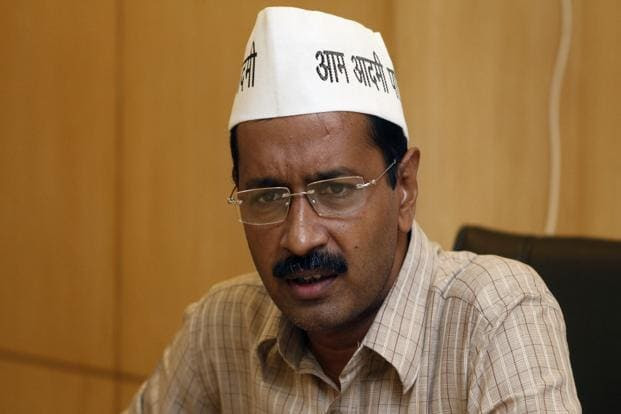
New Delhi: The young anti-corruption party that stormed to power in Delhi last month plans to field at least 73 candidates in Lok Sabha elections due by May to stand against politicians accused of crimes, said its leader Arvind Kejriwal on Monday.
Following its strong performance in Delhi, interest in the year-old Aam Aadmi Party (AAP) has surged. Since an announcement earlier this month that it would
contest the general election, its membership has passed 10 million.
Until now AAP had not said how many of the 540 lower house parliamentary seats it might contest in an election pitting the centre-left governing coalition against front runner opposition candidate Narendra Modi.
While polls suggest the debutante party is unlikely to win more than a dozen or so seats, its success in Delhi has shaken up the national race, with Modi’s Bharatiya Janata Party (BJP) and the Congress party both aping AAP’s anti-elite, anti-corruption language.
Even a small clutch of seats for the AAP could be enough to deny Modi a chance at forming a government, and give Arvind Kejriwal a say in national policy.
The AAP will put up candidates in constituencies of 73 members of parliament who face serious criminal charges. Candidates will also stand for the seats of central government ministers which the party believes are corrupt, Kejriwal said in
an interview with Reuters.
“The most important thing is there are a large number of cabinet ministers who have indulged in corruption, they need to be defeated,” Kejriwal said.
“There are nearly 162 people in Lok Sabha who have criminal charges against them and there are 73 out of them who have serious charges against them. They need to be defeated, we will put up strong candidates against them,” said Kejriwal, who was sworn in as the head of Delhi’s city government on 28 December
Voters are notorious for rewarding candidates with criminal accusations against them. Politicians accused of crimes had a higher success rate than others in the last parliamentary election in 2009.
“It is for the people to decide if they want to support clean politics or not. Earlier the people used to say they didn’t have an option, now we will provide them with a clean option,” Kejriwal said.
The AAP is expected to also field national election candidates in constituencies in New Delhi and in the neighbouring states of Haryana and Punjab. REUTERS
----- ----- ----- ----- -----
JUGGLE-BANDHI
Anarchy Inc
Jug Suraiya28 January 2014, 10:49 PM IST
Mahatma Gandhi told the British: "Leave India to God or to anarchy." Sixty-six years after Independence, India seems to be fulfilling this prophecy, in terms of anarchy. In what has widely been seen as a veiled reference to Arvind Kejriwal`s Aam Aadmi Party (AAP), President Pranab Mukherjee in his address to the nation on the eve of Republic Day said that "popu-list anarchy cannot be a substitute for good governance".
Was the president referring to the constitutional propriety — or impropriety — of a duly elected chief minister sitting in dharna in effect against his own administration? Whether or not the reference was indeed to AAP, Kejriwal has picked up the gauntlet and said that he would welcome a national debate on the subject, which hinges around AAP's style of functioning which an increasing number of commentators — including former supporters — are describing as being 'anarchic'.
'Anarchy' means 'an absence of law or government'. Can any government — which is supposed to be the embodiment of the rule of law in society — be 'anarchic', represent an absence of government, an absence of itself? Is such a political paradox possible?
In India, it is not just possible but in fact has been in practice for many years. For all the increasing clamour of the urgent need of 'good governance', India has always been what is often described as a 'functioning anarchy', a society in which rules exist only in order to be broken, or openly flouted.
India has an innate genius for anarchy, for operating without any rules at all. We call this lack of rules by various names, our famed knack of 'jugaad' being one of them. Whether it is negotiating everyday traffic on the road, trying out a recipe for a new dish, or playing a piece of classical music, India improvises: it improvises through jugaad, andaz, extemporisation, ad hocism, call it what you will.
There is only one cardinal rule in India, and that is that there are no hard and fast rules for doing anything, from driving a car or a two-wheeler, to conducting business, or achieving one's goals by whatever means at hand.
This open flouting of rules is often demanded as a 'right'. Students sitting for an exam will smash up the premises where the test is being held if they are denied their 'right' to resort to mass 'copying'. Members of a particular caste or community will claim as their 'right' to go on a mob rampage and vandalise public property if their demands for quotas, or reservations or a separate state, or whatever else it is that they want, aren't met.
Self-appointed 'moral police' — a euphemism for goons and thugs — assert their 'right' to beat up anyone whose dress or behaviour offends against 'Indian culture', whatever that convenient catchphrase means. Netas convicted under law for multi-crore scams will proclaim their 'right' to be tried only by the 'court of the people'.
So, is Arvind Kejriwal an anarchist? If he isn't, he'd better become one if he's to get anywhere in the anarchy of India's public life.
----- ----- ----- ----- -----
AAP to take on tainted politicians in LS polls: Kejriwal
Candidates will also stand for the seats of central govt ministers which the party believes are corrupt, says Kejriwal
Kejriwal
says there are nearly 162 people in Lok Sabha who have criminal charges
against them and there are 73 out of them who have serious charges
against them. They need to be defeated, we will put up strong candidates
against them. Photo: Hindustan Times
New Delhi: The young anti-corruption party that stormed to power in Delhi last month plans to field at least 73 candidates in Lok Sabha elections due by May to stand against politicians accused of crimes, said its leader Arvind Kejriwal on Monday.
Following its strong performance in Delhi, interest in the year-old Aam Aadmi Party (AAP) has surged. Since an announcement earlier this month that it would
contest the general election, its membership has passed 10 million.
Until now AAP had not said how many of the 540 lower house parliamentary seats it might contest in an election pitting the centre-left governing coalition against front runner opposition candidate Narendra Modi.
While polls suggest the debutante party is unlikely to win more than a dozen or so seats, its success in Delhi has shaken up the national race, with Modi’s Bharatiya Janata Party (BJP) and the Congress party both aping AAP’s anti-elite, anti-corruption language.
Even a small clutch of seats for the AAP could be enough to deny Modi a chance at forming a government, and give Arvind Kejriwal a say in national policy.
The AAP will put up candidates in constituencies of 73 members of parliament who face serious criminal charges. Candidates will also stand for the seats of central government ministers which the party believes are corrupt, Kejriwal said in
an interview with Reuters.
“The most important thing is there are a large number of cabinet ministers who have indulged in corruption, they need to be defeated,” Kejriwal said.
“There are nearly 162 people in Lok Sabha who have criminal charges against them and there are 73 out of them who have serious charges against them. They need to be defeated, we will put up strong candidates against them,” said Kejriwal, who was sworn in as the head of Delhi’s city government on 28 December
He did not say how many, or which, government ministers would be a target.
Voters are notorious for rewarding candidates with criminal accusations against them. Politicians accused of crimes had a higher success rate than others in the last parliamentary election in 2009.
“It is for the people to decide if they want to support clean politics or not. Earlier the people used to say they didn’t have an option, now we will provide them with a clean option,” Kejriwal said.
The AAP is expected to also field national election candidates in constituencies in New Delhi and in the neighbouring states of Haryana and Punjab. REUTERS
----- ----- ----- ----- -----
Subscribe to:
Posts (Atom)