Showing posts with label Hashimpura Police massacre of Muslims. Show all posts

Tuesday, March 24, 2015

1987 Hashimpura massacre: The photographs that stand witness: Express News Service - The Indian Express

http://indianexpress.com/article/india/india-others/1987-hashimpura-massacre-the-photographs-that-stand-witness/2/

The Indian Express

1987 Hashimpura massacre: The photographs that stand witness

Hashimpura massacre, hashimpura killings, hashimpura murders, PAC hashimpura, 1987 hashimpura, UP police, UP police hashimpura
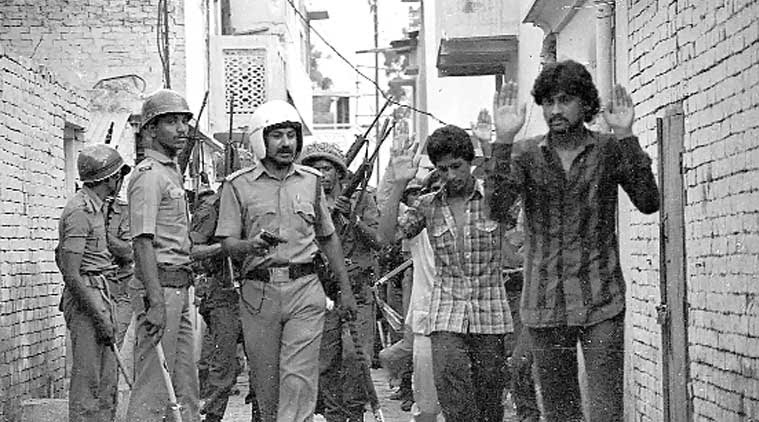
‘When the Army completed its search operation, it handed the men over to the Provincial Armed Constabulary... The PAC men kept threatening the public at gunpoint.’
By: Express News Service | Updated: March 24, 2015 5:35 pm
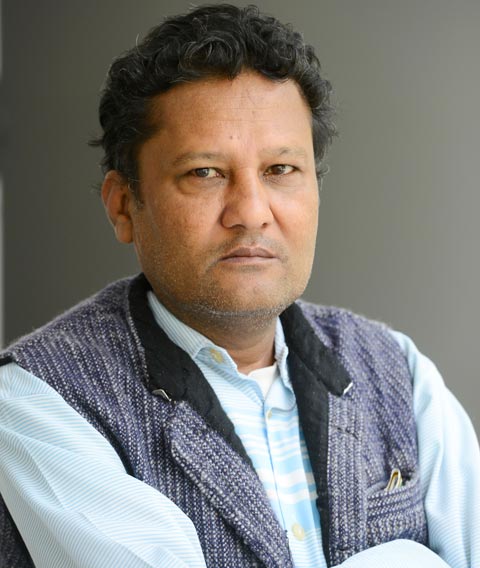
Photojournalist Praveen Jain was in Hashimpura on May 22, 1987, where he saw a PAC and Army crackdown unfold. Some of the photos he clicked would go on to serve as prosecution evidence against PAC men accused of massacring civilians and since acquitted by a court. Jain, Associate Photo Editor with The Indian Express, recounts what he saw that day.
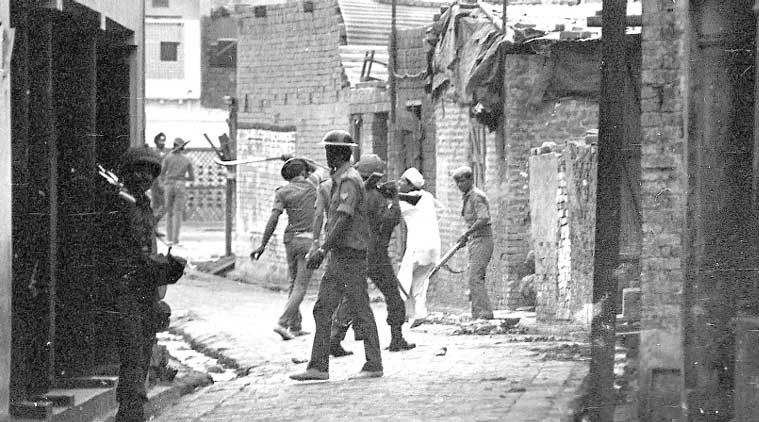
‘While conducting the search, Army men were beating up the young men with their fists and rifle butts.’ ‘While conducting the search, Army men were beating up the young men with their fists and rifle butts.’
There is this one image that has remained in my memory ever since I saw it. As Army men barged into a Muslim home and dragged the men out one by one, a little boy ran in fear, then suddenly stopped and started offering namaaz — he was turning to the almighty for help. Looking at the child’s face, I could sense how helpless he was feeling. I don’t know what the child’s fault was.
‘They were pleading with the Army to leave their men alone.’‘They were pleading with the Army to leave their men alone.’
It was the morning of May 22, 1987. I was then with Sunday Mail, working as chief photographer. I had been asked to go to Meerut; I was told that there were communal clashes there. Until then, it was only an assignment.
praveenjainnew

When I reached Meerut, a police officer told me, “Why you are here? Go visit Hashimpura mohalla (part of Meerut city). That is the place where the Army is conducting its search operation.” That is when I reached Hashimpura.
The moment I entered the mohalla, the tension was noticeable. Army men were marching in groups. Young men were being dragged out of their homes. I took my Canon in my hands and started clicking photos. What was very disturbing was the sight of the distraught women. Standing on their terraces, they were shouting at the Army men, pleading with them to leave their men alone. Not one woman came out on the street, though.
As the operation got more and more intense, it soon became apparent that things were getting risky even for me. I had to hide inside a Muslim family’s house. Today, I cannot remember the name of the family. The Army by then had started entering almost every home. They were conducting their search very fast.
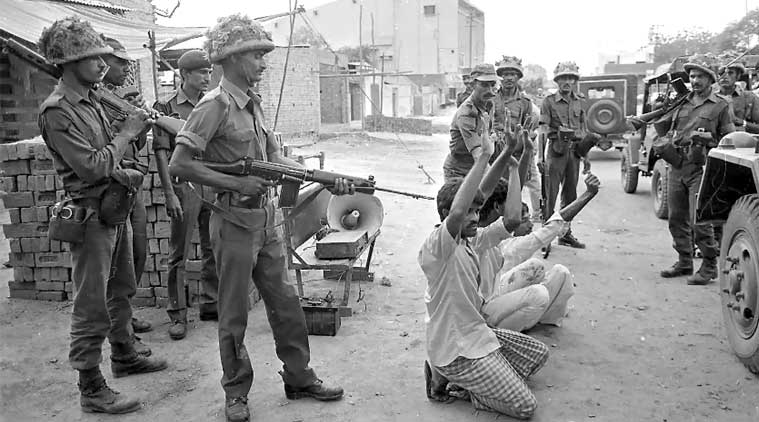
'They were taken to the main road, asked to put their hands up.'
It was mostly the young men who were dragged out. And while conducting the search, Army men were beating them up with their fists and rifle butts. As I was trying to capture one of these pictures, one of the Army personnel saw me and tried to stop me. He asked me to leave. As far as I can remember, I was stopped twice but I did click my pictures, hiding at different places at different times. When the Army completed its search operation, its personnel handed the men over to the Provincial Armed Constabulary.
When I moved out of the house where I was hiding, I saw some men being told to kneel down, others being dragged out, and some others being brutally beaten up. All through, the PAC men kept threatening the public at gunpoint. By then, I had taken more than 15 photographs.
These men were taken to the main road outside the mohalla and made to kneel there. They were all asked to put their hands up. I quickly captured another set of photos. The trucks had already arrived. The young men were segregated from the group and told to get into the trucks. I thought these were preventive arrests. At that point, I thought these men were being taken away to maintain some peace, as curfew had been clamped in Meerut.
It was a three-hour assignment. I then returned to Delhi. It was only after I got back that I got to hear about how Muslim men had been killed in Meerut that day.
First Published on: March 24, 201512:00 am

Thursday, February 9, 2012

Polls 2012: Muslims in Meerut still nurse wounds of two-decade old riots - By Iftekhar Gilani - DNA

http://www.dnaindia.com/india/report_polls-2012-muslims-in-meerut-still-nurse-wounds-of-two-decade-old-riots_1647668


Polls 2012: Muslims in Meerut still nurse wounds of two-decade old riots
 
Published: Thursday, Feb 9, 2012, 9:00 IST
By Iftikhar Gilani | Place: Meerut | Agency: DNA

Emerging from a printing press, with ink soaked hands and drenched clothes, Iqbal Ahmed can be taken for any other labourer. But he is a medical graduate; his life totally changed 25 years ago when he was among the hundred-odd picked up from Hashimpura locality of Meerut when it was engulfed in the worst-ever communal riots.

He was a lucky one to be taken to jail. For, others were shot dead and thrown into the Upper Ganges and the Hindon Canal allegedly by the Provincial Armed Constabulary (PAC) of UP.

Iqbal’s life was so battered that he became mentally wreck and could not continue practicing medicine.

This communally sensitive western UP is now calm. The bloody riots in 1989 sent the Congress packing out of power in the state.

Congress general secretary Rahul Gandhi may be trying hard to re-build the party edifice, enticing various communities including Muslims, but the residents here are hardly in a mood to forgive his party.

In the dingy alley of Hashimpura, there are few takers for the Congress’s promises of employment opportunities for youth and quotas for minorities and free electricity connections to the poor. 

“What we need is justice and security and not doles,” says Laiq Ahmed, president of the local unit of Muslim Majlis.

Shrieks of 70-year-old Peeru, a walking skeleton, rents the allies of Hashimpura as she recounts how her 16-year-old son Nizamudin was dragged and pushed into a PAC truck. Mentally disturbed, she still awaits the return of her son.

Jamaludin Ansari (75) recalls that even BJP leader LK Advani had sympathised with them when he visited the area and was confronted with the story. Then a owner of a roaring scissor manufacturing business, Ansari is now meeting both ends by running a small shop inside his dingy hovel.

His 22-year-old son Qamruddin was killed in cold blood. He even didn’t get his body, despite identifying his clothes in Kotwali.

“Since then everything got shattered. My customers were mostly Hindus, they refused to visit my factory out of fear and prejudice,” says the old man.

Unlike Gujarat, where hordes of NGOs have descended to seek justice for the 2002 riots victims, old and frail residents of Hashimpura and Maliana localities, whose sons were killed 25 years ago, are left to their own to pursue the case in Delhi’s Tis Hazari court, which recently concluded examining the 91st witness.

The anger against the Congress is palpable. “We will never forgive the party till we get justice,” says Ansari, only to add in the same breath that other secular parties like the SP and the BSP have also looked the other way, not even initiating disciplinary actions against the PAC personnel.

Out of the five survivors of the bloodshed, Babudin, now 43, shows three bullet marks on his body — the PAC had picked him up from his house and fired at him.

Now as stakes run high in the UP elections, the issue hardly finds reverberations in the poll lexicons of the Congress and the SP, who are pitted against each other in the Muslim dominated seat.

After delimitation, Hashimpura has been merged with Meerut cantonment, thus saving local Congress candidate Yusuf Qureshi from their wreath. Qureshi, a lawyer and PhD, is pitted against SP’s Rafiq Ansari. It has sharply divided Muslims on caste lines.


While butchers and those associated with meat business are backing Qureshi, weavers, labourers and others are vouching for Ansari. Meat shop owners ask their customers to vote for Qureshi.


But hardly the issue of Hashimpur figures in the lexicon. The role of the Mulayam Singh Yadav government in the past, which is supposed to be favourably inclined to Muslims, did nothing for getting justice done in the case.

The incident which sealed the fate of the Congress finds no mention in the manifestos. Justice still seems a faraway proposition for the victims of Hashimpura.