Sunday, June 19, 2016

Told not to wear abaya, DPS Srinagar teacher quits school - Written by Bashaarat Masood - The Indian Express

http://indianexpress.com/article/india/india-news-india/delhi-public-school-dps-srinagar-abaya-row-told-not-to-wear-teacher-quits-school-2861949/


The Indian Express

Told not to wear abaya, DPS Srinagar teacher quits school


Education Minister Naeem Akhtar said, “We live in a multi-religious, multi-cultural set-up. We have a secular fabric (and) no force on any such issue will be accepted. We are not France.”


Written by Bashaarat Masood | Srinagar | Updated: June 19, 2016 4:34 am
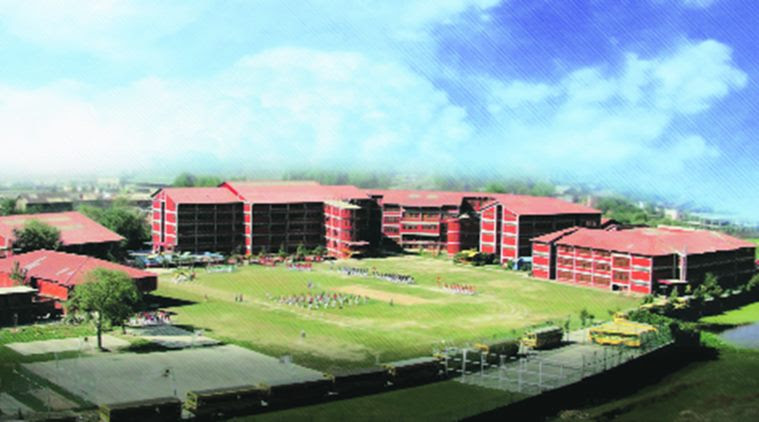
Delhi Public School, DPS, Srinagar, abaya, Srinagar abaya, DPS Srinagar abaya, Delhi Public School Srinagar, DPS Srinagar, india newsWent by school rules, DPS Srinagar principal told students
THREE DAYS after a teacher of Delhi Public School (DPS) Srinagar who had come to work in an abaya (a long, loose cloak worn by women) resigned, after the school management allegedly asked her to choose between the abaya and her job, the Jammu and Kashmir government on Saturday called it a “serious issue” and said that J&K is “not France”.
Responding to Independent MLA Engineer Rashid’s question on the issue during Zero Hour in the Assembly, state Education Minister Naeem Akhtar said, “We live in a multi-religious, multi-cultural set-up. We have a secular fabric (and) no force on any such issue will be accepted. We are not France.”
The minister, who is also the spokesperson of the PDP-BJP government in the state, was referring to France’s ban on headscarves, turbans and other conspicuous religious symbols in public schools. The teacher, who taught Biology, resigned on Wednesday after school authorities told her that she cannot wear it “inside the school”, she told The Sunday Express on Saturday.
The incident had come to light on Friday when students of the premier school boycotted classes and exams and sought an apology from the school management. The students also demanded that the teacher be recalled. “I was not given any contract or explained any conditions when I joined,” said the 29-year-old teacher, who did not wish to be named.
“The principal was absent for two months. After she returned, she sent a message that I should not wear abaya. She categorically told me that Islamic dress is not allowed on the school premises.” “The (school) chairman later also told me that I should not wear it inside the school. When I refused, I was told that I have to leave the job.”
SHARE THIS ARTICLE
Share
RELATED ARTICLE

According to the students, when asked about the issue, the principal told them that the school is “following rules” in issuing the warning to the teacher and contended that the school law says “no female teacher can wear abaya inside the campus during working hours”.
Calling it a “serious issue”, Akhtar said the government would get to the truth of the matter. “It (DPS) is a private school. We will get to the truth of it (the issue of banning abaya in the school),” he said. “We believe the (school) management is sensitive to the issues here.”
While the government tried to firefight, the separatists said the ban on wearing of abaya in school is akin to “interference” in practice of religion. “Jammu and Kashmir is a Muslim-majority state and to raise objections on wearing of an Islamic dress here could have serious consequences,” senior separatist leader and Hurriyat chairman Syed Ali Shah Geelani said. “There is no moral justification for it. The school should offer an unconditional apology and ensure that such a mistake is not repeated.”
The Hurriyat leader added that the school should not ignore sensitivity of the issue. Mutahida Majlis Ulema (MMU), an amalgam of religious organisations headed by Mirwaiz Umar Farooq, said that such “un-Islamic and anti-Muslim measures would not be tolerated”. The school administration did not respond despite repeated attempts for a comment.
---

The Indian Express

Atleast 50,000 Muslims migrated after Muzaffarnagar riots. Would BJP send a fact-fonding team to Muzaffarnagar: Asaduddin Owaisi


The Hyderabad Lok Sabha member termed as "bogus" the list of 346 families who are alleged to have "fled" Kairana in Uttar Pradesh.


By: PTI | Hyderabad | Published:June 18, 2016 4:41 pm
Asaduddin Owaisi, Owaisi, BJP,  AIMIM, muslims BJP,Kairana, Kairana exodus, Muzaffarnagar riots, hindu muslim, hindu muslim conflict, india news Owaisi claimed “50,000 people had left their original places where they had lived for generations” after the Muzaffarnagar riots, and termed it as “mass uprooting” of minorities after country’s Independence.
Claiming that 50,000 Muslims migrated after the 2013 Muzaffarnagar riots, AIMIM President Asaduddin Owaisi on Saturday asked the BJP if it would send a fact-finding committee there, akin to the one sent by it to Kairana on the issue of alleged migration of Hindus.
The Hyderabad Lok Sabha member termed as “bogus” the list of 346 families who are alleged to have “fled” Kairana in Uttar Pradesh, adding that it suited the interests of both the BJP and the Samajwadi Party to create a “drama” over the issue.
Owaisi claimed “50,000 people had left their original places where they had lived for generations” after the Muzaffarnagar riots, and termed it as “mass uprooting” of minorities after country’s Independence.
“Would the BJP send a fact-finding committee? Would the BJP find some time to send delegation to find out what happened to those 50,000 people who are displaced? (after Muzaffarnagar riots),” he said.
“Basically, they (BJP) have no other issue and this (Kairana issue) shows the real face of BJP that all this talk of development, ‘sab ka saath sab ka vikas’, is all a farce…unfortunately, they are being helped by Samajwadi Party,” Owaisi claimed.
“It suits both BJP and Samajwadi Party. Politically, BJP wants to create a fear among majority community. Samajwadi Party wants to give a message to Muslims that you are insecure if you don’t elect Samajwadi Party. So, this drama suits both BJP and Samajwadi Party,” he said.
When such issue are in the forefront, Samajwadi Party is happy as it does not have to answer questions on their failure to deliver and on “misgovernance”, he said.
Owaisi said the AIMIM would contest the Assembly elections in Uttar Pradesh, due early next year, but added that it was too early to give the number of seats that it would contest.
He said his party was open to forging an alliance in Uttar Pradesh.
“Yes. I have no issue if such a proposal comes. We are open for alliance but we will have to wait and see what happens.”
---

Sunday, June 12, 2016

Lights out in Malegaon: What’s killing Mollywood? Written by Zeeshan Shaikh - The Indian Express

http://indianexpress.com/article/india/india-news-india/2008-malegaon-blast-case-lights-out-in-malegaon/

The Indian Express

Lights out in Malegaon: What’s killing Mollywood?


The once-thriving ‘Mollywood’ in this town, popularised by the documentary Supermen of Malegaon, hasn’t seen a release in two years. Its posterboy has called time on his celluloid dreams


Written by ZEESHAN SHAIKH 
Updated: Jun 12, 2016, 11:10

2008 Malegaon blast, Malegaon blast, 2008 blast case, 2008 blast, malegaon updates, malegaon case bail, Shakir nasir, Malegaon related story, Praveen Takkalki, Prasad Purohit, Sudhakar Chaturvedi, India newsNasir runs an eatery now and says is focused on his “akhirat (afterlife)”. (Express photo by-Zeeshan Sheikh)
“We are making films without equipment. We have no weapons but we’re fighting a war. And winning it,” says a character in the critically-acclaimed 2012 documentary Supermen of Malegaon, as he describes the then thriving low-budget film industry in the little town in Nashik district. Four years on, however, increasing social media entertainment and video piracy have pushed Mollywood, Malegaon’s own little Bollywood, to the brink of losing that war: there has not been a single release from its celluloid depots for the past two years.
For Shakir Nasir, the industry’s poster boy, the prolonged hiatus has meant curtains on his 15-year film career, and on that of many others like him in the powerloom town.
The 38-year-old changed professions early last year and now runs ‘Hotel Prince’, a bustling restaurant adjacent to the Malegaon bus stop. He spends his days checking on customers, instructing waiters, preparing bills and offering namaaz — a far cry from shooting sequences on a camcorder mounted on cycles and trucks, among other things. “The entertainment industry is a tough one. You need to completely transform yourself to be a part of it. I could not match up to the demands it was placing on me and so decided to quit,” smiles Nasir, sitting at the counter of his restaurant.
While he also blames increasing online entertainment options and video piracy for the losses faced by the industry, there is another factor that influenced his decision to quit. “I have transitioned from Mollywood to Maulviwood. Films gave me fame but they took me away from the purpose of my existence. Earlier I didn’t offer namaaz but now I get restless if I miss it… I am focusing on improving my akhirat (afterlife) now,” he says. “There was also some opposition to filmmaking from religious heads in the town,” he adds.
Before it hit the headlines for communal violence and blasts, Malegaon, about 250 km from Mumbai, had been churning out locally made films for years.
The town always had a healthy and vibrant cultural space, and the first low-cost indigenous film, Qatil Khazana, was shot in 1972. In recent times, men like Nasir kept the industry alive, releasing about a dozen-odd films a year, all shot with camcorders. The formula was simple: spoofs of mainstream Bollywood and Hollywood films on a shoe-string budget, with a rag-tag crew, actors from the town and scenes peppered with colloquial expressions. The result was films like Khandesh Ke Dilwale Dulhaniya Le Jayenge, Koi Hil Gaya and Nasir’s 2011 hit Malegaon Ke Sholay, made on a budget of Rs 50,000, which grossed about Rs 2 lakh.
“I owned a small video parlour and learned about direction, camera and editing by watching films there. I was 20 when I directed my first film — a social thriller made in 1998 — but that didn’t work. So I decided to adapt commercially successful films to cater to local sensibilities,” recalls Nasir. He claims that some of his movies were even bought by Mumbai-based distributors, who would go on to sell their DVDs across India.
The industry began getting noticed when reporters converged on the town after the 2006 blasts. It really hit the big time after documentary filmmaker Faiza Ahmad Khan made Supermen of Malegaon, which chronicled Nasir working on his directorial venture, Yeh Hai Malegaon Ka Superman. The documentary went on to pick up laurels in film festivals from Rome to Durham and instantly shot Nasir to fame, even though Yeh Hai Malegaon Ka Superman remains unreleased.
“I got many awards and even landed a deal to direct a TV series, Malegaon ka Chintu. The show ran for three years and I even travelled abroad. But the good times have ended now,” Nasir says.
Malegaon still has close to 15 conventional theatres that screen Bollywood films, and 15 video parlours, where Mollywood films were the staple earlier. Even district headquarters Nashik, thrice the size of Malegaon, doesn’t have more theatres.
Then there are plays organised by the Malegaon Drama Art Culture Association. Its president Siraj Dular, a pioneer in the local filmmaking industry who was associated with Qatil Khazana, believes failure to reinvent was a major reason for Mollywood’s downfall. “With the limited resources, the boys did good work, they were technically sound. But artistically, they were not offering anything new to the audience. A certain degree of fatigue set in for viewers, which was never addressed,” Dular says.
“People like it when those on screen speak in their language. They lapped it up, the media lapped it up and we got famous. Come to think of it, we were given a status bigger than what we actually were,” observes Faroghue Jafri, who has written and directed over 15 Mollywood films.
He blames piracy and “jealousy on the part of city elders” for the industry’s collapse. “Piracy broke our back. Distributors who bought our films put the onus of checking piracy on us too. Imagine writing, directing, financing and then picking up fights on the streets to stop piracy,” Jafri says. “Then there were people in the village who just couldn’t handle our fame. There was an insidious campaign against us. There are at least four poets, two actors and one director under every roof in Malegaon, but the industry here is dying, ” he adds.
Disheartened by the turn of events, like Nasir, Jafri too has decided to switch professions. “ In 2010, I went to Mumbai to try my luck in Bollywood and made Rs 5,000 a month working for an Urdu newspaper. I couldn’t survive and decided to return to Malegaon. I am now completing the final draft of my Urdu novel,” he says.
Back at the restaurant, Nasir is busy tallying bills of the day. Between instructing the waiters, he says, “I think I got carried away with all the fame that came my way. I was happy then but I am happier now. There are no plans to make films anytime soon, but if I do, it will not be for commercial purposes. Everything is for Allah to decide now,” says Nasir.
---

Saturday, June 11, 2016

ALI, THE FIRST GLOBAL SUPERSTAR AND MUSLIM HERO - ARAB NEWS

http://www.arabnews.com/node/937151/columns

Logo

Ali — a beautiful life

  
Aijaz Zaka Syed
Muhammad Ali’s boxing career had been over by the time I grew up. We did not even have a television then; so there was no question of watching his epic battles or even his show bouts around the world in the ’80s. However, I grew up with his larger than life persona, thanks to my uncle who hopelessly adored and often discussed him with my father. 
He had a small gym at home where he and his friends spent long hours working out and admiring themselves in mirror. My uncle referred to the boxing legend as ‘Muhammad Ali Cillay’ as it was spelt in Urdu. My father always corrected him saying it’s not Cillay but Clay.
So Ali’s death has been a personal tragedy in many ways. It’s as if someone in the family has departed. But I’m not the only one to be weighed down by this sense of personal loss. Hundreds of millions of people around the world who don’t follow sports felt that indefinable, personal connection with the Champ. Many like me even hated the cruel, inhuman game of heavyweight boxing. 
What was it that made Ali the Greatest, as he modestly referred to himself, and most loved sporting icon of all time then?
His incredible boxing career of 61 fights with 56 wins, his gravitas, not to mention his extraordinary sense of humor, wit and way with words certainly contributed to his legend and immense popularity around the world. He was doubtless the first truly global superstar, far ahead of his time, long before media created stars and killed them on a daily basis.
The Muslims everywhere, from Morocco to Malaysia, were crazy about him ostensibly because he was one of their own; new believers enjoy a special, exalted status in Muslim societies. But then there have been other famous converts to Islam, including the fellow heavyweight boxing champion Mike Tyson. None of them have enjoyed the kind of frenzied love and affection showered on Ali. 
Ali was adored, loved, and lionized across the Muslim world as no other figure in recent memory has been because he was the first Muslim hero and global champion where none had existed in a long, long time. 
For ordinary Muslims around the world stuck with tyranny, injustice, stagnation and corrupt regimes, he was ‘brother Muhammad Ali’ — their own fighter and knight in shining armor who almost never lost any battles and who stood up to powers that be. 
He offered Muslims hope and a rare sense of pride in their egalitarian faith and its ability to unite people in a single bond beyond the narrow distinctions of borders and birth.
What about the rest of the world though? What was it about Ali that struck a chord with people around the world? Why was he so universally loved and idolized — from America to Australia?
Again it had less to do with his amazing boxing career and more to do with the force of his extraordinary personality. It was his magnetic persona, exceptional self-belief coupled with his humility that allowed him to connect instantly with total strangers and above all his humanity and belief in his ideals that conquered hearts and minds everywhere. 
He had stood up for his rights and the rights of his people when doing so was almost unthinkable for the African Americans. And he did so with unapologetic courage. 
He would display the same courage of conviction and fearless moral uprightness repeatedly in his illustrious career and eventful life. When he embraced Islam, he declared it from every platform available with fierce pride, refusing to be addressed by his former ‘slave’ name, at a time when America had few Muslims.
It was the same when he defiantly refused to join the US war on Vietnam. He was prepared to sacrifice his lucrative career and name and fame and even go to jail for his beliefs.
His historic words would give a new lease of life to the anti-war movement across America and Europe and are recounted time and again:“Why should they ask me to put on a uniform and go 10,000 miles from home and drop bombs and bullets on brown people in Vietnam while so-called Negro people in Louisville are treated like dogs and denied simple human rights? No, I’m not going 10,000 miles from home to help murder and burn another poor nation simply to continue the domination of white slave masters of the darker people the world over. I ain’t got no quarrel with them VietCong! No VietCong ever called me nigger!”
His anti-war sentiment was tinged with concern for his people: “If I thought the war was going to bring freedom and equality to 22 million of my people, they wouldn’t have to draft me; I’d join tomorrow. I have nothing to lose by standing up for my beliefs. So I’ll go to jail, so what? We’ve been in jail for 400 years.”
He made dissent cool, protesting against the disastrous war in distant Vietnam so much so the US government was forced to lift the curbs on him four years later. It was an endorsement of Ali’s stand that a warmonger president conferred on him the nation’s highest civilian honor. 
It was this defiance coupled with his down-to-earth humanism that made Ali the beloved, ever reigning champion of the world. The world indulged his swagger and bluster, his claims to be the “greatest” knowing full well that underneath it was all humility and a heart of gold that felt everyone’s pain. 
That is why the world laughed and cried with him. In 1996, when he lit the Olympic torch to open the Atlanta games with great difficulty and dignified eloquence, thousands around the world wept.
Long before Obama talked about the “audacity of hope” and finally made it to the White House, it was Ali’s audacity that helped the African Americans and other groups living on the margins of American society find their voice and dignity. 
Indeed, but for the legacy of Ali, Martin Luther King Jr and Malcolm X, the current incumbent’s White House dream may have remained a dream.
And it’s not just presidential careers that Ali influenced; he touched and transformed hundreds of millions of lives, even those who never had an opportunity to see him in the ring at the peak of his glory. It’s evident in the unprecedented, spontaneous global outpouring of love and grief over his death. 
As Gary Younge says in the Guardian, “it’s clear that Ali understood he had a job to do while he was on the planet — people.”
And what an inspiring, truly uplifting example he has set for generations to follow. It was truly a beautiful and extraordinary life.
In the words of Obama, who apparently keeps a pair of Ali’s gloves on display in his study under a framed picture of the Champ towering over Sonny Liston after knocking him out in the first round of the world title fight in 1965, “Muhammad Ali shook up the world. And the world is better for it. We are all better for it.”
He leaves behind a better world — and a better America — than he had inherited. But there will be no other Muhammad Ali. Ever.