Wednesday, May 4, 2016

EXCLUSIVE: NOW I SEE A TERRORIST, NOW I DON’T - By Sunil Baghel, Mumbai Mirror, May 4, 2016

http://www.mumbaimirror.com/mumbai/cover-story/Exclusive-Now-I-see-a-terrorist-now-I-dont/articleshow/52100218.cms


MumbaiMirror

EXCLUSIVE: NOW I SEE A TERRORIST, NOW I DON’T

By Sunil Baghel, Mumbai Mirror | May 4, 2016, 03.11 AM IST


Nearly a month after their original statements in the Malegaon 2008 blasts case were reported 'missing' from the special NIA court, two witnesses tendered fresh statements before the court and they are completely contrary to what they said earlier.

While their earlier statements, recorded in late 2008 and early 2009 before two different magistrates in Mumbai, incriminated various accused in the case, the fresh statements virtually give the accused a clean chit. These accused are Dayanand Pandey alias Sudhakar Dwivedi alias Swami Amritanand Devtirth, Lt. Col. Shrikant Prasad Purohit, Major Ramesh Upadhyay, Sudhakar Chaturvedi, Sameer Kulkarni and Pragya Singh Thakur.

The recent statements have been recorded before magistrates in New Delhi. Just as the originals, these statements are also admissible in court as evidence. Mirror is in possession of both sets of statements.

In the earlier statement, one of the witnesses claimed he had heard conversations between the accused at two meetings: one at a temple in Faridabad in January 2008; the other — the main one to hatch the conspiracy — in Bhopal in April the same year. This statement conveyed a detailed account of what was discussed at the meets. "Sudhakar Dwivedi alias Swami Amritanand Devtirth had come to the same temple in my village on January 25. Colonel Purohit, Sudhakar Chaturvedi and Sameer Kulkarni were accompanying him. The next day, they had a closed-door meeting. When I went to the room with tea, I heard them talk about Abhinav Bharat. They were discussing how they would be able to take revenge on Muslims in its name, and that the name would help them seek donations as well."

This meeting, allegedly foundational for executing the blasts, was followed by another, said to be the key meeting, in Bhopal. The witness said Dwivedi called him to this second meet, which was attended by Lt Col Purohit, Major Upadhyay, Sameer Kulkarni, Sudhakar Chaturvedi and Pragya Singh Thakur. "All of them held a meeting in a room at the temple. I went there to serve water and heard them talk about creating a base for Abhinav Bharat in Madhya Pradesh. Purohit was talking about executing a plan for taking revenge on Muslims. He mentioned Malegaon as a place with high density of Muslim population and that a blast could be carried out there to avenge atrocities on Hindus. Everyone present at the meeting agreed with Purohit. Pragya Singh Thakur said people would be arranged for carrying out the blasts and that no one should worry about this."

In the fresh statement, though, the same witness said he came to know Swamiji's name from news reports after he was arrested in the blasts case. He further said he was pressurised by Maharashtra Anti-Terrorism Squad officials to say what he did in his earlier statement, adding that he knew nothing about the alleged meetings.

The other witness's earlier statement said he was present at the Bhopal meeting of April 2008 when the slogan 'Bomb ka badla bomb' was raised, and a "revenge blast" was allegedly plotted. But he has retracted this in the fresh statement. He had also mentioned a discussion on formulating a "constitution for a Hindu rashtra" and forming a parallel government. The witness has now stated that he left the meeting immediately after he was apparently humiliated by Major Upadhyay for raising the issue of Kashmiris being displaced. The new statement categorically says he never mentioned Purohit saying anything about carrying out any blasts or the 'badla' slogan in any of his statements before this one.

The original statements remain missing. Mirror had reported on April 7 how key witness statements in the case had gone missing from the special NIA court.

---

Tuesday, May 3, 2016

Malegaon investigation: Jamiat questions probe into train blast, arms haul - Express News Service - The Indian Express

http://indianexpress.com/article/cities/mumbai/malegaon-investigation-jamiat-questions-probe-into-train-blast-arms-haul-2783309/

The Indian Express

Malegaon investigation: Jamiat questions probe into train blast, arms haul

The organisation said the men who had been picked up by the ATS in the 2006 Malegaon blast case had recently been discharged by the court.

By: Express News Service
Mumbai Published:May 4, 2016, 3:33 


Inline image 1


The organisation said the men who had been picked up by the ATS in the 2006 Malegaon blast case had recently been discharged by the court.. (Express archive) 


The Jamiat Ulama-E-Maharashtra has questioned the investigation carried out in the Mumbai train blast and the Aurangabad Arms haul case by the Maharashtra ATS.

The organisation said the men who had been picked up by the ATS in the 2006 Malegaon blast case had recently been discharged by the court.

It claimed that the same police officers who had erred in the Malegaon investigation, had also investigated the Mumbai train blast and the Aurangabad arms haul case and made Muslim youth “scapegoats”.

“Even though these three cases occurred on different dates and in different cities, the ATS in its faulty investigation brought about a common link to all three cases and framed the same set of accused in these cases,” said Gulzar Azmi, head of the Jamiat Ulama-i-Hinds legal aid committee.

In the Mumbai train blast case, a sessions court has convicted 12 Muslim men of whom five have been sentenced to death and 12 to life imprisonment.

In the Aurangabad arms haul case, a total of 22 Muslim men have been accused and a verdict is expected this month.

Azmi alleged that the accused had been repeatedly tortured by the police officers to turn approvers in their case.

He said two of them — Asif Khan Bashir Khan and Mohaamed Ali Alam Shaikh — who had been picked up in the train blast case, were tortured to turn approvers and threatened with being implicated in the Malegaon case if they did not do so.

“They were coaxed to turn approvers and threatened with being implicated in Malegaon case.

They had told this to the court two days before the Malegaon chargesheet was filed and still they were implicated,” Azmi claimed.

The Jamiat has also claimed that the Maharashtra Police had been sending money to Abrar Ahmed who had turned approver in the Malegoan case.

The Jamiat made public documents accessed through RTI which showed Abrar Ahmed getting money order from a police officer from Malegaon inside jail.

“What is the reason for the police to send money to an accused?
The ATS has used all stratagem at their disposal to implicate innocent men and ensure that they rot in prison,” Azmi said.

He also said the organisation would move the court to ensure that the ATS officers who had arrested these guys are brought to justice.

“The reason we have decided to file an application demanding action against the polcie officers is to ensure that no innocent person has to ever face this trauma of being implicated in a concocted case.

The police need to be answerable for their actions,” Jamiat Legal Advisor Shahid Nadeem said.

---

Monday, May 2, 2016

My right to enter the sanctum - Written by Trupti Desai - The Indian Express

http://indianexpress.com/article/opinion/columns/shani-shingnapur-temple-maharashtra-trupti-desai-ban-women-entry-trimbakeshwar-temple-nashik-haji-ali-dargah-2779685/

My comments posted on Trupti Desai's article:My right to enter the sanctum published by The Indian Express

GM
Ghulam Muhammed
It is ironical that the same Indian secular constitution, that bars the State to interfere into freedom of religion, is being referred by the Ms. Desai to grant her constitutional right to equality in the protected boundaries of religions. In fact, even though she says she is not against religion, she is zeroing only on religion, to seek equality, while women suffer inequality in all social, economic and even in state policies of education, employment and health. Her Leftist liberal agenda against religion in all its form is highly transparent and so is the make-up of her supporters and her cronies. All of a sudden a letter-head organization of Muslims for Secular Democracy had sprang up to revive its own dead existence by holding a ten-men Press Conference, that was covered by another fellow- traveler in a prominent newspaper. This smacks of some conspiracy to create civil strife and to sow seeds of division and disruption of peace. The Mumbai police had for once understood the fake nature of the protest and seen to it, that she does not create law and order problem at Haji Ali Dargah, where incidentally there is no 'sanctum' to compare with what Hindu temples have. She is therefore being pushed by some vested interests to run where angles will fear to tread. Mumbai police had seen to it that she is back to her Pune abode in one piece and in peace.
a few seconds ago
 (0) ·  (0)
 

---

The Indian Express

My right to enter the sanctum

We have little doubt that we will be able to break these wrong traditions and set in motion a new era where women in this country will enter places of worship with their heads held high, not as second-class citizens. 

Written by Trupti Desai 
Updated: May 2, 2016, 0:54

About Author


  • trupti desai 400

Trupti Desai -The writer, 32, is founder president, Bhumata Brigade 

Barely a few months after we started our campaign for entry of women into the sanctum sanctorum of the Shani Shingnapur temple in Maharashtra, it has now entered a decisive phase. After gaining entry into the inner sanctum of the Shani Shingnapur temple and then at Trimbakeshwar in Nashik, we will now try to enter the mazar of the Haji Ali dargah in Mumbai.

After Haji Ali, the Sabarimala temple of Kerala — where they say there is 100 per cent literacy — will be our target. We have little doubt that we will be able to break these wrong traditions and set in motion a new era where women in this country will enter places of worship with their heads held high, not as second-class citizens.

We have been repeatedly asked a question: Why are we trying to break “paramparas (traditions)” that have been observed for ages? My counter-question to those who ask this: Why can’t we break such age-old paramparas that seek only to denigrate women and give them secondary status in a country that has given them equal status? 

This male-dominated society has, for ages, sought to carry on with traditions that suit them. They have conveniently carried on with tradition that subjugates women, snatches their identity and smashes their self-esteem. In a nutshell, bad traditions have been given a strong push for centuries by this male-centric society in a bid to maintain their upper hand and dominance.

We are being asked why women — who go through menstrual cycles — should be allowed to go near gods? Some are branding women as impure and unfit to enter the sanctum sanctorum. The mere raising of such issues and talk about purity and impurity in the 21st century reflects the mindset and quality of these people. Thankfully, not many think on these lines or cling on to outdated and highly objectionable ideas that seek to push women into dark corners. 

My question is: What connection does a menstrual cycle have with the entry of women into the inner sanctums of places of worship? How can anybody even term “impure” the changes that a woman’s body undergoes? In today’s scientific world, how can they even ask such despicable questions? Do these men call the women who gave birth to them impure? Will they call their own births impure? If they call the process through which they come into this world impure, then, by their standards, they themselves are impure. But why even bring up such issues that have downgraded the status of women who have, in fact, been exalted by age-old scriptures that stipulate that man is incomplete without woman, and so on. We believe that god brought man into this world. But who brings men and women into this world? Obviously, women. Then who is a woman? Does she not have the status of a god? 

We are not terming entry into inner sanctums as a victory. If the Constitution of this country has given us equal rights, then we want to assert these rights. If men are allowed to enter inner sanctums at places of worship, we, too, want that right. By entering the inner sanctum, we are seeking to do away with the wrong traditions that exist in this country. For instance, in several communities, including amongst the upper classes, widows are not allowed to remarry. It is considered sacrilegious. On the contrary, if a woman dies, the husband is hurried into re-marriage. Such double standards that heavily favour men have continued for ages. As if women have no feeling or desire. Why should there be double standards in this age and time? All the harsh rules of society are reserved only for women. And all the positive norms seem hugely bent in favour of men. 

Our fight to enter inner sanctums is not targeted at any particular religion. Our fight is not against religion but wrong practices of religion. No scripture forbids women from entering the inner sanctums of places of worship. Yet, such wrong practices continue against the spirit and tenets of the religion. By seeking entry into the sanctum sanctorum, we are not challenging Hindu sanghatanas or any other religion. But we don’t understand what they will gain by stopping us. 

All the organisations that are opposing us tooth and nail should join us and help in giving women pride of place, which they richly deserve. Look at the Shani Shingnapur temple now. Women can enter the inner sanctum with pride and dignity — and nothing “bad”, as some had predicted, has happened. We are thankful to the trustees of the temple for changing their stance and giving women their rightful place. We have faced severe opposition to our entry into inner sanctums so far. We have been threatened, called names, abused using unprintable language, even beaten up. But we are not giving up. In fact, our agitation has become a national movement. After Shani Shingnapur and Trimbakeshwar, on to Haji Ali and Sabarimala.

Sunday, May 1, 2016


Inline image 1Inline image 2

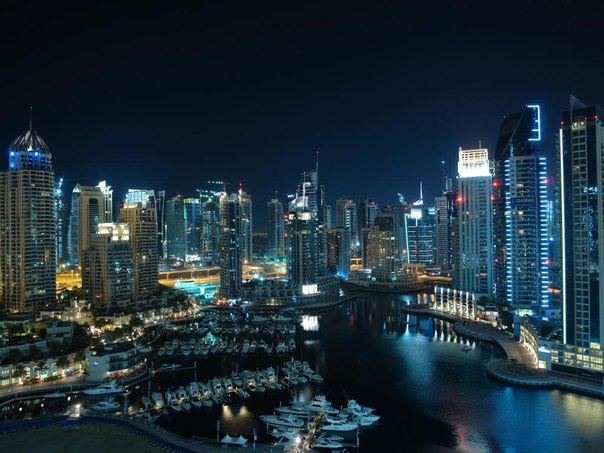
So, I’ve been giving it some thought lately (mostly because I’ve been feeling pretty homesick) and just for the sake of my conscience, I’ve been trying to concur an evaluation – weighing the pros and cons of both cities. However, when it boils down to it, Toronto and Dubai are two very different cities (externally, generally) but they do share many similarities. For example, there are probably as many Arabs here as there are in Dubai, the Lebanese food here is crap in comparison undoubtedly, but there’s something about the Saudi’s in their Canada Goose jackets that just reminds me of home. Toronto has incredible summer weather (ranging from 20 ℃ to 30 ℃) whilst ‘warm’ or ‘hot’ are understatements for Dubai’s summer weather (goes up to 50 ℃). But, everything is centrally air-conditioned and Dubai winter can be compared to Toronto’s early fall, and Toronto winter.. Well, that’s an entirely different story.
Toronto: 0       Dubai: 1
Nobody knows how taxes work in Dubai, because there aren’t any. When I first came to Toronto I had no clue how taxes worked (until much later I realized that 0.13% of how much you spend is added onto the ‘before tax’ equation leading to a ridiculous sum that you have to pay) and yes, tax return may exist but it’s still a hassle and somewhat of a buzzkill. In terms of taxes, Dubai evidently wins this one. In terms of lifestyle, a luxurious money-oriented lifestyle is obligatory in Dubai, at least for the majority of residents. If you don’t have money, you’re nobody. I don’t particularly appreciate that sort of mindset, I mean luxury is great – who doesn’t want a $500,000 car and a $2.8 million apartment that overlooks the Persian gulf? However, it’s not a necessity. I’m more fond of Toronto because of this, everyone is equal. Of course people have money here, but people respect you more for what you do, and for your abilities rather than how much money you have in the bank, or whether you wear a Patek Philippe or a swatch.
.luminato_light_pulse-front_harbourfront_relax_01W5ERwxuET08
Toronto: 1       Dubai: 1
Another characteristic that comes to mind when seeking differences between the two is people. You’re treated exceptionally differently in both cities, and you treat others differently too. Canadians are generally polite, well-mannered, decent people (minus the few assholes you come across) working in a restaurant for the last three months has shown me how respectful and appreciative people can be for your hard-work and efforts. However, in Dubai, nobody gives a shit to be completely honest with you. Tips are considered optional, as are ‘thank yous’. People who work in the hospitality or service industry are considered as the lower-working class and even expats who come from places like the US and the UK eventually succumb to treating those in the service industry in a demeaning manner, you adapt to the different norms wherever you are. Due to these differences, people believe they can treat those ‘lesser’ than them like shit, with absolutely no remorse and no regard – however in Canada, it’s completely different. I adapted to the snobbish, pretentious-like qualities that people possess back in the Middle East, but it definitely made me unattractive – and I still get along better with people from back home.
Toronto: 2       Dubai: 2
imgresDubai_Metro_01
I’ve always believed Dubai to lack anything authentic culture, it’s ‘cool’ to try and adapt to the ‘lochal‘ life-style whereas in Toronto cultures are divided and each area has it’s own unique feel due to the accumulation of one ethnicity (e.g. Little Portugal is literally, little Portugal). Toronto is known as one of the most ethnically diverse cities in the world, and Dubai brims with Indians, Pakistanis, Persians, Filipinos, Bangladeshis, Arabs of all sorts and then you have the splatters of expats here and there – but as I said, if you’re not Emirati you’re not an equal. Also not to mention Dubai’s double standards regarding religious norms – No public displays of affection but a blind-eye is turned to it’s nightlife. Four years in prison if you’re caught with marijuana, but we all know who can bend those rules. I don’t even want to get started on the idiocy of Shariah Law – I do find it disturbing, this is my own opinion. Dubai may be ‘the land of opportunity’ but you, yes you without an Emirati passport, you don’t matter one bit. Toronto provides you with the greatest opportunity – freedom. You can be whoever you want to be, with no judgement or chains to prevent you from doing so (especially no dickhead ‘shoortas’ in their lambos). Let’s not forget Toronto’s endless things-to-do on a daily basis – concerts, shows, TIFF, Nuit Blanche, Luminato etcetera.
Toronto: 3       Dubai: 2
Yes, shopping is way better in Dubai. Shopping in Toronto sucks, unless you’re a hipster or into the vintage thing.
Toronto: 3       Dubai: 3
So, we’re at a tie and I’ve run out of generic, generalized points to consider for evaluation. Now when it really comes down to it, I live in Toronto completely alone. I am alone and I have no form of comfort whatsoever. In Dubai, I have a home. I have a sense of security, I can feel and be a child – I don’t have a worry in the world. Yet here, being in the ‘real world’ I’m constantly on my feet, I worry easily, I am completely and utterly independent. Sure, it’s a great feeling to be able to fend for myself – but at the end of the day, I wouldn’t mind being able to order some Zaatar w Zeit, watch a film at Mercato and grab a ‘little mermaid’ crepe and cruise around.
I can’t wait until December. ✈
Winner: Dubai
2007_12_16TheDubaiBrothers1
Zahraxo

https://zarahaider.com/2013/10/01/dubai-vs-toronto/


Desh Deshantar - Malegaon acquittal: Media trials, biases and rule of law

Saturday, April 30, 2016

Abu Asim Azmi On Malegaon Bomb Blast Victim

After SC [Supreme Court] order, Maharashtra releases highest number of under-trials - Written by Zeeshan Shaikh - The Indian Express

http://indianexpress.com/article/cities/mumbai/after-sc-order-maharashtra-releases-highest-number-of-undertrials-2777096/

The Indian Express

After SC [Supreme Court] order, Maharashtra releases highest number of under-trials

This number of released prisoners accounts for nearly 24.74 per cent of Maharashtra’s last-known undertrial population of 19,895 prisoners and has made activists skeptical about the claims of the government. 

Written by ZEESHAN SHAIKH | Mumbai | Updated: April 30, 2016 2:20 am
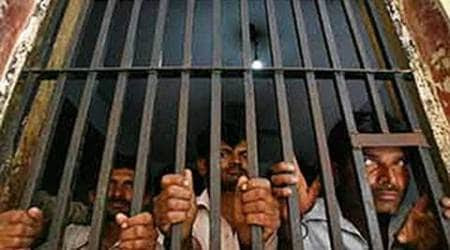
If numbers are to be believed, at least 4,923 undertrial prisoners have been released from Maharashtra’s jails between July 2015 and January 2016. Their release has been in pursuance of a Supreme Court directive that asked states to release on bail those prisoners who had served at least half the sentence they would have been awarded if convicted.

This number of released prisoners accounts for nearly 24.74 per cent of Maharashtra’s last-known undertrial population of 19,895 prisoners and has made activists skeptical about the claims of the government.

A total of 5,819 prisoners were released across the country after the SC’s order, with Maharashtra accounting for nearly 85 per cent of these released prisoners. The second largest number is from Uttar Pradesh, with 198 released undertrials.

These numbers were made public in the Lok Sabha on Tuesday by MoS Home Affairs Haribhai Chaudhary.

In June 2013, Justice R C Lahoti, a former Chief Justice of India, had written a letter to the then CJI, inviting attention to the inhuman conditions prevailing in 1,382 prisons across India. The letter was taken up as a public interest writ petition, and on April 2015, the SC passed an order, directing steps be taken to improve the conditions of prisons.
SHARE THIS ARTICLE
Share
RELATED ARTICLE
Among the various directives, one was to ask all the states to ensure that the Under Trial Review Committees of each consider the cases of undertrial prisoners, entitled to the benefit of Section 436A.

Under this section, all those undertrials who have served half of the maximum period of imprisonment prescribed for the offence they are accused of, can be released on bail. The only rider is that the prisoner should not be an accused of an offence punishable by death.

“The Under Trial Review Committee should specifically look into aspects pertaining to effective implementation of Section 436 of the CrPC and Section 436A of the CrPC, so that undertrial prisoners are released at the earliest and those who cannot furnish bail bonds due to poverty are not subjected to incarceration only for that reason,” a two-member bench of Justice Madan B Lokur and Justice R K Agarwal had said in an order, dated February 2016, while evaluating the implementation of the previous recommendations.

The state has, meanwhile, claimed that all the State Legal Services Authorities (SLSAs) had been requested by National Legal Services Authority (NALSA) to urgently take up the cases of the undertrial prisoners, entitled to the benefit of Section 436A of CrPC, and to instruct the panel lawyers to urgently meet such prisoners and move appropriate application before the courts for their release.

“Under Trial Review Committees have been established in every district across the country, comprising of district judges as chairman and secretary, district legal services authorities as one of the members to monitor and review the cases of aforesaid under-trial prisoners for their early release,” Haribhai Chaudhary said in Parliament.

When contacted, Maharashtra Additional Chief Secretary Vijay Satbir Singh said that he was on leave. ADGP (Prisons) BK Upadhyay could not be contacted.

Activists have been skeptical about the high numbers shown for Maharashtra. “The SC directive had explicitly named Maharashtra and Uttar Pradesh in its order, due to their high undertrial population. 

However, the number of persons released account for nearly 24 per cent of Maharashtra’s undertrial population, which is a huge number. Interestingly, when we had sought these numbers through an RTI application, they had refused to share them,” said Sugandha Mathur, Project Officer, Prison Reform Common Wealth Human Rights Initiative.