PM Narendra Modi is fighting on so many fronts to exorcise ghosts of his controversial past!
The Indian EXPRESS
How to rectify injustice to Yakub? SC should take suo motu notice of Raman pieceWrites former Supreme Court judge Justice Harjit Singh Bedi in a letter to The Indian Express
By: Express News Service | New Delhi | Updated: July 26, 2015 9:14 am

I have with a sense of uneasiness read the news item “Yakub must not hang, we brought him back: Key RAW man in ’07”, published in The Indian Express on July 24, 2015. To get further details, I read the complete article and other related material on rediff.com and my uneasiness has been transformed into a sense of outrage as I take all that is written to be correct in the light of the outstanding record and character of the R&AW officer, Mr B Raman, who wrote it.
Let me at the very beginning say that I am in principle against the imposition of death penalty. It serves as no deterrent, as statistics worldwide show, and on the contrary brutalises society. My predilection, however, has had no bearing on my decisions as a High Court and Supreme Court Judge for almost 21 years, as I have often upheld the death penalty. The Supreme Court of India, as indeed courts all over the free world, are agreed on the fact that all mitigating factors in favour of an accused facing a capital sentence must be put before the court and that this obligation rests equally on the prosecution as well. It also appears that some commitment by the government or its agencies had been made to Yakub Memon and that he had fully cooperated with the investigative agencies after his arrrest. I take it that this commitment would relate to the sentence that he would receive.
Mr Raman writes that these mitigating circumstances “in the case of Yakub Memon and some other members of the family were probably not brought to the notice of the court by the prosecution and that the prosecution did not suggest to the court that these circumstances should be taken into consideration while deciding on the punishment… in their eagerness to obtain the death penalty”. He further concludes that the aura and outstanding investigative work that the intelligence agencies had achieved would have been enhanced yet further had they put all the mitigating circumstances before the court.
The second disturbing aspect is the role of the public prosecutor in such cases. The perception which has grown over the last few years, and actively encouraged by some public prosecutors themselves, that they are agents of the police, is completely misplaced. A public prosecutor is an officer of the court and, as someone put it, “an agent of justice”. He represents the crown (state), not the police. It is, in this background, imperative that he should put all facts for and against an accused before the court so that a just decision can be arrived at.
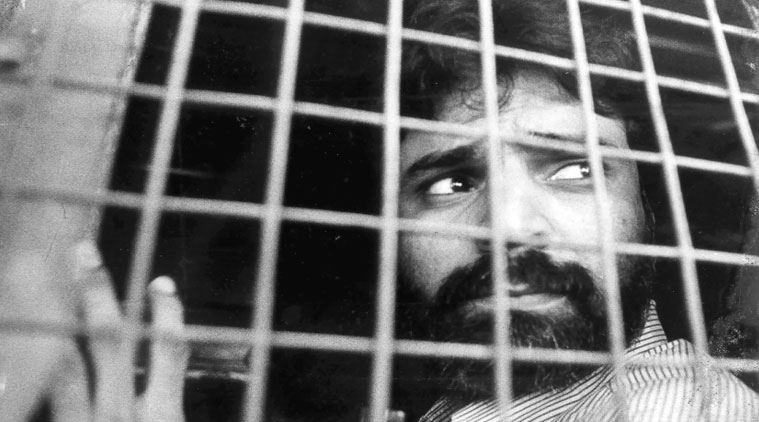 1993 Mumbai blasts convict Yakub Memon. (Source: Express Archive) 1993 Mumbai blasts convict Yakub Memon. (Source: Express Archive)
The Supreme Court in the case of Shiv Kumar versus Hukam Chand decided on August 30, 1999 observed “that a public prosecutor is not expected to show thirst to reach the case in the conviction of the accused somehow or the other irrespective of the true facts involved in the case. The expected attitude of the public prosecutor while conducting prosecution must be couched in fairness not only to the court and to the investigating agencies but to the accused as well. If an accused is entitled to any legitimate benefit during the trial, the public prosecutor should not scuttle/ conceal it. On the contrary, it is the duty of the public prosecutor to winch it to the fore and make it available to the accused. Even if the defence counsel overlooks it, the public prosecutor has the added responsibility to bring it to the notice of the court if it comes to his knowledge”… as the public prosecutor should “not obtain an unrighteous conviction — but to see justice has been vindicated”.
Quite to the contrary, we often see TV savvy public prosecutors, gloating over their legal victories, preening themselves, and strutting around like film actors.
What can now be done to rectify the injustice to Yakub Memon on the question of sentence? The options are indeed limited and time is running out. I think the Supreme Court should suo motu take notice of Mr Raman’s article and after hearing both sides remand the case to the trial court to take further evidence on the question of the sentence or in the alternative take the evidence itself. This is still possible under the power conferred on the Supreme Court under Article 142 of the Constitution. This exercise would greatly enhance the prestige and glory of the Supreme Court of India, more particularly as Mr Raman’s article has been published only after the dismissal of the curative petition. I believe that Yakub Memon has filed a mercy petition before the Governor. Action could be taken on this as well.
— Former Supreme Court Judge Harjit Singh Bedi authored the 2010 judgment in Vikram Singh versus State of Punjab, awarding death sentence to two kidnappers who had poisoned a schoolboy to death as his father did not pay the ransom. While observing that “the theory which is widely accepted in India, however, is that as death penalty is on the statute book, it has to be awarded, provided the circumstances justify it”, Justice Bedi ruled, “When the murder is committed in such an extremely brutal, grotesque, diabolical, revolting or dastardly manner as to arouse intense and extreme indignation of the community or when the victim of murder is an innocent child who could not have or has not provided even an excuse, much less a provocation, death penalty could be awarded.”
Justice Bedi was also part of the SC Bench that commuted the death sentence of Santosh Kumar Singh,who had raped and murdered law student Priyadarshini Mattoo in Delhi in January 1996.
He retired in September 2011.
---
 The courts of this country are on trial, not TeestaThe hounding of Teesta Setalvad is timed to coincide with the publicly articulated urge of the Prime Minister to get a "clean chit" from the courts in relation to the ongoing cases in Gujarat, which Teesta has been doggedly pursuing. She is the victim of the pursuit for justice. We are being asked to roll back the clock, consign the 2002 Gujarat carnage to the dustbin of history and replace Teesta Setalvad as the villain, who hounded the then chief minister...Can the collective amnesia on the Gujarat riots, and the view that we must move on be legitimized? All this could possibly happen if Zakia Jafri and Teesta Setalvad, who are doing everything constitutionally and legally possibe to hold the head of the then government accountable, are checkmated, preferably gagged, and put into jail. Zakia's criminal revision petition is not about seeking recourse to justice for one incident of massacre, where her husband was brutally hacked and burnt to death but about the larger issue of command responsibility of the then CM, and now PM, in failing to prevent the killings from taking place. It is high time this country saw the emergence of the Doctrine of Command Responsibility as a statutory and constitutional imperative, rather than leaving it to the notoriously weak provisions of the Indian Penal Code, which address only crime by individuals and punish only the hand that kills. Conspiricies are not easy to prove, but judging from the attack on Teesta Setalvad, the PM seems worried and insecure that there is an off chance, maybe just an off chance, that some well-meaning judge might accept the evidence pointing out the massive failure of his constitutional duty to prevent the killings. What stands between him and the "clean chit" are the courts and the cases Teesta and some of us are pursuing. This pursuit of justice is slowly but steadily reaching its climax. Could this be the reason for her threatened arrest? The enormous support and assistance she gave 5,000 surviving witnesses, who unflinchingly recorded their testimonies, helped secure 120 convictions to life imprisonments, including that of a minister in the state cabinet.  (TOI photo: Sanjay Hadkar) I once had a discussion with Teesta in Mumbai at a public meeting soon after the 1992 riots. We agreed that if we had fought the 1984 Sikh killings in Delhi the way we do now the Gujarat carnage, the 1993 killing in Mumbai would not have happened. I can now add that, if in 1993 the Justice Srikrishna Commssion findings were accepted and we had succeded in convicting even one accused at the top level, 2002 would not have happened. It is this understanding that compels her to continue with the fight against the killers of the 2002 carnage. What we are witnessing is the power of the state and its terrorising arm, the CBI, to mount a raid on Teesta's home and office to prove that she misused foreign funds versus the power of the courts to hold power to account. Who will win this battle? It is the courts of this country that are on trial, not Teesta. As for the proverbial wine and visits to the beauty parlour, apart from the fact that they sustain the myth of the "five-star" activists, I must remind the courts that they hold their own legal aid meetings spending money meant for the poor in seven-star hotels. There is a record of a protest as regards this lodged by no less a person than a former judge of the Chennai High Court. Will they be swayed by such allegations now to refuse Teesta bail? This is not to admit on my part that money was so spent, but rather to expose the hollow legal nature of the reasons to oppose bail. It is nobody's case that there should be no investigation into the alleged misuse of funds, rather that the investigation be free and fair. I now ask a basic question, why is there one law for the non-profit organizations and another for for-profit corporates? Why is there no imprisonment under FEMA (Foreign Exchange Management Act) but imprisonment for non-profits for violating norms relating to getting grants from foreign donors under FCRA? The only explanation is that the FCRA is a gateway to crushing human rights, and what is worse, an alibi for an argument that we, the NGOs who take up human right issues are "anti-national". We compromise the "economic security" of our countries, expressions that were reserved for terrorists so far. I call for the repeal of the FCRA and its replacement with a Foreign Contributions Management Act, which addresses only public servants. Perhaps then we will see some justice for Teesta, the woman whose father named her after a river in Bangladesh which flows fearlessly across borders.
6 deleted messages in this conversation. View messages or delete forever.
|
|
 
488 more
Show details
|
Saturday, July 25, 2015
How to rectify injustice to Yakub? SC should take suo motu notice of Raman piece: Former Supreme Court Judge Harjit Singh Bedi | The courts of this country are on trial, not Teesta : Indira Jaising,TNN

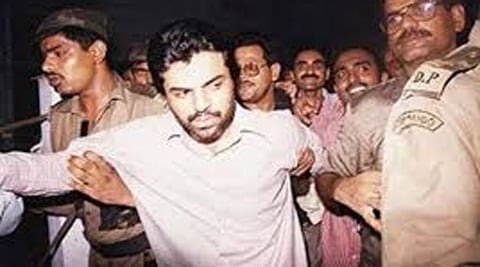


Why Yakub Memon should be spared death penalty - EDITORIAL - THE ECONOMIC TIMES, MUMBAI, INDIA
http://blogs.economictimes.

Why Yakub Memon should be spared death penalty
July 25, 2015, 6:05 AM IST ET Edit in ET Editorials | Edit Page, India, Times View | ET
Thursday, July 23, 2015
http://www.asianage.com/india/


Interest-free banking: Why the delay by government?
By K. C. Tyagi, MP Rajya Sabha
Jul 23, 2015
PM Modi addresses the 46th session of the Indian Labour Conference in New Delhi. (Photo: PTI)
In an open letter addressed to the citizens of the country published on 26th May 2015, i.e., on the occasion of completing one year of the Union government, the Prime Minister stated that the government was dedicated to the poor, marginalised and those left behind.
Sabka sath sabka vikas, the slogan extensively used in the BJP campaign, also conveyed the same idea.
The Pradhan Mantri Jan Dhan Yojna was also aimed at financial inclusion of the most deprived sections of the society.
The State Bank of India Sharia-compliant mutual fund, that was cleared by all agencies for launch on December 1, 2014 was suddenly deferred on November 30, 2014, hours before the scheduled launch. There is no clear, above board explanation for this decision. The only obvious reason seems to be the government’s antipathy for the word shariah.
The government’s move militates against its avowed commitment to inclusion and a sense of fellowship of citizens. A sizeable section of Muslims avoids investment in interest-related funds because interest is seen by them as unethical and exploitative. For people like them, an interest-free system is a great attraction.
That such a mutual fund is going to benefit everyone is clear. Pious Muslims, including NRIs, particularly those in the Gulf region, stay away from finance and banking transactions mainly because of their aversion to interest. With the availability of such a system, the country’s finance and banking system will benefit from surplus funds with such NRIs and it will become more inclusive.
The report of the committee on financial sector reforms, headed by the current RBI governor Raghuram Rajan, in its report in 2012 recommended interest-free banking being “in consonance with the objectives of inclusion and growth through innovation”.
Delhi-based Institute of Objective Studies, which has conducted several studies, seminars and symposia with international participation on the subject has explained to the government and bank authorities that they would not insist on the nomenclature “shariah”, and would welcome any name like ethical investment, participatory banking, alternative banking etc.
In fact, interest-free banking is operational in UK, France, Singapore, Brazil and West Asia. Some of the world’s largest banks have special counters for such operations in major Western countries. Even China is promoting it. The operational term in many cases is not “shariah”, but “interest-free”. As many as 75 countries across the world have adopted the system.
Interest-free banking is interest-free banking and its proponents do not insist on a particular nomenclature. The SBI had announced the scheme after completing due diligence about feasibility, legal-technical and regulatory issues. That’s why the sudden deferral of the decision has been intriguing.
Interestingly, a substantial chunk of people investing in such schemes are non-Muslims. An important attraction of such funds is that their backers discourage speculation, manipulation of value of assets and making tall promises about the value of products. Due to this it is less prone to fluctuating markets than traditional funds. The prospect of interest-free transactions attracts a certain class of investors, most of whom are Muslims. This is the secret behind UTI Unit 64 and others’ popularity among muslims. However, this does not deter non-muslims from participation as Tata Ethical Fund and Taurus Equity Fund support shows. In the latter, there are 40 per cent jains. It is important to note that the inability to repay loans is behind most farmer suicides. As crop fails and interest on the loan taken for buying farm inputs mounts, the cornered farmers have no option but to kill themselves, leaving behind destitute widows and orphaned children who inherit such liabilities.
The scientist M.S. Swaminathan, who played a crucial role ushering in India’s Green Revolution, has endorsed this concept as a solution for rising farmers’ suicides in the country.
Finding the deferral of the SBI mutual fund at the last moment intriguing, I wrote to the finance minister on March 12 to know the cause of the decision. On May 19, Union minister of state for finance, Jayant Sinha, wrote back to me that it was deferred because of “operational constraints arising out of the inputs received from various participants in the pre-launch meeting”.
It will be of some help if the finance ministry lets us know as to who the “participants” were and what the “inputs” were that they provided. What type of constraints arose from those inputs, and why the SBIFMPL had not rectified those constraints and relaunched the scheme within the stipulated time (January 25, 2015).
Meanwhile, Islamic banking assets with commercial banks worldwide are estimated to be around $1.8 trillion and it happens to be growing at a faster rate than traditional banking in Qatar, Saudi Arabia, Malaysia, Indonesia and Turkey. This reckoning does not include Iran.
With these facts and figures in view, we will do well to allow the system in India, as it will help both the investors and economy as a whole. Continuation of the deferral is arbitrary and unfair. This is particularly so in view of Dr Swaminathan’s remarks. According to P. Sainath, a respected journalist specialising in rural development and farm economy, about 300,000 farmers have committed suicide in India since 1995.
“Most farm suicides have been linked to debt, a sharp rise in input costs, serious water crises, price volatility and crop failure due to pest-attacks and diseases,” said Mr Sainath. Whatever the reason behind crop failure, the interest continues to accumulate leading to desperation and suicide. Hence, the beginning of an interest-free system will of immensely help in this regard.
The author is a JD(U) Rajya Sabha MP
Wednesday, July 22, 2015
Brelvi Fatwa on terrorists: By Mohd Faisal Fareed - Lucknow - Indian Express
My comments posted on Indian Express webpage news:
 | Barelvi fatwa: No burial prayer for terrorists |
Brelvi Maulanas are correct when they declare terrorist [as being] against Islam. However if they are depending on USA or Israel to define terrorists for them, they will be treading on slippery grounds. US changes its definition of terrorists and terrorism as per its own changing national interest. Todays Mujahideen will change into Taliban terrorist, the moment US policy changes. Ulama must take this overarching factor before defining terrorist. Are we bound by definition imposed by US or are we free to make our own judgement on who is a terrorist? |
 | 1 |  |
Ghulam Muhammed, Mumbai
-----
The Indian Express
Barelvi fatwa: No burial prayer for terrorists
The directive was issued by Mufti Saleem Noori of Bareilly-based Aala Hazrat Dargah’s Manzar-e-Islam to “distance the community from terrorism”.
A top cleric for the Barelvi sect of Sunni Muslims has issued a fatwa ordering followers not to offer the “namaz-e-janaza”, or the last prayer before burial, for terrorists and those found helping terror-accused.
The directive was issued by Mufti Saleem Noori of Bareilly-based Aala Hazrat Dargah’s Manzar-e-Islam to “distance the community from terrorism”.
The dargah is the religious headquarters of Barelvi Muslims, and Mufti Noori heads one of the oldest centres authorised to issue fatwas on its behalf.
“Any terrorist who claims to be Muslim is acting against the tenets of Islam. The religion does not propagate violence and shedding of blood of innocents, including children.
Thus, such people cannot be treated as Muslims as they are violating Islamic principles,” stated the fatwa, which was announced after Saturday’s Eid prayers. “In no way does Islam allow terrorism and killing of people.
No Imam or any other person should offer their namaz-e-janaza after their death. Muslims should stand up and raise their voice against such terror activities as it is bringing a bad name to their religion.
When their namaz-e-janaza will not be offered, their bodies cannot be buried in graveyards too. In other words, it is disowning terrorists from the Islam religion,” it added.
However, another prominent Barelvi Muslim leader Maulana Tasleem Raza Khan said his “personal interpretation” of the fatwa would exclude from its ambit those retaliating against “atrocities” committed by the United States.
“Terrorists belong to other sects as Deobandi, Wahabi and Salafi, we have already expelled them from Islam. So there is no question of offering their namaz-e-janaza and even our graveyards will not be used for burying their bodies,” Maulana Tasleem said.
“But bearing with atrocities is equal to committing atrocities. One has to retaliate. If the US is bombarding us with explosives, we will also do the same and cannot be termed as terrorists. Only terrorists killing innocents are specified,” he added.
Maulana Tasleem is the younger brother of Maulana Subhan Raza Khan who heads the Aala Hazrat Dargah.
Thursday, July 16, 2015
Reclaiming Islam’s Enlightenment From Its Fundamentalist Hijackers -- By Daniel Chirot and Scott Montgomery - FLAGLERLIVE - JULY 15, 2015

Reclaiming Islam’s Enlightenment From Its Fundamentalist Hijackers
FLAGLERLIVE | JULY 15, 2015
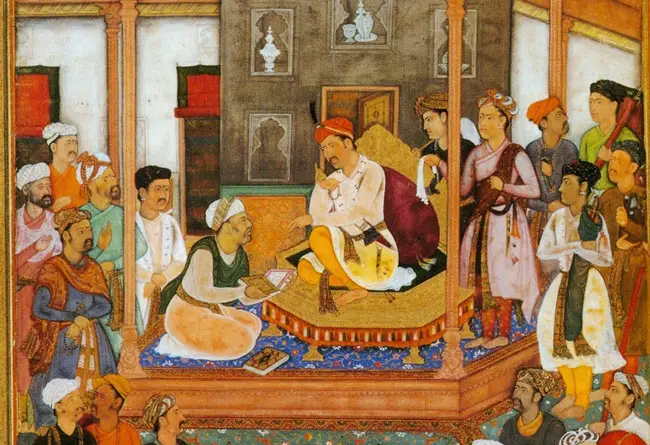
Akbar the Great, the Mogul emperor of the early 16th century, was enlightened two centuries before the French and British Enlightenment.
By Daniel Chirot and Scott Montgomery
In 1877, the great French novelist Victor Hugo wrote, “Invading armies can be resisted; invading ideas cannot be.” Nowadays, the power of ideas, for good or for evil, is something we need to take into account, particularly in contemplating Islamic radicalism. The recent terrorist attacks in France, Kuwait, and Tunisia are only the latest reminders of how important it is to understand that, behind these outrages, there are serious ideas, not simply angry, frustrated criminals.
Violent Islamic jihadist movements do not pose an existential danger to Europe or North America. They may occasionally be able to carry out deadly terrorist acts, but they have no chance of destroying or taking over Western societies. Panicked attempts to march into Muslim countries and extirpate the threat have been counterproductive, serving only to increase the appeal of Islamic extremism.
Most Muslims reject the harshest versions of Islam, but many – if not most – harbor sympathy for the idea of struggling against the dictates of the West and returning the faith to its past strengths and glories. It would be wrong to assert that only a tiny minority of Muslims back the actions of the extremists or that fundamentalist factions have hijacked a religion of which they are completely unrepresentative. Islamic radicals enjoy enough support to be a serious threat in their part of the world. It is important to understand how this happened.
Harsh, radically conservative Islamic theologies have been around almost since the death of the Prophet Muhammad in 632, but they have been repeatedly contested by more tolerant, moderate schools of Muslim thought. Like the Christian and Jewish Bibles, the Koran is open to interpretation, whether quite liberal or dogmatic and repressive.
In the late nineteenth and early twentieth centuries, many Muslim thinkers – most famously Jamal al-Din al-Afghani – believed that embracing many of the ideals developed in the West during the Enlightenment was the only way to promote progress. Al-Afghani and others wrote that Islam’s rejection of Western science and progress was a misinterpretation of the Koran.
But, as the twentieth century progressed, Muslim reformists lost ground to secular nationalists emphasizing socialism as the path to modernization. The promise of secularism, however, proved hollow, with countries like Egypt, Libya, Iraq, and Syria sinking into despotism and corruption. This provided fertile ground for anti-Western, reactionary, violent versions of Islam.
Instead of armed, panicky overreactions, what is needed is cultural exchanges.
These strains have many intellectual roots. But perhaps the single most important modern source is the writing of the Egyptian scholar Sayyid Qutb. Together with other fundamentalists, such as the Pakistani philosopher Abul A’la Maududi, Qutb argued that true Islam had been infiltrated and corrupted by outside ideas. Only when it was reclaimed would two centuries of humiliation at the hands of Western imperial powers and, more recently, the nascent state of Israel be reversed. God would side once more with Muslims against their enemies, whom Qutb called “Crusaders and Jews.”
Dictatorships in North Africa and the Middle East tried to suppress the Islamic conservatives. But Saudi Arabia – a bastion of conservatism – used its oil wealth to counter secular modernizers and any kind of reformed Islam, financing fundamentalist missionaries and conservative mosques throughout the Islamic world. Qutb was executed by the Egyptian dictator Gamal Abdel Nasser in 1966 as part of a brutal but unsuccessful attempt to eliminate the Muslim Brotherhood.
In fact, the crackdowns only strengthened the conservative Islamists, whose faith helped them survive the repression. And they served to convince young, discontented Muslims that extremism was the only possible solution to their societies’ weakness and lack of opportunity.
Confronting ideas with military means is a sure path to defeat. When Western powers send soldiers into Muslim countries, attempt to bomb extremists into submission, prop up brutal dictatorships, or blindly support every Israeli policy, they confirm the claims of the radical Islamists, driving new adherents into their arms.
The real battlefront is the arena of ideas. Instead of armed, panicky overreactions, what is needed is cultural exchanges. There are plenty of serious intellectuals in Islamic societies who want to revive the reformist call for the embrace of some of the ideas of Western Enlightenment: the value of science, the importance of liberal tolerance, and the need for free and open discussion. Western scholars who understand Islam and speak some of the many languages of its practitioners need to support these intellectual movements.
Hawks in the West may try to dismiss actions like these as weak. But while they may do little in the short run, they are sure to prove critical over the long term. After all, the force that brought down communism in Europe – a far more dangerous ideology than radical Islam – was not simply military containment, but also the power of ideas and ideals.

Daniel Chirot, left, is Professor of Russian and Eurasian Studies at the University of Washington. Scott L. Montgomery is an affiliate faculty member at the Henry M. Jackson School of International Studies at the University of Washington. The two are co-authors of “The Shape of the New: Four Big Ideas and How They Made the Modern World” (Princeton). (© Project Syndicate)


Friday, July 10, 2015
Bombay HC frowns on govt for silence over women’s plea on Haji Ali - By Rosy Sequeira,TNN - THE TIMES OF INDIA - MUMBAI | Comments by Ghulam Muhammed
http://timesofindia.

Rosy Sequeira,TNN | Jul 11, 2015, 06.13 AM IST
My comments posted on Times of India, Mumbai webpage over Rosy Sequiera's News report:
Bombay HC frowns on govt for silence over women’s plea on Haji Ali
Be the first one to review.
Petitioner's lawyer Raju Moray is on slippery ground when he contends that since the shrine is on Public/State land, the state has a right to interfere in the affairs of the occupier trust. Haji Ali grave is occupying the island for over centuries. State could go for vacation of the land, if it so pleases. But then it is clear that the occupiers age old occupation cannot be vacated by state or vested interests instigating tangential matters in the nature of a blackmail. The trustees had full right to administer the dargah, as per the clear advise by the Holy Prophet for the women not to visit graves. Moray's citing of practice of other Dargah's donot hold, as the fundamental point in Islam is what Quran and Prophet say. Other practice of Dargah's is their own choice and they will have to account for Almighty on their judgement day. Here, as far as state or Raju Moray is concerned, they are intruding on the constitutional rights of freedom of religion of people. Islam has a billion followers spread out all over the world. There is no central authority, like a Khalifa to decide matters in a decisive manner. Under such conditions, people or groups are at liberty to follow their own conscience keep the fear of Almighty in their affairs. The secular state has to keep out of the affairs of all religion, even the Hindu religion, as far as its governance is concerned. The activists who have filed a PIL are looking for trouble. They are possibly more interested in women's rights as a new wave of women's liberation. It is for them to decide if they adhere to the strict strictures of Islam or are followers of anti-religious Western ideas of women's liberation that is uprooting entire societies world over. India's secularism is at stake just like that of United States, where religion has now taken second place. That's not the case with India. We respect all religions and our religious traditions are alive and thriving. Judiciary too should be aware of the issues of wider impact involved, before taking up such vexatious plaints that are meant to be disruptive and destructive. The court should have thrown out the petition as internal matter of Muslims.
---
Bombay HC frowns on govt for silence over women’s plea on Haji Ali
Rosy Sequeira,TNN | Jul 11, 2015, 06.13 AM IST
MUMBAI: Even as the Bombay high court on Friday appealed for resolving the dispute over the ban on women into the inner sanctum of the Hali Ali Dargah, it frowned upon the state government for not taking a stand in the matter.
A bench of Justice V M Kanade and Justice B P Colabawalla began the final hearing of a PIL by activists Noorjehan Niaz and Zakia Soman to lift restrictions imposed since June 2012 at the mazaar, or tomb, of the saint.
The judges took note that the state had not filed a reply and also took note of a statement made to the press by former state minorities development minister Arif Naseem Khan that the petitioners should try to persuade the muftis and maulanas to take a decision on whether to allow women and that the state will not interfere. "It appears that the state government does not want to take a stand, one way or the other," the bench said.
Petitioners' advocate Raju Moray said, "Why should we go to muftis and maulanas to plead our case when the Constitution gives us rights?" He said the Haji Ali Dargah Trust is using government land and is a public trust and hence the state cannot remain a silent spectator. The judges agreed, saying "in a matter like this, it is very important for the state government to take a stand".
Moray said the decision was imposed arbitrarily by the trust without hearing persons who are going to be affected. "They (petitioners) have been visiting the shrine since their childhood. They felt the ban is unreasonable and especially as it is not mandated by religion nor practiced in other dargahs," he explained.
The trust's advocate Shoaib Memon denied that women were allowed in the inner sanctum before the ban. "They are allowed up to a certain point. They can't touch the grave," he said. Moray said the trust in its reply has admitted that the ban was effected after the trustees were made to realize by clergy that allowing women in the inner sanctum is a sin. "If it is un-Islamic, (other shrines) would not permit women," said Moray.
Justice Kanade said, "See that it can be sorted out. Otherwise we will decide it one way or the other."
Subscribe to:
Posts (Atom)