Saturday, July 25, 2015

Why Yakub Memon should be spared death penalty - EDITORIAL - THE ECONOMIC TIMES, MUMBAI, INDIA

http://blogs.economictimes.indiatimes.com/et-editorials/why-yakub-memon-should-be-spared-death-penalty/

The Economic Times

Why Yakub Memon should be spared death penalty


July 25, 2015, 6:05 AM IST  in ET Editorials | Edit Page, India, Times View | ET


Perpetrators of the Mumbai blasts fled to Pakistan where the Inter-Service Intelligence kept them in secret custody even as Islamabad hotly denied doing anything as disgraceful as sheltering perpetrators of a terror attack.
Indian intelligence agencies considered it a coup when they succeeded in getting several members of the Memon family to come back to India and face trial. At one stroke, the Memon family’s flight to India via Dubai showed that Pakistan had been sheltering the blast accused in Karachi and that Indian Intelligence could spirit them away from under Pak Intelligence’s nose. Yakub Memon facilitated this process. The then head of the counter-terrorism wing of the Research and Analysis Wing of the Cabinet Secretariat, B Raman, wrote in an article that he considers it a valid mitigating circumstance.
Memon cooperated with Indian authorities on the strength of an assurance that he would not be hanged. If such an assurance cannot be trusted, New Delhi will shut the door to engaging another Phizo or Laldenga or any other rebel who can be persuaded to surrender to bring a conflict to an end. This should not happen. B Raman is no more. But those who facilitated the Memons’ transit to India via Dubai are around. The government should seek their corroboration and advise the president to show clemency.
This piece appeared as an editorial opinion in the print edition of The Economic Times.
---

Thursday, July 23, 2015

http://www.asianage.com/india/interest-free-banking-why-delay-government-034


Interest-free banking: Why the delay by government?


Inline image 1
By K. C. Tyagi, MP Rajya Sabha

Jul 23, 2015

PM Modi addresses the 46th session of the Indian Labour Conference in New Delhi. (Photo: PTI)
In an open letter addressed to the citizens of the country published on 26th May 2015, i.e., on the occasion of completing one year of the Union government, the Prime Minister stated that the government was dedicated to the poor, marginalised and those left behind.
Sabka sath sabka vikas, the slogan extensively used in the BJP campaign, also conveyed the same idea. 

The Pradhan Mantri Jan Dhan Yojna was also aimed at financial inclusion of the most deprived sections of the society.

The State Bank of India Sharia-compliant mutual fund, that was cleared by all agencies for launch on December 1, 2014 was suddenly deferred on November 30, 2014, hours before the scheduled launch. There is no clear, above board explanation for this decision. The only obvious reason seems to be the government’s antipathy for the word shariah.

The government’s move militates against its avowed commitment to inclusion and a sense of fellowship of citizens. A sizeable section of Muslims avoids investment in interest-related funds because interest is seen by them as unethical and exploitative. For people like them, an interest-free system is a great attraction.

That such a mutual fund is going to benefit everyone is clear. Pious Muslims, including NRIs, particularly those in the Gulf region, stay away from finance and banking transactions mainly because of their aversion to interest. With the availability of such a system, the country’s finance and banking system will benefit from surplus funds with such NRIs and it will become more inclusive.

The report of the committee on financial sector reforms, headed by the current RBI governor Raghuram Rajan, in its report in 2012 recommended interest-free banking being “in consonance with the objectives of inclusion and growth through innovation”.

Delhi-based Institute of Objective Studies, which has conducted several studies, seminars and symposia with international participation on the subject has explained to the government and bank authorities that they would not insist on the nomenclature “shariah”, and would welcome any name like ethical investment, participatory banking, alternative banking etc.

In fact, interest-free banking is operational in UK, France, Singapore, Brazil and West Asia. Some of the world’s largest banks have special counters for such operations in major Western countries. Even China is promoting it. The operational term in many cases is not “shariah”, but “interest-free”. As many as 75 countries across the world have adopted the system.

Interest-free banking is interest-free banking and its proponents do not insist on a particular nomenclature. The SBI had announced the scheme after completing due diligence about feasibility, legal-technical and regulatory issues. That’s why the sudden deferral of the decision has been intriguing.

Interestingly, a substantial chunk of people investing in such schemes are non-Muslims. An important attraction of such funds is that their backers discourage speculation, manipulation of value of assets and making tall promises about the value of products. Due to this it is less prone to fluctuating markets than traditional funds. The prospect of interest-free transactions attracts a certain class of investors, most of whom are Muslims. This is the secret behind UTI Unit 64 and others’ popularity among muslims. However, this does not deter non-muslims from participation as Tata Ethical Fund and Taurus Equity Fund support shows. In the latter, there are 40 per cent jains. It is important to note that the inability to repay loans is behind most farmer suicides. As crop fails and interest on the loan taken for buying farm inputs mounts, the cornered farmers have no option but to kill themselves, leaving behind destitute widows and orphaned children who inherit such liabilities.

The scientist M.S. Swaminathan, who played a crucial role ushering in India’s Green Revolution, has endorsed this concept as a solution for rising farmers’ suicides in the country.

Finding the deferral of the SBI mutual fund at the last moment intriguing, I wrote to the finance minister on March 12 to know the cause of the decision. On May 19, Union minister of state for finance, Jayant Sinha, wrote back to me that it was deferred because of “operational constraints arising out of the inputs received from various participants in the pre-launch meeting”.

It will be of some help if the finance ministry lets us know as to who the “participants” were and what the “inputs” were that they provided. What type of constraints arose from those inputs, and why the SBIFMPL had not rectified those constraints and relaunched the scheme within the stipulated time (January 25, 2015).

Meanwhile, Islamic banking assets with commercial banks worldwide are estimated to be around $1.8 trillion and it happens to be growing at a faster rate than traditional banking in Qatar, Saudi Arabia, Malaysia, Indonesia and Turkey. This reckoning does not include Iran.

With these facts and figures in view, we will do well to allow the system in India, as it will help both the investors and economy as a whole. Continuation of the deferral is arbitrary and unfair. This is particularly so in view of Dr Swaminathan’s remarks. According to P. Sainath, a respected journalist specialising in rural development and farm economy, about 300,000 farmers have committed suicide in India since 1995.

“Most farm suicides have been linked to debt, a sharp rise in input costs, serious water crises, price volatility and crop failure due to pest-attacks and diseases,” said Mr Sainath. Whatever the reason behind crop failure, the interest continues to accumulate leading to desperation and suicide. Hence, the beginning of an interest-free system will of immensely help in this regard.

The author is a JD(U) Rajya Sabha MP

Wednesday, July 22, 2015

Brelvi Fatwa on terrorists: By Mohd Faisal Fareed - Lucknow - Indian Express

My comments posted on Indian Express webpage news: 

Barelvi fatwa: No burial prayer for terrorists
indianexpress.com ·


Brelvi Maulanas are correct when they declare terrorist [as being] against Islam. However if they are depending on USA or Israel to define terrorists for them, they will be treading on slippery grounds. US changes its definition of terrorists and terrorism as per its own changing national interest. Todays Mujahideen will change into Taliban terrorist, the moment US policy changes. Ulama must take this overarching factor before defining terrorist. Are we bound by definition imposed by US or are we free to make our own judgement on who is a terrorist?
Comments
1Share

Ghulam Muhammed, Mumbai

-----


The Indian Express


Barelvi fatwa: No burial prayer for terrorists


The directive was issued by Mufti Saleem Noori of Bareilly-based Aala Hazrat Dargah’s Manzar-e-Islam to “distance the community from terrorism”.


Written by Mohd Faisal Fareed | Lucknow | Published:July 22, 2015 3:40 am
A top cleric for the Barelvi sect of Sunni Muslims has issued a fatwa ordering followers not to offer the “namaz-e-janaza”, or the last prayer before burial, for terrorists and those found helping terror-accused.

The directive was issued by Mufti Saleem Noori of Bareilly-based Aala Hazrat Dargah’s Manzar-e-Islam to “distance the community from terrorism”.

The dargah is the religious headquarters of Barelvi Muslims, and Mufti Noori heads one of the oldest centres authorised to issue fatwas on its behalf.

“Any terrorist who claims to be Muslim is acting against the tenets of Islam. The religion does not propagate violence and shedding of blood of innocents, including children. 

Thus, such people cannot be treated as Muslims as they are violating Islamic principles,” stated the fatwa, which was announced after Saturday’s Eid prayers. “In no way does Islam allow terrorism and killing of people. 

No Imam or any other person should offer their namaz-e-janaza after their death. Muslims should stand up and raise their voice against such terror activities as it is bringing a bad name to their religion. 

When their namaz-e-janaza will not be offered, their bodies cannot be buried in graveyards too. In other words, it is disowning terrorists from the Islam religion,” it added. 

However, another prominent Barelvi Muslim leader Maulana Tasleem Raza Khan said his “personal interpretation” of the fatwa would exclude from its ambit those retaliating against “atrocities” committed by the United States. 

“Terrorists belong to other sects as Deobandi, Wahabi and Salafi, we have already expelled them from Islam. So there is no question of offering their namaz-e-janaza and even our graveyards will not be used for burying their bodies,” Maulana Tasleem said. 

“But bearing with atrocities is equal to committing atrocities. One has to retaliate. If the US is bombarding us with explosives, we will also do the same and cannot be termed as terrorists. Only terrorists killing innocents are specified,” he added. 

Maulana Tasleem is the younger brother of Maulana Subhan Raza Khan who heads the Aala Hazrat Dargah. 

Thursday, July 16, 2015

Reclaiming Islam’s Enlightenment From Its Fundamentalist Hijackers -- By Daniel Chirot and Scott Montgomery - FLAGLERLIVE - JULY 15, 2015


Reclaiming Islam’s Enlightenment From Its Fundamentalist Hijackers


 | JULY 15, 2015


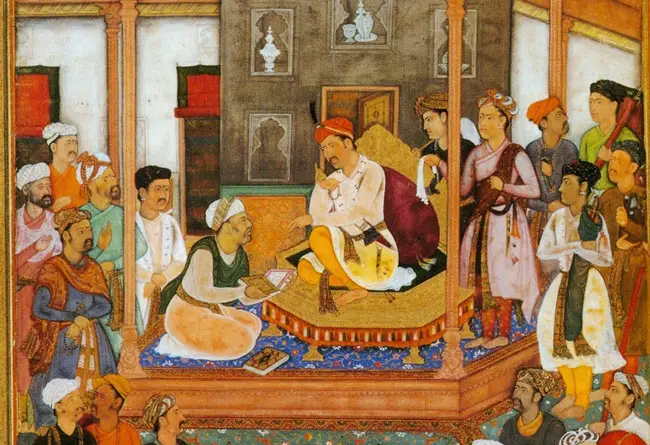
akbar the great islam enlightenment
Akbar the Great, the Mogul emperor of the early 16th century, was enlightened two centuries before the French and British Enlightenment.
By Daniel Chirot and Scott Montgomery
In 1877, the great French novelist Victor Hugo wrote, “Invading armies can be resisted; invading ideas cannot be.” Nowadays, the power of ideas, for good or for evil, is something we need to take into account, particularly in contemplating Islamic radicalism. The recent terrorist attacks in France, Kuwait, and Tunisia are only the latest reminders of how important it is to understand that, behind these outrages, there are serious ideas, not simply angry, frustrated criminals.
Violent Islamic jihadist movements do not pose an existential danger to Europe or North America. They may occasionally be able to carry out deadly terrorist acts, but they have no chance of destroying or taking over Western societies. Panicked attempts to march into Muslim countries and extirpate the threat have been counterproductive, serving only to increase the appeal of Islamic extremism.
Most Muslims reject the harshest versions of Islam, but many – if not most – harbor sympathy for the idea of struggling against the dictates of the West and returning the faith to its past strengths and glories. It would be wrong to assert that only a tiny minority of Muslims back the actions of the extremists or that fundamentalist factions have hijacked a religion of which they are completely unrepresentative. Islamic radicals enjoy enough support to be a serious threat in their part of the world. It is important to understand how this happened.
Harsh, radically conservative Islamic theologies have been around almost since the death of the Prophet Muhammad in 632, but they have been repeatedly contested by more tolerant, moderate schools of Muslim thought. Like the Christian and Jewish Bibles, the Koran is open to interpretation, whether quite liberal or dogmatic and repressive.
In the late nineteenth and early twentieth centuries, many Muslim thinkers – most famously Jamal al-Din al-Afghani – believed that embracing many of the ideals developed in the West during the Enlightenment was the only way to promote progress. Al-Afghani and others wrote that Islam’s rejection of Western science and progress was a misinterpretation of the Koran.
But, as the twentieth century progressed, Muslim reformists lost ground to secular nationalists emphasizing socialism as the path to modernization. The promise of secularism, however, proved hollow, with countries like Egypt, Libya, Iraq, and Syria sinking into despotism and corruption. This provided fertile ground for anti-Western, reactionary, violent versions of Islam.


Instead of armed, panicky overreactions, what is needed is cultural exchanges.


These strains have many intellectual roots. But perhaps the single most important modern source is the writing of the Egyptian scholar Sayyid Qutb. Together with other fundamentalists, such as the Pakistani philosopher Abul A’la Maududi, Qutb argued that true Islam had been infiltrated and corrupted by outside ideas. Only when it was reclaimed would two centuries of humiliation at the hands of Western imperial powers and, more recently, the nascent state of Israel be reversed. God would side once more with Muslims against their enemies, whom Qutb called “Crusaders and Jews.”
Dictatorships in North Africa and the Middle East tried to suppress the Islamic conservatives. But Saudi Arabia – a bastion of conservatism – used its oil wealth to counter secular modernizers and any kind of reformed Islam, financing fundamentalist missionaries and conservative mosques throughout the Islamic world. Qutb was executed by the Egyptian dictator Gamal Abdel Nasser in 1966 as part of a brutal but unsuccessful attempt to eliminate the Muslim Brotherhood.
In fact, the crackdowns only strengthened the conservative Islamists, whose faith helped them survive the repression. And they served to convince young, discontented Muslims that extremism was the only possible solution to their societies’ weakness and lack of opportunity.
Confronting ideas with military means is a sure path to defeat. When Western powers send soldiers into Muslim countries, attempt to bomb extremists into submission, prop up brutal dictatorships, or blindly support every Israeli policy, they confirm the claims of the radical Islamists, driving new adherents into their arms.
The real battlefront is the arena of ideas. Instead of armed, panicky overreactions, what is needed is cultural exchanges. There are plenty of serious intellectuals in Islamic societies who want to revive the reformist call for the embrace of some of the ideas of Western Enlightenment: the value of science, the importance of liberal tolerance, and the need for free and open discussion. Western scholars who understand Islam and speak some of the many languages of its practitioners need to support these intellectual movements.
Hawks in the West may try to dismiss actions like these as weak. But while they may do little in the short run, they are sure to prove critical over the long term. After all, the force that brought down communism in Europe – a far more dangerous ideology than radical Islam – was not simply military containment, but also the power of ideas and ideals.
daniel chirotscott montgomeryDaniel Chirot, left, is Professor of Russian and Eurasian Studies at the University of Washington. Scott L. Montgomery is an affiliate faculty member at the Henry M. Jackson School of International Studies at the University of Washington. The two are co-authors of “The Shape of the New: Four Big Ideas and How They Made the Modern World” (Princeton). (© Project Syndicate)

Friday, July 10, 2015

Bombay HC frowns on govt for silence over women’s plea on Haji Ali - By Rosy Sequeira,TNN - THE TIMES OF INDIA - MUMBAI | Comments by Ghulam Muhammed

http://timesofindia.indiatimes.com/city/mumbai/Bombay-HC-frowns-on-govt-for-silence-over-womens-plea-on-Haji-Ali/articleshow/48027476.cms

My comments posted on Times of India, Mumbai webpage over Rosy Sequiera's News report:

Bombay HC frowns on govt for silence over women’s plea on Haji Ali

Be the first one to review.
Ghulam Muhammed•Mumbai•4 mins ago

Petitioner's lawyer Raju Moray is on slippery ground when he contends that since the shrine is on Public/State land, the state has a right to interfere in the affairs of the occupier trust. Haji Ali grave is occupying the island for over centuries. State could go for vacation of the land, if it so pleases. But then it is clear that the occupiers age old occupation cannot be vacated by state or vested interests instigating tangential matters in the nature of a blackmail. The trustees had full right to administer the dargah, as per the clear advise by the Holy Prophet for the women not to visit graves. Moray's citing of practice of other Dargah's donot hold, as the fundamental point in Islam is what Quran and Prophet say. Other practice of Dargah's is their own choice and they will have to account for Almighty on their judgement day. Here, as far as state or Raju Moray is concerned, they are intruding on the constitutional rights of freedom of religion of people. Islam has a billion followers spread out all over the world. There is no central authority, like a Khalifa to decide matters in a decisive manner. Under such conditions, people or groups are at liberty to follow their own conscience keep the fear of Almighty in their affairs. The secular state has to keep out of the affairs of all religion, even the Hindu religion, as far as its governance is concerned. The activists who have filed a PIL are looking for trouble. They are possibly more interested in women's rights as a new wave of women's liberation. It is for them to decide if they adhere to the strict strictures of Islam or are followers of anti-religious Western ideas of women's liberation that is uprooting entire societies world over. India's secularism is at stake just like that of United States, where religion has now taken second place. That's not the case with India. We respect all religions and our religious traditions are alive and thriving. Judiciary too should be aware of the issues of wider impact involved, before taking up such vexatious plaints that are meant to be disruptive and destructive. The court should have thrown out the petition as internal matter of Muslims.

---

The Times of India

Bombay HC frowns on govt for silence over women’s plea on Haji Ali


,TNN | Jul 11, 2015, 06.13 AM IST
MUMBAI: Even as the Bombay high court on Friday appealed for resolving the dispute over the ban on women into the inner sanctum of the Hali Ali Dargah, it frowned upon the state government for not taking a stand in the matter. 
A bench of Justice V M Kanade and Justice B P Colabawalla began the final hearing of a PIL by activists Noorjehan Niaz and Zakia Soman to lift restrictions imposed since June 2012 at the mazaar, or tomb, of the saint.
The judges took note that the state had not filed a reply and also took note of a statement made to the press by former state minorities development minister Arif Naseem Khan that the petitioners should try to persuade the muftis and maulanas to take a decision on whether to allow women and that the state will not interfere. "It appears that the state government does not want to take a stand, one way or the other," the bench said.
 
Petitioners' advocate Raju Moray said, "Why should we go to muftis and maulanas to plead our case when the Constitution gives us rights?" He said the Haji Ali Dargah Trust is using government land and is a public trust and hence the state cannot remain a silent spectator. The judges agreed, saying "in a matter like this, it is very important for the state government to take a stand". 

Moray said the decision was imposed arbitrarily by the trust without hearing persons who are going to be affected. "They (petitioners) have been visiting the shrine since their childhood. They felt the ban is unreasonable and especially as it is not mandated by religion nor practiced in other dargahs," he explained. 

The trust's advocate Shoaib Memon denied that women were allowed in the inner sanctum before the ban. "They are allowed up to a certain point. They can't touch the grave," he said. Moray said the trust in its reply has admitted that the ban was effected after the trustees were made to realize by clergy that allowing women in the inner sanctum is a sin. "If it is un-Islamic, (other shrines) would not permit women," said Moray. 

Justice Kanade said, "See that it can be sorted out. Otherwise we will decide it one way or the other."

Thursday, July 9, 2015

My comments posted on TOI, Hyderabad edition webpage over their correspondent Syed Mohammed's article: Does Zakat Creates a 'Receipant Class?'

My comments posted on TOI, Hyderabad edition webpage over their correspondent Syed Mohammed's article: Does Zakat Creates a 'Receipant Class?' :


Ghulam Muhammed• annumallya•Mumbai•4 mins ago


UK is a welfare state and it is not a Muslim country. Still they have lakhs of people on welfare who legally can live off all their lives on dole and they do. UK government and media do make noises about throwing out this non-productive welfare system. But no political will is shown by the democratic parties to move in this direction. It is therefore surprising that Muslims whose religion has so much stress on welfare and who have big majorities who are below poverty lines, should harbor such mean-minded non-practitioners to howl about reform in Zakat distribution. In fact, it is the huge amounts involved that has attracted the attention of freeloaders to try and siphon Zakat funds through dubious means and services. A new class is emerging, some from the government bureaucracy and other from fringe political affiliations to make inroads into the prevailing Zakat distribution system. Individual donors are not fools to fall for such new fitna and will protect their own deen by strictly following the spirit and letter of Sharia in toto.
---

The Times of India
Hyderabad


Does Zakat Create a ‘Recipient Class’?


,TNN | Jul 9, 2015, 01.32 AM IST
Ramzan is a month in which 'giving' and 'helping' is encouraged. This giving manifests itself in Zakat, mandatory charity, often described as 'purification of wealth.' It is a pillar of Islam - the fourth of the five tenets. The concept is the transfer of money from those who are men of means to the weaker section of the Muslim community. Zakat is calculated as two and a half per cent of one's annual savings. 
It is applicable on gold and also on property acquired for the purpose of investment. Lakhs of Muslims busy themselves in evaluation and calculation. For, as tradition goes, they wish to make this charity - both in cash and its equivalent in kind - before the end of the holy month. 
But while crores are donated in charity, a more organised and streamlined effort is required. Alternatives to the traditional recipients need to be identified and instead of focusing on immediate gratification, long term measures are required so as to ensure sustainable economic independence for recipients. This will be a step towards empowerment. 
A look at the Zakat trends shows that the donor has a wide choice of recipients. The traditional ones include madrassas, orphanages and poor individuals, who are known as the mustahiqeen or those who deserve assistance, and for funding marriages. It is largely to these groups that Zakat funds find their way. The general feeling is that as soon as the donation is made, the charity is done. As a result, on many occasions, the utilisation of funds is not monitored. 
There is no denying that there are many from weaker sections who need immediate relief. A few hundreds or thousands, a bag of rice or a set of new clothes will provide them this relief. These are doles which the elderly or the ailing, who are unable to work, should not be deprived of. 
But to bring about a tangible change, Zakat needs to be channelised in such a way that it not only funds the education of recipients but also enables these Muslims to be self-reliant. This is the second category. One that is currently unable to work on account of the economic conditions, but, after assistance, may do so. Those in the know say it is this group which is far greater in number that those on the doles. Therefore, a concerted effort to channelize funds to this group is likely to do more in terms of poverty alleviation. 
The first challenge is to invite the attention of the Zakat donor to the second category of potential recipient and then urge him or her to fund their education. The younger generation appears to be more amenable to such ideas. 
Further, there have been suggestions that the Zakat funds be "rotated" to provide interest free loans to small businessmen such as hawkers. Once repaid, the funds would be given to other such people. But, this idea has met with considerable resistance from scholars of Islam and has led to disagreement between groups on the basis of interpretation of scriptures. While the Islamic clergy maintains loans cannot be given from Zakat funds as "ownership" of funds is transferred to the recipient, the others claim that creating opportunities is the spirit of Zakat and that giving without measures towards self-reliance creates an unproductive "recipient class". It is here that the second challenge lies: in finding a common ground between these two groups. 
Finally, the trend of centralised, transparent system of Zakat distribution is yet to catch up in the country. Apart from a handful of groups, including the notable Hyderabad Zakat and Charitable Trust, there appears to be none with a substantial presence in the state. By setting up an institution which clearly shows their books, visible changes are likely to be seen.