Sunday, November 1, 2009

Call to the Community to Oppose "Central Madrasa Board" and Save Madrasas : By Syed Shahabuddin - TWOCIRCLES.NET

http://www.twocircles.net/2009oct16/call_community_oppose_central_madrasa_board_and_save_madrasas.html

Call to the Community to Oppose "Central Madrasa Board" and Save Madrasas


Submitted by admin2 on 16 October 2009 - 4:48pm.


By Syed Shahabuddin,

The Madrasa as an institution has always been an eye-sore for the Sangh Parivar. They see it as the defence line for Muslim identity and an obstacle to eventual assimilation of Muslims in the Hindu fold. Under the NDA government the madrasas particularly in border areas were looked upon as cradle for terrorists and shelter for militants. As a result many madrasas including Nadwatul Ulama were subjected to search. Following 9/11 the US authorities added a new word to their lexicon-‘Deobandi’ because they were told that the Taliban had been trained in ‘Deobandi Madrasas’ in Pakistan. These madrasas had been established by the old boys of the Darul Uloom and had no connection whatsoever with Deoband. But, all embassies and intelligence agencies put the Darul Uloom and other Madrasas on their radar. Though, Home Minister Advani admitted that no madrasa manager or teacher anywhere in the country had been prosecuted for any subversive activity, the local police continued to harass them. Harassment has stopped but suspicion lingered about their purpose and their funding. At one stage, government tried to place its own teachers in the madrasas in the name of ‘modernization’. Very few madrasa responded to the bait. This may well be the conceptual origin of the proposed Central Madrasa Board.
History
The National Policy on Education, 1986, updated in 1992, two centrally sponsored schemes for Area Intensive Programme for Educationally Backward Minorities and for Financial Assistance for Modernization of Madrasa Education were launched during 1993-94. Under the 10th Plan these two schemes were merged to form the Area Intensive and Madrasa Modernisation Programme. These schemes are now sought to be replaced by a Central Madrasa Board which seeks to coordinate, regulate and control all madrasa education in the country. The State Madrasa Boards, functioning in some states have disappointed the Muslim community.
The Central government has never conducted review of the impact of its Madrasa Modernization Programme whose basic approach was to provide teachers to Madrasas for modern subjects like English, Mathematics, Science and Social Studies. But the present Bill goes far beyond.
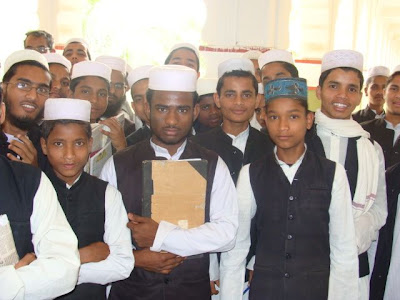

The Central Madrasa Board Bill, drafted during the first UPA Government (2004-09) was ready for introduction but it was not introduced, whatever, the official reason, because nearly all well known Jamias, Darul Ulooms and Madrasas in the country, including the Jamia Nadwatul Ulama, Lucknow and the Darul Uloom, Deoband, were totally opposed to the very concept of a Central Board funding Madrasa education, laying down a uniform curriculum and syllabus(even for non-theological subjects), and conducting common examinations. So, this was a tactical move because of the fear of a negative impact on Muslim support for the UPA in the 2009 General Election.
Now, that the second UPA government has completed 100 days in office, the Bill brought out of the closet, has been circulated to the Muslim MPs for their views. The Bill is not yet quite in the public domain because the heads of nationally eminent Muslim organizations like the JUH, the AIMMM, the JIH, the AIMPLB, the MJAH, and the All India Shia Conference have not been taken into confidence. Nor have the views of Muslim educationists and opinion-makers been sought. The idea is first to placate the Muslim MPs, because they alone can raise a rumpus in the Parliament.
Controversial Aspects
The community, as a whole, is not convinced about the need or urgency of the move. The first question they raise is why the government is so anxious to bring all madrasas under a centralized administration even to the best of its knowledge, no such central board exists for the Sanskrit Paathshalas whose number far exceeds that of the madrasas. If the idea is to upgrade the standard of education in religious institutions and to make their products more employable than they have conventionally been, the same consideration applies to Paathshalas. The State Madrasa Boards have not distinguished themselves by producing any religious scholars of national repute since their inception or at least since independence. They have been working as attached and subordinate offices of government steeped in corruption, graft and nepotism like the paathshala. In some states, for example, in Bihar, official intervention in Madrasas was politically motivated so that the Government of the day or the party in power may secure the free services of a set of drum beaters in every basti or mohalla! But the standard of these Sarkari madrasas and the employment prospects of their output were so low that they did not acquire any credence or credibility in the community. Largely, it was the products of the Azad (unaffiliated) madrasas which refused aid, retained their autonomy and produced the Ulema and religious functionaries.
But the Muslim community did realize that religious scholars who perform conventional functions should also have minimum knowledge about the country and the world at large and have some idea of the direction in which the world and the country are moving. Therefore, apart from receiving classical instruction in theology, they should acquire basic knowledge of non-theological subjects and current affairs. This idea has been recognized by nearly all the leading madrasas and has flowered over the last 2 or 3 decades and many darul ulooms have taken pains to revise and prune their classical syllabus in order to teach non-theological subjects, essential in the modern context and pursue ‘contemporary education’. However, they have drawn a line between the two branches of knowledge and always focused on the essential purpose of the madrasas, which is not to produce administrators or engineers or doctor but religious scholars, and devoted only 25% of the academic time to contemporary subjects. At the other extreme, in West Bengal the affiliated madrasas have all been converted into high and secondary schools under the state madrasa board and allotted less than 10% of the academic time to what it calls ‘Introduction of Islam’, which covers all branches of theology-Tafsir, Hadith, Seerat and Fiqh. One can easily realise that this deformed and distorted education cannot produce any Islamic scholars worth the name, West Bengal has thus killed Madrasa Education.
Unaffiliated Madrasas in UP and Kerala, for different reasons, have followed a common strategy to achieve the objective. Since primary instruction is prohibited in UP through the medium of Urdu which is the mother tongue of nearly 100 % of Muslim students.
Muslim students are normally enrolled in local madrasas where they study up to the primary level. Then most of them take primary examination as private candidates and enter normal schools. In Kerala, school enrollment is nearly universal and all Muslim boys and girls have double enrollment during the first five years spending morning hours in the local madrasas and the rest of the day in schools. At the end of 5 years, those who aspire to become Aalim, stay with the madrasa system while a large majority moves on to the general school. These examples show that neither the Muslim community nor the managers of the madrasas are blind to the changing circumstances and the aspirations of the young Muslims and are trying to adjust as best as they can, without giving up theological instruction to every child at the impressional age of 5-10, to lay the foundation of his or her Islamic identity.
During the last two decades there has been a very fortunate development. The senior products of the madrasas, comparable to graduates are accepted by several well known universities like the AMU, the JMI, the JNU and the Jamia Hamdard for the master course in several subjects, or a course in Tibb. Some universities require them to take a one year bridge-course in order to familiarize themselves with the new subjects of study as well as improve English which is often the medium of education. Such products have found their way into government service, including the central civil services, mass communication system, government media and as translators in the foreign service. This development has opened a new horizon for the madrasa products without affecting the autonomy of the institution or diluting its basic purpose.
Why emphasis on Madrasas?
Another important question that arises in the Muslim mind relates to the fact that only 4% of the Muslim students at the secondary level are enrolled in madrasas while 96% study in schools and colleges and receive certificates and degrees. What the community fails to comprehend is the selective approach. Most of the Muslim youth armed with university degrees are unemployed or they take jobs far below their entitlement. Why is it that the government is so anxious about improving the prospects of the madrasa products, while totally ignoring the wide spread unemployment among educated Muslim youth?
Why no Schools in Muslim Areas?
The Government launched Sarava Shiksha Abhiyan and is now implementing the Right to Education Act. But even at the lowest level, the benefits of universalisation are yet to reach the community in their villages and mohallas. Why the government does not care to establish adequate number of schools according to national norms. If they exist they are generally treated step-children. Muslim parents are eager to send their children to schools of minimum quality in the neighbourhood, even braving other linguistic and social obstacles. A legitimate question is addressed to the government why it does not provide minimum educational facility and at least primary education of minimum acceptable quality to Muslim children in most cases have no option but to attend maktabs in local masjids.
Outline of the Bill
Let us now have a glance through the Bill. Though the Long Title only mentions coordination and standardization of non-theological education, the Act goes far beyond clearly shows under the Bill that the Board will be established by the Government will not enjoy academic or administrative autonomy. There is no compulsion, no doubt, and the Board shall affiliate why the madrasas which volunteer for the ‘honour ‘ to receive the ‘benefits’. But once affiliated, the Board can disaffiliate them or take disciplinary measures for not following its instructions. However, affiliation entitles the madrasas to receive grant-in-aid from the Central or the state governments.


Among the list of subjects to be taught, theology does not have any priority. Instead of fiq‘h, philosophy is mentioned.
The senior products are not guaranteed admission to colleges or universities or government institutions, far less employment.
The Act does not lay down any qualification for the selection of the Chairperson of the Board or the method of selection or appointment (Section 4). Theoretically, it can be a non-Muslim. In any case, he shall be a person who enjoys the confidence of the government in power. Read with the provision for the appointment of Registrar (Section 14) who is to be nominated by the government in consultation with the Chairperson, it is clear that the decisions of the Board shall be taken, whatever the procedure laid down, by the Chairperson and the Registrar both of whom shall toe the line of the government.
The Board shall have 11 additional members (Section 4 (1)), all of them nominated. 7 of them shall be ‘renowned’ Muslim religious scholars belonging to various sects and denominations. The draft mentions a ‘Deobandi’ and a ‘Barelvi’ while there are no such sects as they are both Hanafis. It shall have Ahle Hadith, Shafeis as well as two Shia scholars, one belonging to the Bohra community. Thus the Bill lacks a sense of proportion and seeks to divide the community. In addition, the Board shall include three Muslim educationists including a woman as well as a Muslim philanthropist (why?). No member will have any representative status, as the head of a Muslim organization, Jamaat or institution. The members will serve at the sweet will of the government and may be removed by the government before completing their term of three years.
The Board shall have several Committees. The most important is the Curriculum Committee with 5 including the Chairperson of the Board as its head and the Registrar as Secretary (Section 35).
The government shall nominate or appoint all other officers or employee. The Rules and Regulations of the Board shall be formulated by the Government.
The Board shall hold an Annual Meetings, prepare an Annual Report as well as an Annual Statement of Accounts, duly audited by the Comptroller and Auditor General of India, to be submitted for presentation to the Parliament.
Section 18 (1) lays down the general duty of the Board as the standardization of the non-theological aspects of Madrasa system for its ‘comprehensive, systematic and integrated development’. But this is no more than a mask.Nowhere does the Act lay down the proportion of academic time and energy to be devoted to non-theological instruction. It is presumed that standardization by the Board will universally apply to all affiliated madrasas of the country. One wonders if it is possible and practicable.
The Act goes further to empower the board to ‘emphasise the liberal, universalist and contextually pro-active genius of Islam’. It does not even clarify whether the general education in the Madrasas shall be compatible with basic Islamic doctrines.
Sub-section 18(1)(w) speaks of ‘programmes for the consolidation of the inclusive society marked by religious and cultural diversity through proper interfaith understanding’. This is as political an objective as could be and can possibly clash with the basic tenets of madrasa education.
Finally, it provides under sub-clause (ee) for ‘adoption of a non-polemelical approach to other religions and non-sectarian institutions in a state of fidelity to the Islamic spiritual tradition’. One does not understood what this means. But, it is obvious that any instruction for da`wa shall come under a ban.
The Board shall recommend not only textbooks in non-theological subjects but also the prescribed reading material.
Chapter V relating to finance, accounts and audit does not lay down that the affiliated madrasa shall be wholly funded by the government or the Board; it speaks of donations, gifts, etc., which are normally available to the madrasas. The funds of the Board shall be allocated as grants to affiliated madrasas for their maintenance and development and for such other purpose as may be prescribed including remuneration and honorarium. Again, nowhere does the Bill say that the remuneration and honorarium to the teaching and non teaching staff of the affiliated madrasas shall match those admissible to those of government schools and colleges.
The Budget of the Madrasa shall be subject to approval by the Board. The financial procedure as well as the audit procedure is the same as generally applicable to government institutions but it will be beyond the capacity of an average madrasa to fulfill the formalities. In addition, the madrasas shall submit periodical reports and returns to the Board, for compilation and submission to the central government.
It is said that the country has more than 100,000 madrasas but the figures may be misleading. The government has not done its home work to quantify the number of Maktabs and what the Bill calls primary, upper primary, secondary and higher secondary madrasas.
If the past experience of the number of institutions which volunteered to receive government grant under ‘Modernisations Programmes’ is a guide, the total number of madrasas affiliated to the Board may not exceed a few thousands. But this is also raises a question on the double affiliation of the Madrasas which are already affiliated to some state boards. The Bill is also silent about the organic relationship between the Central and State Madrasa Boards.
Conclusion
The Modernisation Programme having failed, the Government now wishes to take over the entire madrasa system. No doubt, the teachers who are ill-paid may be better paid. But for hudnreds of years the community has supported the madrasa system and will not easily succumb to the lure of money or official status. The community knows that affiliation to a Government Board is an embrace of death which will not merely distort and devalue the system. Ultimately it will kill it. The Community realizes that the AMU and the JMI have lost their status as minority institutions. It also knows that despite Article 30, it is not easy to set up minority schools and colleges because of deliberate obstructions, which even the NCMEI has not been able to tackle with any success. Essentially, the madrasas are minority institutions. Nearly, all of them are also wakfs in law. The Bill totally ignores both these crucial aspects. Even the Right to Education Act does not recognize the functioning madrasas as equivalent to schools for the purpose of universalisation of education.
Virtual takeover of the madrasas by the government will amount to gross interference in the religious affairs of the community and a violation of the Constitution.
The madrasas are all modernizing themselves and introducing non-theological subjects, at their own pace and in response to the felt needs of the community. They cannot be rushed into divesting themselves of their autonomy and their real purpose for the production of Ulema and religious functionaries.
Muslim organizations as well as leading Ulema and eminent Madrasas have already taken a position against the official move. There may be an odd voice here and there, enticed by monetary prospects, but just as the move to take over and regulate madrasas in Pakistan, at the instance of the USA after 9/11, under President Musharraf failed, so will this move. Insha Allah!
Muslim India requests the government not to interfere in the madrasa system but as well-wishers simply create a Madrasa Development Fund which may be drawn upon by some madrasas at their option for their development. And no more.

Friday, October 30, 2009

A PLOT FROM A PIPE - Were youths in Vadodara building a rocket launcher? - By Sanjana - TEHELKA MAGAZINE -INDIA

http://www.tehelka.com/story_main43.asp?filename=Ne071109a_plot.asp


From Tehelka Magazine, Vol 6, Issue 44, Dated November 07, 2009
CURRENT AFFAIRS 
terrorism
A Plot From A Pipe


WERE YOUTHS IN VADODARA BUILDING A ROCKET LAUNCHER?


In a case flawed with broad incongruity and marred by deep prejudice, SANJANA speaks to an accused in another alleged terrorist plot in Gujarat
image
Pictures and Frames Mehrunnissa Ismail holds up photos of her arrested husband and missing son
PHOTOS: GAURAV SHAH
image
Samina Iqbal with her children shows a photo of Iqbal Shaikh
image
Shabina Usmangani with a photo of her husband Usmangani Nawab


AN SMS joke that surfaces frequently talks about three possible ways to catch a tiger. Plan A: Ambush the tiger; shoot it dead. Plan B: Lay a trap; capture the tiger alive. Plan C (known as the IPP – Indian Police Plan): capture a cat; beat it till it confesses to being a tiger in disguise. Then, proclaim you have captured a tiger alive.
For anyone who has taken a closer look at police arrests of suspected terrorists across India, the message can evoke only hollow laughter. In the recent spate of arrests of suspected terrorists by the Gujarat Police, life imitates (SMS) art.
On September, 6 Rakesh Sharma, ACP of Vadodara called a press conference to announce the arrest of five men — Usmangani Nawab, Ameen Razaak Shaikh, Iqbal Shaikh, Mushtaq Ismail Shaikh and Zaheer Abbas Shaikh — from the Hathikhana locality in the city. The police claimed that the five had planned to bomb the Ganesh Visarjan Yatra, an annual religious procession. The explosions, the police say, were meant to injure Hindus and trigger communal riots.
Sharma named 23-year-old Zaheer Abbas, the youngest among the five, as the mastermind. Zaheer’s confessions, Sharma said, not only led the police to the others but also helped them recover a rocket launcher, fivesutli or rope bombs, a packet of grey powder, some nails and tiny iron balls. The FIR registered on 5 September stated that the men were being arrested under the Explosives Act and the Arms Act for possession of explosives and the Indian Penal Code provisions that punished criminal conspiracy and the promotion of enmity between two religious communities. Sharma also talked of how the five were responsible for a crude bomb explosion in October 2008 on the eve of Dussehra. In the riot that followed, no one died but several shops owned by Muslims were looted and burnt. Frustrated by the minimal destruction, Sharma said, the group planned to fire a rocket at the particapant of this year’s Ganesh Visarjan Yatra, hoping to cause the maximum damage. On September, 23 the police announced the arrest of two others — Kalu Ismail Malik and Raees Rashid Shaikh — bringing the total arrested in the ‘rocket launcher case’ to seven.
A detailed examination of the FIRs, police custody remand requests and court documents reveal insurmountable flaws in the police version of events.
According to the FIR, the desi rocket launcher is described as a “hollow iron pipe with a diameter of 1 inch” that “could possibly be a rocket launcher.” At one end of the pipe was a coupling, says the FIR. Besides the pipe, the FIR describes a packet of grey powder that “look[ed]” like gunpowder. The police have sent a sample to the Forensic Science Laboratory in Ahmedabad to verify the contents. A couple of nails and tiny iron balls were found next to the packet. Five sutli (rope) bombs were also found amidst these.
An inch-thick pipe and a packet of grey powder that ‘looked’ like gunpowder were seized
The FIR goes on to describe the location where these items were found. IU Patel, a Vadodara-based advocate whose arguments secured bail for one of the seven, says that the police description of the rocket launcher was a far cry from a real one. “Even if it was a rocket launcher, it was not assembled and could not have been fired at all. The FIR states that these were found on top of an abandoned pushcart in the busy Hathikhana market area. Where was the igniter to fire a rocket from this launcher? And would anyone assemble it in the market?” asks Patel incredulously. In court, these arguments secured bail for Ameen Razaak Shaikh. Perhaps afraid that the rest of the bail applications would also be similarly accepted, the police then claimed they found three witnesses who had overheard the men talk of launching a rocket and had seen them place the material on the pushcart. Mohammed Hanif Shaikh, representing the accused along with Patel, says that the witnesses have been propped up by the police. “The witness’ statements are being recorded before a magistrate. They told me they were surprised to hear their names announced by the police. Let’s see what they have to say in court,” says Mohammed Hanif. He has filed an affidavit asking the police to investigate if the materials seized are available freely in the open market. “There are other questions to be asked,” he says, “The police claim that the arrest foiled the plot to bomb the Yatra. The Yatra took place on September 3. If the men were arrested after the Yatra on September 5, why wasn’t there an explosion, as per their plan?” Besides lessthan- ironclad grounds of arrest, there are allegations of illegal detention and torture levelled against the Gujarat Police which the National Commission for Minorities (NCM) has taken note of.
A man accused of involvement in the October 2008 riots was allegedly in London at the time
This correspondent met Iqbal Shaikh at the Vadodara Central Jail on October 21 along with his children, wife, sisters and mother on their weekly visit. A police constable recorded every word exchanged. Despite the constable’s presence, Iqbal talked, in a voice that could barely hold back pain. Disputing the fact that they were all arrested on September 5, the date the FIR was registered, Iqbal talks of being illegally detained and tortured for five days. “I was taken away by the police on September 1 at 4 pm. I was blindfolded, hooded and driven to a house out of the city. No one told me where I was being taken or why. In the five days they kept me there, I was mercilessly beaten with iron rods, tied upside down, flogged and administered electric shock several times a day. Live electric wires were attached to our feet and private parts,” says Iqbal. His voice was steady and he never looked away – not even for a second. “Ever since I was handed over to the jail authorities, I have been asking for medical treatment. All I am given are painkillers and sleeping pills,” says Iqbal. Throughout the visit, unable to stand, he chooses to squat on a ledge adjoining the prison grill. There is a lot more to be shared, but time is precious. He wants to spend the remaining visit time with his family. A few days later, Iqbal repeats his account of torture and illegal detention before a magistrate.
IQBAL’S FAMILY members validate his account. For six weeks now, they have heard horrific tales of torture during their visits. Zaheer Abbas talked to his brother of having his hands tied to the handlebars of two motorbikes and being forced to run to keep pace with them. If he faltered, a policeman behind him would beat him. “Zaheer has a terrible skin allergy that is aggravated by direct exposure to the sun. We rarely allowed him outside. He stopped school after Class 10, unable to stand the sun. He went to pray at the mosque only in the evenings. The whole day he would stay at home with me,” says mother Rahima Amiruddin Shaikh. “According to the police, this is the group’s mastermind!”
image
Crime scene? Zaheer’s relatives asks why the ‘rocket launcher’ materials were allegedly stored above and not in the pushcart
Between September 1 and September 5, the families went from one police station to another to trace their men. “We met the police commissioner on September 4. He told us that the police had taken them away since their lives were in danger. We were asked to return the next day,” says Zaheer Abbas’ eldest brother, Moinuddin Shaikh. Records of their visit are in the police visitor diary, says Moinuddin. The next day, the 5th, the families were allowed to see their men. “None of them could walk. They were held up by at least two policemen. Their feet dragged across the floor, their hands were limp,” says Shabina Usmangani, whose husband Usmangani Nawab was one of the five arrested. A day later, on September 6, the police announced their arrest at a press conference.
This was not the only discrepancy. On September 23, the police claimed that they arrested Kalu Ismail Malik. But this was 12 days after Kalu Malik presented himself to the Ahmedabad Anti-Terrorist Squad (ATS). Kalu’s wife Mehrunnisa tells TEHELKA that at least four people were with her husband when he surrendered in Ahmedabad. The police, she says, are also looking for her eldest son, Sajid. “He has run away from home. Considering what they did to his father, an innocent man who presented himself voluntarily to the police only to be beaten up, why would Sajid turn himself in?” she asks.
A week after the families deposed before the NCM in New Delhi, alleging illegal detention and torture, pressure on the families began to mount. Police informers, the families claim, are pressurising them to sign blank statements and not talk to the media. “They have even offered us money to keep quiet,” says a near hysterical Shabina Usmangani. “I will pay them if they provide proper medical treatment to my husband. I am not asking them to drop the case against them. I am confident of my husband’s innocence,” she says categorically. An hour later, Iqbal Shaikh’s brother Javed comes up with a startling revelation. “The police accused my brother of being involved in the October 2008 violence. In October 2008, my brother was working in London as a tailor. He returned to India on June 21, 2009,” says Javed. In his hands are photographs of Iqbal and his wife posing before the Tower of London. “Are they going to torture people to confess to crimes they have not committed?” asks Javed.
A resurrection of Plan C from the SMS joke?
WRITER’S EMAIL
sanjana@tehelka.com

Comments posted on Facebook on the Status of Tarek Fateh


Ghulam Muhammed
 Tarek, I find so many similarities in conditions prevailing in the US post-9/11 and in India post Babri Masjid Demolition and the Bombay Riots followed by Bombay Blasts in 1992-93.

I have lived through the period, just as you are a witness in these troubled times. You will be surprised how Indian police and communal elements in Indian government hounded Muslims, religious or irreligious and murdered them and their families. Only their names had to be Muslims. Rioters went through voters lists and other local directories to single out Muslim names and go hunting. Famous liberals, who swore they never went to any Masjid all their lives, had to face the brutalities of the mobs as well as the communalized police.

I must admit that Left liberals, especially in English media, were in the forefront of fighting these communal crimes. And some of them are still resolutely fighting communalism.


However, it is only now, 20 years later, the real face of Hindutva terror has been exposed through the single-minded professional work of Anti-Terrorist Squad Chief Hemant Karkare, (who was among the first shot dead in the 26/11 carnage in Mumbai), that Hindutva terror group were identified and exposed. A long list of Muslims who have been incarcerated in the intervening years, due to no fault of theirs except carrying a Muslim name, are still to be released. The persecution rate of all Muslims in jail is less than 10% or even less.

I find the same persecution of innocent Muslims being callously inflicted in the aftermath of 9/11 and simple minded people like you with a chip on their shoulder, are making their work so much easier. Go through Google under police encounters in India. They shoot first and brand the victims terrorists. I see the pattern emerging in the USA. And there is no organised group of civil libertarian who can challenge the bona-fide of such summary executions. People like Tarek Fateh are so engrossed in their own war, they are not aware what is happening in their own backyard.

Thursday, October 29, 2009

Taliban Chief Blames Blackwater for Peshawar Blast - OUTLOOK.INDIA.COM

http://news.outlookindia.com/item.aspx?668599


Taliban Chief Blames Blackwater for Peshawar Blast
ISLAMABAD | OCT 29, 2009
PRINTSHAREClick to ShareCOMMENTS

Pakistani Taliban chief Hakimullah Mehsud has claimed that the controversial American security firm Blackwater was behind the deadly bomb attack on a market in Peshawar that killed over 100 people.

Hakimullah questioned why the Taliban should target the public when it was capable of carrying out attacks in Islamabad and targeting the army's General Headquarters.

In an interview with
 BBC Urdu, he claimed Blackwater and "Pakistani agencies" were involved in attacks in public places to discredit the militants.

A powerful car bomb exploded at a crowded market in Peshawar yesterday, killing more than 100 and injuring 200 more. No group has so far claimed responsibility for the attack.

The Tehrik-e-Taliban Pakistan had earlier said it was behind an attack on the army's headquarters earlier this month.

About 15 people were killed during that attack. A group of militants took nearly 50 people hostage before they were gunned down or blew themselves up.

Reports in the Pakistani media have claimed that Blackwater has established a presence in the country by tying up with local security firms but these allegations have been rejected by the US administration.

When Hakimullah was asked about the perception among people that militants are involved in attacks on public places, he said: "Our war is against the government and the security forces and not against the people. We are not involved in blasts."

Taliban spokesman Azam Tariq, who was present along with Hakimullah, warned that the militants could target media organisations that are "defaming" the Taliban.

North West Frontier Province Information Minister Mian Iftikhar Hussain and chief military spokesman Maj Gen Athar Abbas have blamed militants for the blast in Peshawar.

They said militants are targeting the people because they are facing defeat in South Waziristan tribal region, where the army has launched a major ground offensive.

FILED AT: OCT 29, 2009 20:45 IST 
FILED IN: PAKISTAN ,  TERROR GROUPS ,  TALIBAN
© Copyright PTI. All rights reserved. Republication or redistribution of any PTI content, including by framing or similar means, is expressly prohibited without their prior written consent.

Wednesday, October 28, 2009

« View all web results for Who killed Karkare - Google News


Google News

Ex-top cop sniffs conspiracy in Karkare death

India Today - ‎Oct 26, 2009‎
Mushrif has written a book, Who killed Karkare?, wherein he points fingers at the Intelligence Bureau (IB). He claims in his book that since independence, ...

26/11 martyr's wife gets RTI order to seek police record

Times of India - ‎Oct 24, 2009‎
Ashok Kamte and two other police officers, Hemant Karkare and Vijay Salaskar, were shot dead on November 26 last year. Vinita Kamte said that "there were ...

Ex-Maharashtra IG smashes India's “Islamic terrorism” myth in a new book

TwoCircles.net - ‎Oct 23, 2009‎
By M Zeyaul Haque, A new book curiously titled Who Killed Karkare? says a nationwide network of Hindutva terror that has its tentacles spread up to Nepal ...

Terrorism And The New Line Of Investigation

CounterCurrents.org - Mustafa Khan - ‎Oct 27, 2009‎
Could all this add up to what SM Mushrif argues in his book "Who Killed Karkare: the real face of terrorism in India", that the driving force of Hindu right ...

Blast in Goa

Tehelka - ‎Oct 23, 2009‎
It is same Karkare who got killed in the 26/11 terrorist attack in Mumbai prompting the then Minorities Affairs minister AR Antuley to state that there may ...

Be ready for surprise attacks, Virk tells police

Daily News & Analysis - Manish K Pathak - ‎Oct 21, 2009‎
Chief minister Ashok Chavan, Kavita Karkare, wife of slain anti-terrorism squad chief Hemant Karkare, Smita Salaskar, widow of encounter specialist Vijay ...

Goa heat on Hindu outfit

India Today - ‎Oct 19, 2009‎
Police sources said after two blasts in the state in 2007, the then Maharashtra antiterrorism squad (ATS) chief Hemant Karkare, who was killed in the 26/11 ...

26/11 hero Ashok Kamte's father not on city police's Martyrs' Day guest list ...

Pune Mirror - Payal Banerjee - ‎Oct 21, 2009‎
Seventy-one other police heroes were also honoured with 21-gun salutes, prominent among them being Hemant Karkare and Vijay Salaskar. ...

I am not a boot-licker: Dr. Ejaz Ali

TwoCircles.net - Manzar Bilal - ‎Oct 25, 2009‎
... killed. It left suspicion in minds of millions of people. AR Antulay raised the question in Lok Sabha on the matter and demanded that death of Karkare ...

Goa govt forms SIT to probe Margao blast

Indian Express - ‎Oct 18, 2009‎
Goa has already faced a bad tourism year last year and dont need these goons to blacken our faces in the world once again. Hemant Karkare's death cannot go ...

Give ACP Ashok Kamte's wife 26/11 records, cops ordered

Pune Mirror - Aneesh Phadnis - ‎Oct 22, 2009‎
Additional Commissioner of Police Kamte, along with ATS chief Hemant Karkare and Crime Branch Inspector Vijay Salaskar, was killed in gunfire with the ...

Is it a Crime to be born a Muslim in India?

ummid.com - ‎Oct 11, 2009‎
While such enthusiasm in arresting Muslim youth is there for all to see, those arrested by Hemant Karkare's ATS in Malegaon blast case, are currently being ...

Ex-top cop sniffs conspiracy in Karkare death - INDIA TODAY

http://indiatoday.intoday.in/index.php?option=com_content&task=view&issueid=111&id=68024&Itemid=1&sectionid=114


Ex-top cop sniffs conspiracy in Karkare death


A book written by a former inspector general (IG) in Maharashtra is generating fresh controversy on the death of anti-terrorism squad (ATS) chief Hemant Karkare and other police officers on 26/11.
Karkare was killed by Pakistani terrorists Mohammed Ajmal Amir Iman Qasab and Abu Ismail. But if S.M. Mushrif is to be believed, then there is more to the murders than meets the eye.
Mushrif has written a book, Who killed Karkare?, wherein he points fingers at the Intelligence Bureau (IB). He claims in his book that since independence, the IB has been repeatedly ignoring incidents of Hindu hardliners who have caused violence and instead focusing on Islamic terrorists.
The former top cop also paints current Maharashtra ATS chief K.P. Raghuvanshi as a communal officer and has even hinted that Karkare was killed because Raghuvanshi, who was present at the spot on 26/11, gave him wrong directions to the location of the two terrorists.
Interestingly, the wives of the slain police officers have never alleged that their husbands were killed as part of a rightwing conspiracy.
Mushrif, however, is not perturbed. "I can understand their psychological condition, but I am a cop and I have done my own investigation in this," he said.
When contacted, Karkare's wife Kavita said, "I cannot comment, as I haven't read the book." Vinita Kamte, wife of additional commissioner of police Ashok Kamte, said, "I cannot comment on a book which I have not read and which you claim is based on media reports." What one would find shocking is that Mushrif has based all these conspiracy 'theories' on stories and articles published in newspapers after 26/11. That a book on such a controversial and sensitive topic has been published just on the basis of reports is surely going to stir a hornet's nest.
"The book is based on newspaper reports and my own investigation," Mushrif said.
He defended himself when pointed out that newspaper reports could be wrong.
"The reports have been taken from reputed national dailies. I acknowledge that all such reports appearing in news papers are not 100 per cent correct but then, one cannot say that all of them are wrong too. If the reports are wrong, then those who wrote them should be prosecuted," Mushrif said.
When pointed out how different are his questions than that of former Union minister A.R. Antulay, Mushrif shot back: "He (Antulay) was speaking through his hat." The former IG said he has written the book based on an "alternative theory" as there was something fishy in the death of the former ATS officer and that the whole incident should be re-investigated.
Courtesy: Mail Today

Monday, October 26, 2009

HINDUS LEARN SANSKRIT IN MADRASSAS! - UNICEF REPORT - THE FREE PRESS JOURNAL - MUMBAI

http://www.freepressjournal.in/FPJ/FPJ/2009/10/26/ArticleHtmls/26_10_2009_002_015.shtml?Mode=1


SCHOOL OF THOUGHT - HINDUS LEARN SANSKRIT IN MADRASSAS!

NEW DELHI

Reveals a research conducted by UNICEF to understand the role of religious minority institutions


A UNICEF sponsored study has found that a sizable number of Islamic seminaries in Uttar Pradesh (UP) were not only enrolling Hindus, but also teach them Sanskrit.

The study found a large number of Hindu students in Madrassa Islamiya Arabia Alim-UlUlum in Devgaon of Barabanki district of the state.


It also found that Hindus would prefer madrassa to local government primary school. The study was conducted by Lucknow-based BETI (Better Education Through Innovation) Foundation, for the UNICEF.


The research was aimed to understand the role of religious minority institutions. All the five madrassas under study were operating only with the community support and no government or any other fund was available to them. Their day-to-day expenses were incurred through donations and fees charged from students. "Out of the five, three madrassas are already teaching other subjects besides the religious education," the study found.


Unlike the popular conception that madrassas were not open to modern education it was observed that most of the staff and students realised the importance of modern education. The madrassa management lamented that the certificates issued by their institutions were not recognised by the government.


"These madrassas provides a wholesome environment for children. This is vital for right growth of mind and body. I find it the most interesting study and one that will help clear a lot of doubts," said Vinoba Gautam, UNICEF education specialist, who was part of the study team.